The Comedy of Malaysian Life
Show Notes & Description
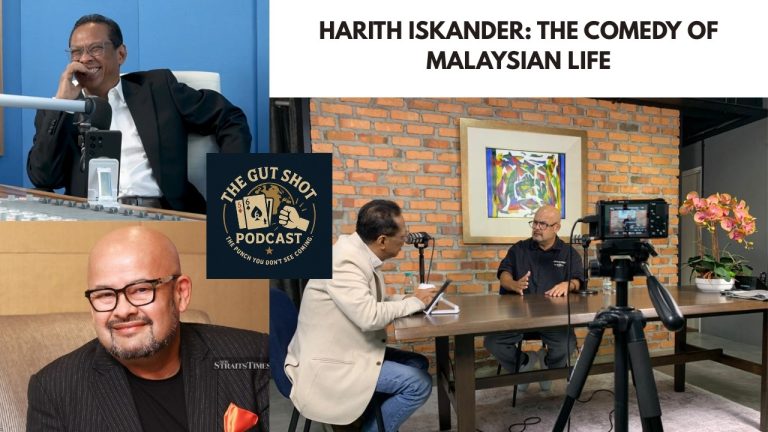
We sit down with the OG of Malaysian stand up comedy, Harith Iskander for our perspectives of not just his comedy background and takes, from his days of Jangan Ketawa, the huge media cultural event of its time, in 1991 on TV3 and its cancellation apparently due to cross dressing complaints.
We spoke of our thoughts on our upbringing that shaped us and what we see today and why, including absolutist point of view when it comes to free speech and defamation, and the place of insults in comedy and free speech itself.
Come along and enjoy the time with us.
Jump to chapter 9 chapters
- 0:00 Introduction and Yasmin Ahmad's Equality
- 1:42 The Massive Phenomenon of Jangan Ketawa
- 6:31 Cross-Dressing Controversy and Censorship Decisions
- 12:14 Comedy as a Mirror of Truth
- 16:08 Hypersensitivity, Social Media, and Genuine Intent
- 28:46 Online Vitriol Versus Malaysian Reality
- 37:02 First-Past-the-Post Politics and Manufactured Division
- 47:46 Navigating Political Offers and Party Baggage
- 1:03:39 Economic Traps, Mindsets, and Overcoming Fear
Auto-generated from YouTube captions. Timestamps link to the video.
One person who never did that in my experience was the late Yasmin Ahmed. She could, and you have to bleep this out, call and gardener
with the same amount of love because the word the word had no power and you have no power over me over me. Neither do you because you are equal,
right? I am as well. Yeah. And that's I I've seen her do it, right? And welcome to the Gutshot podcast. We have a special one today. Uh, subscribe and like as soon as you can because we have today our very own the godfather of comedy, Hares Kanda. How are you my friend?
I'm good. Asalamikum. Thank you for having me. You're welcome. Some sparks are going to fly. I don't know. I don't know. Depend on the kind of sparks you've been you've been having lately. A lot of sparks. I know. Which we cannot discuss because ongoing in the courts. Anyway, carry on.
Carry on. Okay, let's do this. I think u you know I mean you've been on the scene for a long time, bro. Um and actually before we started, I was already thinking about the uh the 1990s when I think you were on TV3, right? Uh on this program called Jang Katawa.
Yes. It it was it was such a hit. Let let me tell you what a hit it was. Okay. It was 1990. Yes. We had three TV stations,
right? Satu, ITM dot. Prior to NTV7, prior to Metro Vision, and of course, prior to Astro, right? Three TV stations. Jangawa was on air every Wednesday night. La pansa malamu. We had a viewership given to us by nuisance ratings in those days of above 6 million. Okay. How they got the ratings I don't know but can you imagine 1990 if you if you Google it Malaysia probably had uh 25 24 million people.
Yeah. So essentially we had 25% of the nation maybe possibly more. Yeah. Watch stopping every because that's how you had to do it. Right. You had to watch it when it was on.
Yes. There was no replay. There was no pay-per-view. So 25% of the nation stopped on a Wednesday night to watch Jang Katawa between 8:30 to 9:00,
right? Which if you imagine in today's numbers, that would be what 20 that would be 18 million or whatever it is. No. Well, you're looking at about what 20 that's uh% of the huge number. Yeah. 25% that's like that's like
a quarter of the country stopped I don't even think 25 million people watch har makers you know much past nowadays probably the quarterfinal of the of the world cup
yes probably but here's another interesting fact right people if you remember Jangqatawa you remember if you don't remember go to YouTube some clips are still there uh to this today.
Yeah. 1990 to 2026 is 30 whatever amount of years to this day I will have people online or even in real life stop me and say hey I was a child my family gathered in front of the TV or they will recall a sketch to me and I thought that's something that happened 36 almost 40 years ago and yet it's a memory a core memory for many people which is pleasing.
Yeah, it's pleasing because it's like wow you Yeah. Yeah. Like you just said you opened up with Jakatawa. You remember that from 40 years ago. It's crazy. Well, I mean some of it that that came to the thoughts was I wondering whether that can even be done today.
Uh to be honest, no. Uh I look back on some of the sketches and I remember some of them and a lot of them I don't remember. We got away with so much compared to today.
Right. I'll give you in what way? Yeah. Please give us an example. Yeah. Let's go down the the Keep in mind I'm talking about 1990. So let's not have any cancel culture here. Okay. There was an incident back in those days where
uh now you may need to cut this out. I know. I'm not going to cut anybody. This is a factual incident. A member of a royal family, okay? Uh I'm I'm going to get some facts wrong here, but this is the gist of it. Uh had purchased a car. It was in the Goudang of immigration or whatever. You know, where you wait for taxes and
Oh, I think I remember that. You see that? You probably can Google it. Yeah. He apparently the story was he walked in, took the car, and drove out, right? like just my car, I'm driving it out without paying the relevant taxes, etc., etc. That was the story in the papers,
right? So, we did a sketch uhhuh of of what happened of Hua or a Malay warrior. Okay. Datang and had purchased a cuda and like walked into uh the the place where the kandang was took his cuda and walked out. Then we had the Jaga come Texas and all lifestyles of the rich and famous which was a TV show back in the day. Lifestyles of the rich and famous. So it was it was a silly sketch reflecting a real life incident.
But today you could not do that sketch. Yeah. I I thought not for any reason. I'm not saying you need to or you have to. I'm just saying this is you can't do it. What what uh what was the reason that show was cancelled? Ah.
Ah. So, uh, for those of you who don't know, we had a cast of about nine people, all male. Two of those guys, D and Moon, Arwah, played all the female parts,
right? So, we had essentially all the male parts and any female part was played by either D or Awakon. And we had a lot of fun because they were they were, you know, it was fun and it was they're full of character and they were just genuinely funny people. Now, here's what happens. Season one, nobody knew us. Canal could shoot anywhere. Then we got the 6.2 million viewership. Season two, everywhere we shot, traffic stopped. Traffic would stop and people would watch and call out, "Hey, Dunbo." You know, season 3, we had to shoot in Singapore and Jakarta because and India as well just to
avoid the crowd. Avoid the crowd because we couldn't just shoot anywhere anymore. Uh-huh. Of course, that means your popularity is rising, right? In season 3, there was a letter to the newspaper. In those days, you couldn't complain on social media. You had to write a letter to the editor by an individual who complained My children are confused because okay
asking me this letter made it way it way onto the parliamentary floor where some politician of the time brought up the issue
91 or 92. Okay. So this uh had existed back in the day at which point whoever was a ministry of communication and I don't think it was called communication whoever looked after TV then made a ruling TV3 got the instruction and TV3 pass it down to us. Oh so uh these two characters you have to get real women to play them.
Oh my god. Okay. So we had to make a executive decision. Uh-huh. Our argument was what about two two or three full argument. We said number one, it's theater. Since the origins of history back in the day,
you know, Romeo was played by a female, Juliet was played by a male. It was just it's theater, right? Number two, we have a cast of nine guys. If we shoot out station, right, and there's two women in the cast.
Mhm. the wives of the other men. So guys, and number three and guys, whenever I as a director ask them to do anything, hey live and you stop the traffic dress in your shooting and they don't do that.
They don't care. a woman you know quite proper. So we said listen we cannot exist does not exist without this authentic element of theater and so we we stopped because we were instructed if you want to continue you have to do this and we decided no we're not going to do this
so you stood to your principle we stopped so we had three amazing seasons. Wow. That's s that's but this issue is cyclical. Remember when Amy search and uh had to cut his hair and to Mohamad Ramadan cut his hair live.
Yeah. Yeah. Yeah. I remember that. But yeah, the rock because they would not play their songs on radio if you had long hair. And being rock bands, you had to exist on radio. So they cut their hair and then
it eventually died out and all rockers have long hair. Then it'll come up every 20 years. Western culture blah blah blah. So it's very cyclical even now. So even now uh like pi was it p my tang too there was another show that had baba you remember there was these two Chinese characters
they they also had to change their their style and then it came back again. So but that was the story in 1991 a long time ago. That's why we went off air. Yeah. But uh I mean it's it's it's a cultural heritage, isn't it?
Yeah. Being upset and offended like it's a cult. Oh, well no. I mean I mean I I look at comedy. You think about that, right? I still remember when you were telling me that it reminds me of actually my my dear old 85year-old mother. Uh I still have her black and white photo on the stage uh uh dressed as a man.
Yeah. Is it Saniara? Saniara. It's theater. Yes. It's It's not real. It's on a stage. You're looking at it and contextually you realize, "Oh, that's not a man. That's a woman or that's not," you know, and you accept it.
Yeah. Yeah. Oh, by the way, yes. Final story on that. Uhhuh. When we received this ruling, we did a sketch where D and Ramoon were dressed as women and the other characters dressed as men. We shot a scene and then within the scene, we're like, "Okay, everyone, see you tomorrow." We disappeared into the dressing room. D and Moon came out in leather jackets, beards and like okay and the men came out all dressed as women. Okay, bye. We said okay bye. So we fit the rules. We fit the rules. But just
to point out it's it's TV. They're not like that in real life. Yeah. Is do you find that actually I mean comedy as they say reflect uh society
comedy is a great mirror to society because number one people don't realize this you won't laugh unless you recognize it comedy is based on communal uh recogn truth
which is why people go yes yes yes to you because you don't recognize it So people will say I don't really get British humor. It's too dry or whatever. Yes, that that doesn't mean it's not funny because you don't recognize the societal truth to the comedy that is being expressed. But comedy is a mirror. You will only laugh at it if it's true. If it's not true, it's not funny.
Correct. It's like it's like we Okay, there's the there's the truth and the comedy stretches the truth, right? So that to the point of absurdity That is the that is the word absurdity. Pointing out the absurdity of a situation. Correct. When you look at it in real life and you go, "Huh, I told you got nothing." But when you point out the absurdity, it elicits a a gutal feel of I didn't think of it that way. That's why you laugh. You are caught by surprise because this absurdity which just now you thought was that's life.
Yeah. Show the absidity of it. Oh my god. Ha. That's funny. Yeah, that's what love is about. How how long how long have you really been doing this? Uh I mean how long actually if you remember at what age did you start and how long now?
Okay. Uh well was the same time I started my standup comedy career. So let's say 1990. But obviously I I didn't overnight have this ability which I thought was the truth. But once I became inverted commerce famous, my school friends
reminded me, right? Yeah. But yeah, obviously it's you because they reminded me back in class, there was a group of us, you know, when you mu first day of class,
right? There's a certain group that choose to do the pan cuz you chose your own seat. in the group. I was one of the dolan groups where you can keep out of the eye of the teacher and you know have a little bit of fun and you don't really learn much
because apparently part of my shik in those days was I would be at the back and I would make sound effects. I would tell stories of movies. We would watch Ultra Man or $6 million men in the next day episode and I would make them laugh by repeating the stories of what they all understood that was last night's episode.
All right. Once again, but I don't remember this to be honest. But they were like, "Yeah, you were doing it since school days." Yeah. Yeah. Okay. Right. So that's a long long time ago in a galaxy far far away. Look at where you are. People are now younger people are googling $6 million men. What's that?
So how do you think actually looking at our society we look at it what what what I find is things are so sensitive today. I don't know whether I am the one feeling it. I mean you're a comedian. How do you how do you how do you see it today as far as society? Um and how how does that impact your comedy?
Okay. Uh let's start with the with the idea things are so sensitive, right? Are they dalu? We have a special word for it. Sensitive. Sensitive.
Which is very different from sensitive. Okay. Spelling wise. uh I would say and I'm not blaming I would say this this is just one of the factors uh internet and social media
right uh has highlighted or amplified every message back in the day you sat in your kong and if you said something idiotic the only people who heard you were the four people around you and they would say it's end of story today you say something idiotic, put it online and potentially the world can see it. And of course in the world there are other idiots as well and there are right-minded people. Idiots are often louder than right-minded people. So then your message becomes inverted commas important because just because it's amplified pahal it's the same message.
So when you talk about sensitivities, yes, sensitivities existed in those days, but it was there was no hammer on the nail to keep reminding. So let's say there was a joke. I'm I'm now I'm I'm assuming I'm just describing it. Is it that let's say we all sat around 10 of us and we told something that one person felt Oh. Um, I'm not going to laugh because I'm
offended. Offended, but my friends are laughing. But you move on the next day. Now that's amplified. That offense gets put online. Then the there be the supporters and then that moment lives forever. And as you know any muscle that you continuously practice grows stronger. So, one I'm offended message is repeated and then not only am I offended by this coffee, but I'm also offended by the water and the fact that you're using a and then you'll have other people supporting that you cannot use a stand for your phone. That's that's offensive.
And therefore, this muscle grows stronger to the point that it becomes normal. It's it's Yeah. Yeah. It you we should be offended because that's the way it's always been. You know, that's not the way it's always been. At one time, it existed and it either disappeared or whoever was offended got on with life.
But now I'm holding on to my offense and one becomes 10, 10 becomes 100 and then it becomes a movement. Now I'm not saying that's right or wrong. Uh I will just use an example. Uh the Malaysian cliches class uh China uh you know greedy or whatever. Now I grew up and this is a true story. My best friends in school true story Kenny Chong
Mhm. Chinese Don Dave Benjamin Pane Silvanda Mallayu although some may not agree on that. In those days, okay, in those days we all we literally greeted each other with and then we sat down and we had our chong and we laughed, continued to laugh, but we greeted each other with what would seem like an insult
because it was not an insult because with insult you need to look at intention. Yes. Our our intention was love. Yes. You can only do that with people you love.
Yes. And if you just took out the words, it hey, if you just took those words, it looks insulting. But you have to look at intention. Was the intention to insult? Yet some people are intending to insult. Okay, that's a different matter. But my point being now everything is segmented. You look at the headline, you look at the words and you immediately go insult that which is the which is the reason comedy gets in a lot of trouble because when you take it out out of context, people think the comedian made it meant to insult. No, a comedian's intention all the time is to make you laugh.
That's the intention. If you are insulted, oh okay, but that was not the intention. Yeah. Now we are not saying you can't be insulted when when I say we I'm talking about the general world but if you are insulted perhaps it's for you to look
at oh why was I insulted that person did not intend to insult me you you know I mean this remind me of some of the conversations we we have outside of here is that when I I told you my comedy my my uh genre of comedy tends to be quite rough. I I want to hear insults. I want to hear actually really bad words being taken, you know, and you can hardly do that if at all in Malaysia, you know. I I find even uh foreign ex can uh moderate themselves when they come over here.
Yeah. Uh let us talk about then what you just mentioned which is actually in real life. Can what you say resonate completely with me because um um I learned this maybe I'm not sure I I mean I can't recall when I was too young cuz maybe I'm too old right
um but I remember in college uh in in the US one of the things you know you are really good buddies and I think this is I cannot speak for women okay but men when we insult you that means you're my buddy.
You've been accepted. You are accepted. You are in the gang. And when you take it without feeling insulted, you're gang. Yeah. You are gang. You are one of us. You're one of us. That is the that is actually your badge of honor. When your friend actually insults you,
man, you guys are, you know, once again intention because they're not me. We're not talking about bullying here, right? We're talking about I've accepted you bodo and I will accept your your bodo because you are an immissile.
Yeah, brother. And and and this has actually to be to be fair with you actually this has carried on in my adult life actually even I mean uh in our gang of uh friends we insult each other all the time because that's that's basically how we born.
What can I say? It's and bustle, right? Part and bustle. Yeah. But I'm going to take the other side here. Yeah, please. Also, it's not Okay, I get it. Uh the the the K word used to express uh Indians.
Mhm. You know, and I'm going to say the K word because that's the same as the N word. Now times have moved on and I get why it is considered uh an insulting word. I get it.
Mhm. Because I and to this day now uh at a certain point I would never use it because it has gone past the point of love unless this particular Indian friend of mine is someone pane. I could call him
that K word and he would totally get it. But we have that years of brotherhood together. But I understand why it is insulting. Do you see what I mean? So
I would not simply use it to prove my point that I love you. No, I get it. So uh going to wrap that up with a simple uh saying. My belief is insult is more often taken than given. So whenever someone is insulted it is look at the situation more often not always more often taken the people who scream I've been insulted uh scream much louder than the incidence of actually trying to insult. Yes, if you're two football groups opposing shouting each other intention is clearly to insult. But we get insulted. When I say we, I'm including myself and everyone else. We
automatically find ourselves getting insulted by way too many things to the point that I go, "Hold on, it's being taken. I've People call me Ba daily basis online and I know it's meant as an insult. In fact, their intention is to insult. I don't take it.
I don't care either. I don't take it." Yeah. Now I could go to court look look at these and I will say hundreds of people they intended to insult me.
I don't take it. I mean I I don't I don't understand that part actually in our society where actually any insult is uh uh I am a free free free speech ab absolutist to be honest
I really don't care you know you can call whatever you want to call you can say whatever your opinion is you know as as long as you don't go out of your way to defame uh with a lie that is uh intention ally to uh what do you call uh to cause harm,
right? Um and even that is a very high bar for me, you know, because I built differently. Yeah. You know why it's is it's is otherwise um this is what we call the marketplace of ideas. The minute you start holding back uh what you want to say, you are actually censoring the marketplace of ideas and you and that is how a society progress which is being able to challenge each other uh and get ideas out whether you are right or wrong whether you are insulted or otherwise that's the way I see it you know I mean that goes back to go a bit serious Where do you think we are at as a
society? I mean to taking your you come from a very different background than I am in terms of career-wise, you know. Um you've been entertaining people. Um and you are public figure, right?
Um I have been doing I mean privately this is the first time in my life actually I I I felt that all of a sudden I become somewhat like a public figure which is a bit uncomfortable to be honest. Um because what you were concerned about is is is building businesses and and whatnot. But where we are as a as as a country as a society as Malaysia um where do you think we are at? Do we think do are you positive about uh the direction of where we are going? Um I know I'm I'm getting serious a bit right but uh you know coming from these two direction
and and and your way of thinking cuz you got to be to a certain extent I thought that you are an optimist in order for you to be funny you must be an optimist right. Um on the other hand to be a business person you have to be a pessimistic optimist I call it because you have to prepare for the worst and and and work for the best right but looking at where we are we are at today what's your what's where where do you see we are going
um two schools of thought which I'm I'm sit I have one foot in both sides. On one side, if you look at social media, which is unavoidable because that is how we consume news and life nowadays,
we are Malaysia is sliding uh down a slippery slope. Uh in my opinion, and I preface everything by saying in my opinion, uh from what would be called an open um progressive point of view, we are slipping into a narrow hole of right and wrong and my way is better than your way. And it's all in my opinion it looks like it's based on race and religion down this slope where we are splitting the the groups that's on social media. My personal experience my other foot is on the ground uh where in my experience it doesn't exist with such heat as it does on social media. And uh I've spoken to
this before and I've brought it up in a couple of my videos when I periodically every one or two years am attacked viciously online. Let's use a number of 10,000 comments, 10,000 hate comments.
Really that much? Yeah. Yeah. Yeah. I can I actually stop on one video? On one video I stopped taking uh I blog comments because 10,000 comments. Like number one, I got no time to read it. Number two, this can go on forever. I blocked it. And then at the same time as I walked the streets for the following two to three months, zero hate coming direct to my face. Now, is it because those people online don't exist as I walk around Malaysia or Koala Lumpo or the Clang Valley or Pinang or wherever I do any shows or Joo or is it those people online who are chatting ba
bodo see me in real life and go bang could be could be I don't know but um so my point being actually I fortunately really have not been caught in any flash situation where it turns into extreme uh violence or name calling. Uh but that I'm like wait a minute online I I'm hated by it looks like everyone but when I walk around everywhere
selfies in fact more selfies because hey you're the guy in the news take picture with you. Yeah. So where which is the real Malaysia which is I believe it gets played up. This is my opinion. I believe it gets played up online. Uh give you current example.
Um I've got a little something called view on 60 which I put on I put on Facebook. It automatic uh Instagram automatically goes to Facebook and for some reason I didn't realize I was setting automatically goes to threads. the same post on Instagram. I let I just use number 100. I get 100 comments, you know, hot and warm, cold, indecisive, they don't really care. Some people care deeply. But on threads, which I'm not big on because I don't really follow without fail, even if it's only 10 comments or 20 comments, all 20, all 10 will be hit. Wow. Instagram, Facebook, half half. Then I
realized, hey, is it because different people are on the different different platform platform? Uh, and I asked uh Chat GPT, right? Why is this so correct? And GPT's explanation which made sense to me was Instagram is your photo photos your latte you went on this holiday your person visually is available and that's why you are successful on Instagram on threads there is no history of you which then either attracts or allows the person who is just there to to to blast to hunt to to be to be disruptive to to verbalize because you you can't trace back. Oh, this person lives in Raang and they had
a latte this morning. You're just I'm generalizing. You're you're you're just a caricature. You're just a a profile which with a And by the way, Instagram has an algorithm.
Uhhuh. I found out also on threads my post goes to anyone. So not my followers, not people who have the same ideas or are interested in what I have to say. It goes to them. That doesn't happen on Instagram. And to a certain extent doesn't happen on Facebook,
but th is like so th is a bit more like Tik Tok is it? I'm not sure how exactly how Tik Tok works, but yes, I get a lot of negativity on Tik Tok as well. But my suddenly I get this and I'll give you this is just anecdotal. It's just me. Mhm.
The people who slam me on threads have 14 followers, three followers, 28 followers, 16 followers. And as an experiment, I looked at their profile. Each one of their own thread comment got zero likes, zero likes. So no one is reading
what they think, what they are thinking, but they're on my page telling me what they're thinking. And the only person reacting to them is me. So threads is a way of like hear me, hear me, hear me. People are just stabbing away asking to be heard
because in their life I'm assuming they are not heard which I'm assuming is pretty sad whereas on Instagram not only are you heard you're see I could go to Instagram and see what you did today yesterday last month
my my my my assessment have been actually ever since I've been doing I I've only been doing this effectively maybe now coming to 11 months uh the guy shop work right um and what I have observed is um or I what I have realized is uh the ones that engage you uh constantly tends to be they truly follow and they truly make an effort to understand what you're trying to say in totality at least my format
on YouTube yes on your format on my format of course Um, I don't really read Tik Tok at all because I don't understand that platform. Um, but my team do uh cut out and put it out on Tik Tok. Um, unfortunately I don't have time to look at it.
Um, so I said to myself that is basically how they engage themselves. But what I find a bit sad to actually uh confirm what you just said is that the negative comments are such that they are void of ideas.
It is just hate uh and that hate has got no content to it to it. Okay. Or if there are a semblance of content um it fails on even the slightest scrutiny. So it is very sad but at the same time I also tell myself that the what I find is um uh the the social media world is not real life. No.
Right. Like you say, you walk around, people asking selfies for you and whatnot, you know. I mean, I got people coming in and and and you know, shaking your hand and saying, "I love what you're doing, blah blah blah." and also in our personal life that uh like you say uh I I really don't understand this um uh this this polarization that we seem to be seeing coming out of politician's mouth because I don't see it in real life.
Um I really don't I more more than likely Well, maybe I'm wrong. I don't know. I don't know. Can you pick Can you correct me if I'm wrong?
I I I'm in no position to correct you, but I also and you will understand the game as well. The game of politics. Let's just look at Malaysia. Um your your what what do you call first across the line? That's that's how we that's how we vote.
First pass the post. But so if you uh are running to win a seat in a constituency of a thousand people, number one, you look at how many voters they have. Okay, let's say only 400 are ellegible to vote. Then you look at the racial background of that 400. Oh, 200 are Malay, 100 are Chinese, 100 are Indian. Just using a very simplified example. To win 400, you only need 20. That's all you need to run that constituent of a thousand people. So that's first pass the post. So all you need to do is please 201 people out of a thousand and and you have now won. What you do with that win later is
a different story. But that's why you have to rephrase what you were saying earlier the polarizing because how do you win 201 people out of a potential 400? You set them against each other. That's how you win 201 people. That's that is the game of democracy. You you can
because majority rules because majority rules. Not what is best for the thousand just what is best for the moment. And how do you get 201 other 199 that's all you need to do. That is if you were to talk about what is what is our game plan guys? How do we go? Okay. How do we make this 201 hit that 199? That's all.
Yeah. That's so that number come to you. So that number comes to you. Point out what's wrong with those people. Have these people agree with you and there you win. Which was COVID period was wonderful at pointing this out.
Why? Because from March 2020, March 18 if I'm not mistaken, I noticed because before that I had prior to that, you know, following political social stories online, us against them, LAU versus China, this versus that, liberal versus for I would say a good three to five months when we were in total lockdown. The initial MCO online was one enemy
co and there was no talk of commonly malayina liberal uh leftwing rightwing it was one common enemy. So if there was a spiritual being out there, what they had done was all of you are on this side and our enemy that we all hate is co. Okay. So now we're on your side.
That's very perceptive. I I I actually I think I made a comment. I maybe I didn't I didn't say it out loud, but I was like this was refreshing. I never thought about that. I didn't feel anything online that was which you feel now every day about
because you got a common enemy. You had a common enemy which is the rules of war. When a country government is failing or losing its popularity, start a war. Start the forms war. Start the uh uh um you know, start a war in Iran. Start a war in Vietnam. Start a war so that the people instead of being angry about this go no no no no we're angry about these people. YEAH WE'RE ALL ANGRY about these people. Uh what what ratio are we put that on hold first? We're angry about co and once that had cleared up. Oh let me get back to being angry about you being different from me.
Let's pass a bit actually I'm I'm I'm I'm looking at how your point of view came about. Um you spent boarding school in um uh in in in
Australia. Perth. Western Australia. In Perth. How long was that? Australia. I was there for a total of 5 years. Five years. Huh? Five years in Perth. And then you did your tertiary.
I did my tary in Perth. I did two years boarding school and then two years university doing getting a communications and cultural studies degree BA degree an obsolete profession but but um uh you must read a lot I bet
uh I I don't read as ferociously as I would have liked to because I see people who read a lot and like wow I wish I could do that because I was not a okay the reason I didn't do law for example I I went to communications we had one semester of journalism and I love journalism oh yeah exploring then we had within that one semester of journalism
we went for a moment we went into journalistic law which then I was required to read all these law cases regarding journalism and I found it oh my god it was too difficult for me to read so much I love the act of journalism but the knowledge of needed to read it then I realized well that's why I I'm not going to do journalism for now because I'm not a great reader but then again that probably makes me a better comedian because I'm better at seeing formulating in my head with no given facts that I need to remember just like oh this looks interesting it'll look
even funnier if I talk about it this way and it could be even funny if I talk about it this way but I don't need the facts written and remembered which is what reading is all about however the books that I did enjoy reading challenged that books that when you read it created a visual in your find not factual books,
right? You know, uh I would say story books, but but uh slightly more fiction. Tuesdays with my Mitch album books, stuff like that. I could actually get through and feel I want to read it again. Okay.
Uh I don't read. You know why I ask if our audience want to understand why I I I ask this question is because um I what I've noticed with comedians they're very observational lot
right you guys observe and you guys process it in your mind and then you got and and you present it in an interesting way right an angle that we don't see. Uh and the best ones are when actually you put in a you know you you you you come back later on to it and
you call it a call back to it. Yeah. That's you know uh it's a skill. It's it really is a skill. Um but it is uh it comes from a lot of observational capability that for me it it's akin to um reading a lot but you're probably reading a lot of maybe you may not think you're reading maybe the things that you when you mention Mitch album and all that kind you actually reading a lot
and actually you're also transferring the observation that you have and and you are putting together the uh the image and and processing that image and this is where I think um we are failing in society especially in the social media age it is happening to me
um I used to read a lot a lot I read I can tell you um I'm just overly curious But the social media age has made me less patient to sit down and actually finish a book.
And you you you cannot get the same amount of information uh as a book, you know. So that's one thing that I think society is failing if you ask me, you know.
Please uh push me back if you if you think so. Failing. Okay. uh I know what you're talking about and I totally understand it, but I'm also one of those people who like hm look at it another way,
right? So, uh for example, um I know what you mean by failing because when we grew up, reading was lorded. Reading was the way you got information. And if you didn't read, you didn't get the information. But now, the information is given to you, but in bite-sized pieces. headlines, 60-second reels, uh, and then us old school people go, "Oh, but that's not a 300page book."
The the the problem is this, I find actually because I do watch a lot of, uh,formational YouTubes, uh, documentaries and whatnot. And I find the difference between reading and even those in-depth documentaries, the death is not there.
Yeah. The death is not there. And the difference is having the breath and the death. Okay, that's all I'm I'm I'm I'm saying right. And I'm feeling a loss in terms of the last 10 years compared to the previous 30 years, you know, of what I have loaded in here and what I could process and what I could make sense of.
Um I don't want to talk too much about myself in a sense for this. Hey guys, I got Haris here. Okay. Uh, you know, I thought at at one point, right, I heard at one point that there was a Ura of you running for election. How true is that particular rumor? Uh, shall we dispel or shall we elaborate on that? And what are your interests? uh in a nutshell when
you don't have to name names. No, when when it began happening, uh I okay, I will admit, uh there were uh I was approached in a very surface level 2018, prior to 2018, but it was just like you should you should join me.
And what was the reasoning for that? Because uh what what did they what did they reason that for you? In my approach, in my opinion, I think it's because oh, you've said some interesting things. Uh people know you, people listen to you just why but that was coming not from people within political parties.
Okay. Or maybe you should think about it was you know from the general certain people in the public in 2000 uh 1822. Uh the the more serious approaches came in uh 2022. So after our whole upper sharitan move and then muhidin and then that collapsed and that time came some more serious approaches
approaches from a couple of different parties meaning meeting members of those parties who said to me uh I think you should join me and here are the reasons and here is the plan or what do You think so? They were direct as in join this party.
Correct. Okay. Uh attractive be to me because ooh you know it's always attractive when someone says you are powerful. So inside your bangu scale like oh I didn't realize I was that influential for you. You know
I like your honesty. But fortunately for me I have already got a lot of ludition ludition is that the word loing and claps and bagus throughout my career that this was not this was an addition and it was a different coming from a different point of view but it was not something that I was starved of
right it was not the first time someone said to me you're good at something you can you can be useful so I I liked the idea and I and I genuinely like the idea of making a difference to the country.
Right? That's that one is with or without being a comedian. That's who I am. Mhm. Uh one thing that I hold on to to this day is when you join a political party and if if I had you take on the baggage of that party,
right? Baggage that had nothing to do with you prior to you joining. So if you join this party ah they'll bring up something that your party member who is a new person did four years ago don't even know this person might have met him at a dinner but I don't know him and I'm not responsible for what they said what they did and that's why I thought look I've got enough baggage in my own life why do want to take on the baggage of a party that's been there for 30 years or 10 years or five is number two. I was married at the time and my kids were young and they're still young.
I might be able to put up with it or handle it. I didn't want to put them through it because they will be reading it and seeing it every single day, which they already do being me being a comedian that they don't need to see
probably by 10 multiply by 10 or 100. So I I thought to myself, listen, I'm if I'm making a difference at all, I'm already doing it. Uh I can continue doing it on my own terms rather than because as as you probably know and anybody knows once you join a political party, you your enemy is not from outside. Your enemy is from within. Because this is my perception and I'll tell you why it's my perception. I went to a an open house of a bank Haray open house and you know Basa ballroom hotel and I remember seeing different members of different political parties. There were people
from BN, people from Pakistan, you know, the the chiefs all there and the head of CIB and and everybody was ha ha ha makan karip and tare. And then I noticed opposing political party members were standing huddled, laughing, backs slapping. I'm going to use it for visual. A DAP guy and a Barisan guy at the time were not on the same side. And then I would see another bison guy standing away watching. Then I'm like, what? Those two are backs slapping. This guy's watching. Why aren't these two backs slapping? Cuz they're from the same party. Then I realize your
opposition is not after your position. They are after your party's place. There's the government and the opposition. Your opposition member is not after your position. They want their party to take over your party. So they're not your enemy. Your enemy is that you if you are chief of this department in this party, your enemy is your number two and your number three and your number four because they want to be number one.
Correct. And not just that, I I I always feel that also in order for you to even get to be uh proposed to be a candidate for an election, there's a lot of infighting going on and there's a lot of I mean internal politics that is happening. You know,
did not mention that reason. So another thing that held me back was if I stepped into this party and they offered me you we will run you here and here are the reasons. I'm thinking I step in and they put me in a position to run for a
constituency. Yeah, I'm thinking what about that line of people who've been there for 2 years, 5 years, 10 years, 12 years waiting to do that to be able to be given the chance because they've earned it to run in their constituency
to run here. What does he know? And I'll be given the party machinery to help me win. That's what they promised. But the people with will be greeting their teeth trying to help me. Yeah.
And at the same time definitely and I don't blame them. Yeah. If a two comedian of two years walked in and suddenly was given the headline big picture with my picture there and I meant to support this comedian who's only been around for two years on a big show. I'm not, it's not a party member, but I'll be saying,
"What's going on? What's going on?" I get it. He's popular. I get it. Uh, he will sell tickets, but I'm not going to support him. Not because Jio Dunkey is like, "Okay, now you're going to do your own show."
Yeah. I I I've put my years. I put my ears. Yeah. And good for you. You You got a Tik Tok video that got a million views. Good for you. But I'm not going to lend my name to give you two million views instead of a million
because that's just human nature. Unless I really, really, really love you and I think you are God's gift to comedy and I can learn so much from you, I will definitely support you all the way, I don't care. But if you're someone that's brought in just to sell tickets and I've been working at it for 25 years, what to do? So I understand that. I understand it completely. That's human nature.
That's interesting. I I I it brought to me in my mind what u the only comedian I know of who's uh I don't know whether there's any who's who's leading a country is probably Zalinski.
Yeah. Uh I I don't know of any other. Do you? Trump. Trump. Well, I have a different way of looking at Trump. Yeah. I think Trump is um Trump is Trump is an interesting character. I think Trump is a businessman number one. Uh a lot of people uh when I talk about Trump uh really get a uh especially in this in this part of the world have a very uh adverse reaction to it because of I think because of the way the media has portrayed him. But I uh it never surprised me actually the way he he he carried himself
because I was there in America in in 1982 when uh when he was already famous as a property developer. Um and he is what he is. Um number one so and that's typical of that side of the business. You know you're not really a corporate guy. you are basically a a developer
you know it's a rough and tumble business um and straight talking right the other part is actually I don't think he's a politician uh he is a businessman and that comes through and through um in in business we what we we don't really call it politics we call it just doing business
is marketing and he understands his marketing Um so the other thing that I the other thing that uh I think if there is anything that I take from um uh from from from what he's done is that whatever he promised he delivers. Um you may not like it um but he says he's going to close the border. He closes the border. He wants to raise the tariffs he raised the tariffs right. So I mean the presidential system is an executive function that is actually to me in America very much more successful than what we have uh which is the first pass the post. That's why we don't seem
to be able to get things done. Mhm. Uh now I'm I want to go back to where you you end up u the story of you know being offered or or or being considered.
Um when I look at where we are at I I'm very pessimistic. Um because why? In any corporation and I keep saying this um government is the ultimate form of a corporation. Your constituents your shareholders are your citizens. Uh if you are an MP, your your your constituents are your shareholders, right? And I don't think we are delivering um what the constituents actually want and basically because of that horse trading that politicization in terms of the political party and we have inherited and have that culture now for probably 60 years. M
um so here comes my banger which is um when I listen to you see the the people don't understand intellect uh comes in various manner uh you don't have it it it it takes a long time for you to get to where you are. You have actually have to hone your skill as a entertainer. you um uh it is a business, it is a number for yourself, right? None of these guys do. The only thing they do is actually talk and actually try to divide the people to get the votes. Okay? You on the other hand u people rely on you to uh produce your shows, sell your tickets, make your production,
right? This is business as far as I'm concerned. I'm looking at a businessman. People may see you as a comedian. I see you as a businessman. Right? And I have uh maybe I'm biased but I have a big uh bias for private sector businessman and you are a private sector businessman and you bring something to the table which is you have created uh employment. It's not easy what you do. So
what's your point? Haha, I know you're going somewhere. So, my point is my point is actually um uh but it it I would look at it in another way. Um I don't look at it from a party standpoint and this is something I'm trying to very much educate or or try to change the mental way in terms of our electorate which is I think we should be voting for persons rather than voting for parties. We should stop voting for parties. And I think that at the end of the day, parliament must be about the people that you vote for that then conglomerate into uh into something that can govern.
Let the cheap fall how it may be. Right now, you know, they they using boogeyman. our citizens are actually hell ransom because uh if you don't vote for me, you know, the boogeyman here is going to run. I don't give a anymore because why? We at the bottom. Hey, dude. Do you know what I mean? Okay, I'm talking slightly more. I want to hear your point of view after I'm done. Okay, we you know, I I look at per capita GDP. We are at about $13,000 US. Singapore is 99,000 almost $100,000 US dollar and they start at the starting point uh the same as ours. South Korea is close to uh 40,000
you know and they were in a war right doing something terribly wrong for the last five to six decades. All right. It is not a middle income trap. It is a lower income trap that we are stuck in. We are not in the poverty trap of the African countries. So I'm saying that there is something there to consider bu you know and uh I think you are very satisfied with your position or your place in uh in the pantheon of uh Malaysian entertainment. You know it's uh it's it's a secured position. you know, you know where you are. Uh, as you said, lorded or otherwise, right?
That's you, you've been there, done that, you know, but looking at where we are, shouldn't we be looking at where we are going and how much do you think a sacrifice that would be if we were to do something like that and throw our heads in the ring? Bang, bang, bang, bang. That's my point.
Not in what do you think? Not in disagreement with you. It it it is a noble and exciting proposition. Uh-huh. Uh just leaning on the message that you had just now about GDP.
Unfortunately, uh I myself am not going to say I totally understand what all of those numbers mean. Okay, I I get it. I understand growth or or Korea, Singapore, Malaysia. So I can see no when I talk about GDP per capita that's basically in that's basically on average what the where our income is as individuals, you know.
Yeah. So I I I I get it. You get it? Okay. But that has always been an argument which I heard you talk about just now when you were recording your monologue that Okay, take one step back. Okay, splitting. Yeah, we create a boogeyman. So that is a catchphrase and it perfectly set up your uh idea of the boogeyman. So uh who cares what happens to us? We can go and rot to hell which is a really weird argument. Not here's what I'm going to do for you. It's I don't care what happens to me. I don't care what happened to you. And people buy into that argument. They buy
into that catchphrase which is so I don't get it. I find that weird. Next, I'm not going to say the word, but we are our race.
Mhm. Sits on this and I understand why the whole phrase and as you know and you've mentioned it, it's like what are we complaining about? We have everything. In fact, we have less than how much we should have because we are leaning on this or we have nothing. People are stealing it away from us. Other people are taking our riches. Other people are taking our power. No, you're you're 68% of the country people in the ruling sitting positions of ministerial are malaise. So what exactly are you complaining about? Going back to you lay the GDP argument on the average person out there, the
grab riders that you've spoken to. It doesn't resonate with them because they are, as you mentioned before, gig employees. It's like
they're trying to survive. They're just trying to survive. So we or we kind of understand how survival looks on a bigger scale, but that's not really the concern of the person on the street, which is why the 1MDB issue uh after a while like we can't think in billions. People just don't don't get it. From a bigger picture, you can see what the country has lost from a bigger picture. Wow. And we're continuing to pay interest on the the losses
for three generations. Three generations. Yeah. But on the street is it's so different because it's a belief in yourself to me. And I'm not saying it's not a interesting proposition. My first plan of attack, not attack, my first plan of play, which I'm trying to do now with my own social media is let's work on people's belief system about who they are and what they mean. Because at the moment the certain segment of our society as if someone is taking what is rightfully theirs without realizing possibly the person taking what is rightfully theirs is from their own race.
Yeah. But they don't see that because they sold because they've been sold a set of lies. Set of lies. And it's a belief in themselves that they believe they're not smart enough, clever enough. Saw a great reel this morning about the perception of uh this was only a real. So once again, it's not a book, it's not a theory, it's not it's not a PhD, but why Malays are considered lazy. Then it went into the history of how that perception was set up. And we had this conversation privately as well. No, Malays are not lazy. It's a perception. And we have anecdotal examples including
in your own family of why this is not true. But going back to what we started talking about, once a lie is or a perception is repeated often enough,
it becomes true. And when it becomes true, people act that way. So there are lazy Malays and there are lazy Chinese and there are lazy Indian but but there are lazy ma. Now I'm not saying that they became that way. I'm just saying it's become so true that it we as human beings we we only believe what we believe is the truth and we reject everything that's not. So as a child and I know this because I have children if you tell a child you're stupid from young
by the time they're 15 16 17 they will start acting doing stupid things because it confirms their belief in themselves. It's not
jahhat it's and it's not even oh you tell me I'm stupid therefore I'm stupid. No, no, no. Because if they did something smart, that's not their belief in themselves. Like, oh, that was a one-off or I'm just going to I'm going to keep on doing things which reconfirms the belief in myself.
Yeah. Yeah. I absolutely agree. My first step would be and it's not going to happen in my generation. Let's look at what we believe about ourselves and what we believe about life and other people and realize it's only a belief
you. Yeah. It's too big. It's too big. We've only got x amount of hours. But that's interesting. I I mean I I as I said I think um yeah I mean it's a it's it's it's a way of thinking. It's the mindset. To me the mindset travels uh from individual and then when you aggregate it it becomes a culture.
Culture. Yeah. When I look at society I say what holds back a society is actually culture. Uh oh. This is another podcast coming up.
Oh boy. Right. Uh because Yeah. Because culture is just like a company which companies have company and how you you follow that culture and that culture can be changed when the leadership in that company changes and and the person brings in a new culture and have the time to implement that culture. M
I'm also a believer that you shouldn't stay uh beyond your time. Um because uh I think that you know at any position at any position you are at leadership I think 10 years is the most you should be staying on. Anything more than 10 years in my opinion you're a failure. Um because you have not been able to uh set up a culture that and a uh an um uh a system a process is more like it where um the culture produces the next in line ready to take over from you to continue you know um I think I I think I think Harish uh we it's very interesting having this conversation so-called an entertainer
and a and a business person and here we are talking relatively serious stuff right um people I don't know whether uh I love this um do you have anything else and before we wrap it up that you would really like to uh to tell the audience at Gutshot especially I mean the where do they find you uh and what do you really want to especially these days, you know, at the at this point in your life, uh, how do you look at things? Let's wrap it up that way.
Well, number one, uh, I'm I'm I'm grateful for this opportunity. I I I like what you're doing with Gutshot. Uh, like thank you people. uh at the same time I actually realize uh the ones who enjoy how we talk what we speak about uh is a very selective audience. Our my hope is that both yourself and other like-minded people we are able to catch some fence fence sitters
to go that's interesting I never thought about it that way which is I think uh our only hope is that we you know we are able to change certain beliefs now are our beliefs right or wrong I'm not going to argue that I'm I don't think that there is any particular right or wrong way to do things but like a company uh and I'd like to get into that conversation with you one day how to run a country like a company there are many things to look at what I would like to leave the audience with is um I've al often said this let's just be open to discussion and debate and be allowed to have
different points of view. That is the most important because when you allow yourself that and you brave enough to say that it eliminates fear and fear, this is a big one, is at the root of all hate, of all war, of all anything that I would call not good or bad or damaging. is actually based on fear. Fear of the other, fear of the unknown. DAP or we don't understand them. We're scared of them. We don't understand why they think the way they think. It's just fear.
We scared. And I will end it off with one small example. AIM undergrad industry music. very early on I would say early 2000s I've been invited to host now the usual hosts have been very prominent Malay centric Malayu uh DJs uh actresses host etc etc so I came in from the English standup comedy world and I'm hosting I think along with Sarai Ibrahim or someone even more malay than Sarah Ibrahim and I remember hanging backstage it wasn't Sarai Irahim somebody else I'm hanging backstage and I'm seeing seeing for the first time people that oh search wings sit noisa
raarov you know like uh rahan oh like big names and I remember none of them or maybe this my memory came up and talk to me and I realize why I'm the oh speaking England too speaking is their fear of not being able to speak English as good as him might have prevented them or he's different. You know who came to talk to me? Who?
Rahan, right? Rahan. Five members of Rahan came, introduced themselves, were not fanboy moment. They, oh, you're the host. Began asking me questions about standup comedy in English. And they had no fear. Although they probably never seen my comedy, whether they understood it or not doesn't even matter. But they had no fear. Now, why did they have no fear? This is my interpretation. Because they knew who they were. And I was neither above them nor below them to tot to talk if I'm above them and not good enough to talk to if I'm below them. They just 10 million. Yeah. When we start looking
up at people, it elicits a different response. When we start looking down at people, it elicits a different response. And it it's all based on fear and judgment. Fear.
Fear and judgment. Yeah. Correct. So, finish it off. The moment someone goes, everybody, oh, why are you placing this person above you that you have to automatically stand without even knowing who it is?
Mhm. At the same time, you know, I know it's very cliche. You don't go stand up. We suddenly placed down one person who never did that in my experience was the late Yasmin. Mhm.
She could, you have to bleep this out, call a dri and a gardener with the same amount of love because the word the word had no power and you have no power over me
over me. Neither do you because you are equal, right? I am as well. Yeah. And that's I I've seen her do it right. Oh yeah.
You you you know I was going to end this but you just continue this discussion a bit. Yeah. I know. I know. But before before I By the way, she didn't actually do it that way. I'm just showing this was her being.
Yeah. Yeah. That was her being. Yeah. Opabon I am as good as bad as you. you know when I was in school in uh in the states one of the things I admire most uh one of the things I took back is actually I think my experience of watching the janitors in the in on campus uh this black guy black guy who actually took great pride in his work you know and I realized something there's something about that culture uh in their society whether it's uh uh when they are at work whether it is a waitress whether it's a janitor whether it's a professor they take great pride in doing good work yes
and and it makes you very respectful of people at all levels you know that's why I would sit down and buy my burger and sit and talk to grab drivers grab grab pane this one I just want to understand how is their life what do they do uh and and I can see that they're working hard to put food on the table,
right? Uh but actually what I wanted to get at, you know, you know what what um is my next target if you guys want to know and I'm I'm really want to invite this. I I want to I want to have um a past leadership come on Gutshot. Um because I have interesting questions to ask them and conversations I want to have
um because um again come to your point I have no ill feelings with anyone. I just want to understand you know and I think that's what I think to end is that's that's what I take from what you just said. I just want to emphasize this is the whole point of what we are all about. Uh we want to see a better nation, a better uh a better society, right? In any way we can do, right, Harris?
So with that, I want to thank you. Thank you. Thank you so much for gracing this uh podcast of ours. Uh appreciate it. Thank you. See you all. Hope to see you all again.