ft Syed Akbar Ali: Things We Cannot Say in Malaysia
Show Notes & Description
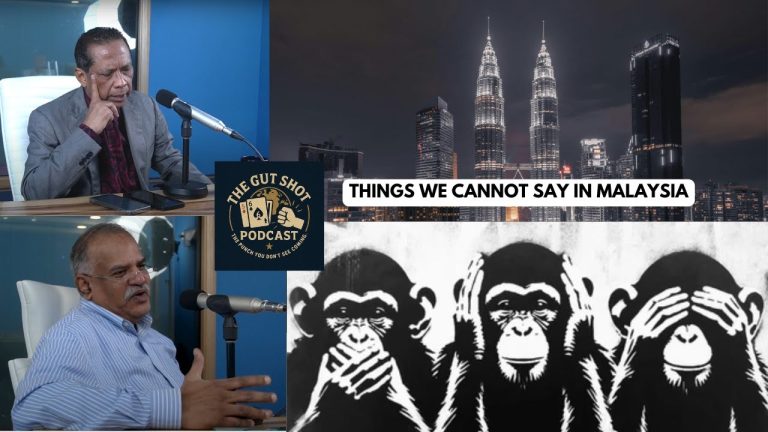
Our conversation between Syed and Sam on the things we cannot say in Malaysia, the why and the history of the laws behind them and its impact on our development. How do we change.
Welcome back to The Gut Shot Podcast! We are Shamsul and Sewali, and in this explosive episode, "Things We Cannot Say in Malaysia," we dive deep into the oppressive web of legislation designed not to protect you, but to control your very mind.
We firmly believe that controlling speech is, in essence, controlling thought. Our politicians are playing a losing game by relying on over-legislation and over-regulation because times have changed, and the younger generation rejects these archaic methods. These laws, which are often vague, broad, and implemented arbitrarily, fail to deliver measurable justice, ultimately costing politicians votes.
We name and shame the "Big Brother" laws still active today: the big daddy Sedition Act, along with Sections 233 and 211 of the MCMC Act (regulating social media), the outdated Printing Presses Act, and laws that criminalize the publication and discussion of religious texts, specifically concerning Islam. These acts govern expression and thought, essentially controlling the people’s brains from functioning.
If Malaysia truly wants to be an advanced society, we must look at global standards; countries like Britain, Australia, and New Zealand abolished the Sedition Act years ago as their societies matured. When you stifle thinking, you extinguish creativity—the "software" necessary for advancement. We question loudly: Who truly benefits from prolonging this mind control? It's not you, the citizen. Politicians rely on these unpopular laws for their own gain, but this reliance is now leading to them getting kicked out of office faster than ever.
We reveal the true, shocking history of the Sedition Act, which the British colonial power enacted in 1948—before Malaysia's independence—not for the King or country, but purely to safeguard British commercial interests after the scare caused by Sukarno’s successful independence war against the Dutch and British. What is truly astounding is that after independence in 1957, we embraced this oppressive colonial act, effectively transferring colonialism from the British to our own local leaders.
We challenge the unfounded political fears that abolishing these laws will lead to chaos, pointing out that abolishing the Internal Security Act (ISA) did not end the world. We explore the sensitive 'Three Rs'—Race, Religion, and Rulers—and demonstrate how religion (Islam) is legislated and regulated through certifications, making discussions on theological issues a potential criminal offence. We stress that a crime should be tangible, not simply thinking or discussing a subject.
We finish by celebrating what Malaysia truly is: a super peaceful country where races interact safely, a "Norman Rockwell" scenario that should negate the supposed need for these excessive controls. These controls have outlived their usefulness and are now a liability for politicians who mistakenly believe they benefit from playing up non-existent issues. We give you the key insight: when you stop people from having discourse, the bad ideas win out. Don't miss this crucial conversation about reclaiming your freedom of thought!
——————————————————————————–
Ready to challenge the status quo?
Here are the critical moments you need to see:
• [0:00] The Losing Game of Mind Control
• [2:15] The Vague Big Brother Laws Still Haunting You
• [4:30] Why Advanced Countries Ditch Thought Control (And We Haven't)
• [7:00] Who's Getting Rich Off Your Silence?
• [10:00] The Shocking Colonial Origin of the Sedition Act (It's About Money, Not God or Country)
• [15:00] When Thinking Becomes a Criminal Act in Malaysia (The Regulated Three Rs)
• [19:00] The Great Lie: Is Our Society Too Fragile for Freedom?
Many thanks to CITYPlus for their collaboration with The Gutshot Podcast, in whose studio this conversation was recorded. CITYPlus is Malaysia's first Chinese business radio station, dedicated to delivering in-depth analysis on local and international current affairs, markets, and businesses.
Jump to chapter 8 chapters
- 0:00 Mind Control and Political Over-Regulation
- 3:43 Big Brother Laws in Malaysia
- 14:37 Colonial Origins of the Sedition Act
- 31:50 Unfounded Fears and Regulating the 3Rs
- 40:36 Ideological Bans, Quotas, and Societal Maturity
- 54:23 Reform Platforms and Two-Term Limits
- 1:09:36 Technology, Defamation Laws, and Public Scrutiny
- 1:22:43 The Era of Throwing Politicians Out
Auto-generated from YouTube captions. Timestamps link to the video.
Ladies and gentlemen, welcome back to the Gutshot podcast. I'm your host Shamsul. Sam are back with me, my buddy, my friend. Hi, Sewali. How are you, sir?
Good morning. Very well. Fine. Rainy today. Ready today. Okay. Um, today we're going to talk freedom of speech. We are going to talk about things that we cannot talk in Malaysia apparently. Right. I'm just boggles my mind. Why do our political leaders and politicians think that stopping us from talking or writing or even sometimes even thinking uh this sort of thing uh whatever we want uh is a is problematic so to speak and how we as uh a people should actually make an effort to ensure that we change this. So site let's start off kick the ball rolling. I agree with you uh uh 100%.
So I'd like to so maybe I'll start today's uh discussion with my closing line. Sure. Um controlling speech uh basically controlling thought people's thinking process controlling speech uh will cost the politicians votes. This is a losing game. uh going down this path of u over over legislation and overregulation of writing, speaking, talking, basically thinking will not win you elections anymore. You will get kicked out faster because uh times have changed. This is 21st century. Uh younger generations have grown up who don't understand all these archaic old types of controlling this,
controlling that. I'm talking about freedom of speech and expression through laws you know through laws that are that are often vague you know uh wide ranging broad scope of laws which sound almost the way they are implemented it it is not precise not objective it sounds almost it looks almost arbitrary. So what exactly is uh you know law is supposed to deliver justice. So uh what is the measure of justice which they can deliver is highly debatable when they have vague laws which which uh uh which cannot be quantified. Why why are they vague? Why? Because you you cannot
quantify freedom of speech bro. You cannot measure you cannot measure freedom of speech. So you know in science rule number one is things have to be measurable. Only then you know what you have achieved. So if you can't measure something and then you make laws to regulate it and to control it, uh you are basically you're doing something that is not measurable. So that always creates uh doubt and unhappiness. And to the politicians, doubt and unhappiness causes you cost you votes. You lose elections. That's my opening.
But I mean people whether you whether you legislate or you don't legislate especially in today's society right where um unless you're going to ban this little uh particular instrument right you're not going to be able to stop people from talking anymore.
Nope. Yep. So but let's let's just pin a bit. Okay. in our country in Malaysia. What are the laws we're talking about? Let's just quickly uh um mention that
what are the big brother laws that big brother laws in Malaysia. Yeah. Well, you have the the big daddy of all it's the sedition act. Okay. Sedition act is big daddy number one. Following close behind is uh a portion a portion not all a portion of this new well new means it's uh the MCMC act the multimedia multidia commission whatever act multimedia something act
I think uh there's a certain which regulates what you can put on your on on the on social media a certain uh section 233 is the one that has been flagged uh a lot and a bit of something else called a section 211 Uh these are the two we used to have the internal security act but that was more of a security act uh that has been abolished.
I have said before I didn't fully agree with abolishing the ISA from a purely from a security point of view. Uh uh the other laws other than sedition act you have the we still have this printing presses act which governs you know the newspapers and printed stuff also very archaic because now everything is online uh but it is still there you have uh one more is the for Muslims uh you have this um it's it's there is an act where they regulate the printing, publication of religious texts, religious works, religious writing, be translations of Quran for example or any
book that touches on religion, it can be governed by this act. When I say govern means it can be criminalized. You write something that is disagreeable to the laws of the land as defined by those acts, you can be held liable and you can be punished under law. So
does that include the blasphemy blasphemy as well? I know blasphemy is is that is part of faith your your your daily practice like a like a person who doesn't attend Friday prayers three weeks in a row. Those are offenses under the well in some states offenses under the Sharia criminal enactments. But I'm talking about writing
writing and publication of Islamic text Islamic material right they have an act that governs that. So the these are the acts that we have in the country that govern basically freedom of thought, freedom of expression. You know with this uh they basically can control what you say and what you think.
I like to use the word freedom of thought because whatever you say, whatever you write comes from from your thought. You're basically controlling the people's brain from functioning. That's what is happening.
So I if I may just say a bit moreh. Yeah sure. uh we have had these kind of acts throughout history in a lot of countries but as time goes on as societies mature and become more advanced then they learn to do away with this kind of regulations for example sedition act sedition act has been around for a long time you know the British are famous for their sedition act but they abolished it they abolished it in in stages years ago I think even in the beginning of the last century they were already uh watering it down in Britain and uh Australia But finally the
final act where they totally abolished it happened quite recently around 2009 2010 around there. Britain, Australia, New Zealand the the the Commonwealth uh countries the main uh commonwealth countries the white populated countries they abolish the sedition act. So you find that I think in India there's no sedation act for a long time. As societies mature you know and people become more aware more educated the society itself therefore there's no need for this kind of uh overregulation over control of uh of thought and freedom of speech especially acts like sedition act
because there's a history behind all these kind of uh uh laws and there is there's always some history we'll talk about the sedition act in in a while but you know last time we were saying that last time I don't know if they're still saying it or not we wanted to be an advanced country you know by 2020
2020 what's the day today I I I don't know so I I'm almost going to say wawasan 2020 my ass so go ahead so one of the uh one of the measures of success that we would have arrived at as an advanced society is that not only the highways and the skyscrapers and you know all those tangible things we see around us the the development the economic advancement but also the the social advancement the social indexes in the country. One of which is freedom of uh speech, freedom of thought. Surely if you want to be an advanced country, people should be mature enough to be able to say what
they want to say and think about what they want to think. Why do you need someone else sitting above them? Most likely a politician who are usually, you know, less qualified and they decide to regulate what people can think. I use the word think. They're basically telling you what you can think about because before you speak you got to think about it. They're basically telling us how we can use our minds. It's mind control big brother. That's what it is.
So are we so are we an advanced society? Are we a modern society if we still need rules and regulations where somebody else a politician most likely tells us what to think, how to think, what you can think about.
We are not. If you were to ask me that question, we are not because why? You can have the hardware um you can have a gleaming infrastructure, right? But with the software that you have, you cannot translate that software into uh creativity and one way that you actually bring down creativity is stopping people to think from thinking.
It truly does. Yeah. And and not just that, in my opinion, if you ask me, I mean, well, it may not be their intention to stop creativity, but when you uh douse the the whole place with your carbon dioxide foam, you kill all anything and everything is snuffed out. You know, not only you put out the fire, but you know, the insects, the birds, the bees, everything gets snuffed out all together. But you know you know
carpet bombing this this this conversation actually to me have been going on between us for a long time since I know you you know I mean and and we are still talking because why I think we we don't have our people revoling against this uh this u uh uh what do you call this this this pressure this uh all this this power that is put upon their thought process their way of thinking the way they speak and when you don't allow people to speak and think you don't allow things to change if you ask me that's the whole point they don't want you to change meaning that they don't want you to change them
okay somebody benefits right somebody what you say I agree completely completely but somebody has to benefit from this. So who why I mean obviously uh they want to control what you can think about and what you can say uh because that benefits them. If controlling uh speech and thinking and writing in the country freedom of thought if they control by controlling uh freedom of speech and freedom of thought does not benefit them
they won't do it. They won't do it. all this uh all this you know overregulation over legislation of speech and thought will disappear overnight. The fact that these kinds of laws and regulations exist for so long it simply means that somebody benefits from it. So do you benefit from it? Do I benefit from it? Who benefits from this? So he who benefits is the one who wants to prolong all this. It's as simple as that. But as I said this this has come to pass. This is now off way past shelf life. The politicians somehow don't see it. Now is the age in Malaysia since
2018. This is the age of losing elections. Tomorrow is a Sabah state election. Somebody is going to lose that election. Lose bad. This we are entering now into a phase in our politics where politicians get thrown out of office. And these people don't understand that they are being thrown out of office. They are being thrown out of office because of their over reliance and their uh uh what do you call this prolong prolonging really unpopular legislation rules and laws like what we are discussing about today. The longer these laws and these these uh uh regulations
remain in place the more the more the politicians are going to get kicked out of office. Well, you know what they think the the politicians think or believe what they are protecting is actually they're not protecting you and I
they are not interested at all. No, only their own benefit. Our Yeah. What they are interested number one if you ask me is actually how cushy is the place that they are sitting.
Okay. Exactly. how what is uh the post that they're going to be holding after the election. Someone has to benefit. That's that's the whole thing. They don't give a about you. Somebody has to benefit.
Yeah. So, if we start talking and we start being able to think for ourselves and we are allowed to say things for ourselves, then you are exactly right. You know, uh which is they're going to get thrown out.
Exactly. And this is uh this is basically the thesis that that that uh that this whole conversation hinges on, you know. And if you ask me, okay, um are we a first world country? We are going we're not going to get there. We are never going to get there. Number one, if we still hold on to all this legislation and we still have politicians that are holding on to this kind of uh uh uh authoritarian uh u uh mind control. Exactly. Now, what do we do about it? Perhaps uh we should uh we can uh we can look at the history of some of this legislation. Uh I have uh dug up uh some interesting
uh history behind the sedition act. This is entirely my own my own view. Yeah. Uh this the British the British the colonial British they enacted the British the sedition act in uh 1948. 1948 at that time there was no independent Malaysia. We would not become independent until 1957. 1948 the British enacted the sedition act. Uh it was there was some changes made to it in 1960. So now we have the Malaysian one is a sedition act 1960 and I think there were some other changes made later. But why did the British um uh introduce the sedition act in 1948
uh just after the second world war? Uh why not 1938 or 1925? They were here for a long time. I uh I don't blame it. I attribute it to uh the Dutch and uh President Sukarno. The Dutch the Dutch who were the colonial power in Indonesia and President Sukarno who led Indonesia to independence. 1945 Second World War ended the Japanese surrendered. So as soon as the Japanese surrendered 1945 these dates are are important because 45 Japanese surrendered 46 AMNO was formed 46 was also the war of independence in Indonesia. Uh 48 was the sedition act and 48 also 4849 was the year the Dutch
were basically completely left Indonesia. So 45 was uh end of second world war Japanese surrendered. So the British uh came back to Malaya to repossess uh the country. They landed in Port Nixon, the famous operation zipper. It was supposed to invade Malaya, but then because of the atomic bomb, the Japanese surrendered. So it was uh the British army, the British Indian army landed in Malaya to re retake possession of Malaya. Now across the across the water across that ditch in uh in Indonesia, Sukarno and Mohammad Hata declared independence. Immediately after the Japanese
surrendered, they declared independence and said Indonesia is a sovereign nation. Of course, the colonial powers were shocked. You how you you can't have this as Asiatics declaring independence. So, uh the Dutch didn't agree and then the fighting started. So the the Indonesian, it was actually a real war. Indonesian war of independence started after the Japanese surrender. But you see the thing is there were no Dutch in Indonesia anymore cuz all the Dutch
Dutch got thrown out. They got thrown out. They ran away actually and some were locked up by the Japanese in in in prison. But then there was there was no Dutch presence. So the British told the Dutch or the Dutch asked the British because they just landed all their divisions of you know British Indian soldiers in Port Dixon in Malaya. Can you do us a favor and and help us repossess you know like car repossess help us repossess uh Indonesia for us which the British did. So the British Indian army uh from Malaya they crossed over into Sumatra and Java and they actually started fighting against
Sukarno's uh Indonesian freedom fighters. They call them rebels. There was a real shooting war. So uh a large part of the British army was the Indian troops. You have the the the Sikhs, the Punjabis, the Baluch, the Rajputs, Maratas. Uh no no paratas. Yeah. the 23rd 23rd Indian the famous 23rd Indian division all these divisions they went over to Indonesia and they actually there was street fighting there was a famous battle of Surabaya I think 1946 October to November where thousands were killed thousands of Indonesians were killed and also up to a thousand British
troops were killed a big fight that war and that fighting ended on November the 10th and until today until today November 10th is National Warriors Day in Indonesia, Haralawan until today. But but anyway, uh after that that huge battle in Suraya, the British realized that they're not going to win this war. They were shocked. The British also the British government was almost bankrupt after Second World War.
They didn't want to go from, you know, from the frying pan again into another frying pan or into the fire. So the British told the Dutch, uh we're not going to do this for you. you have to make your peace with the Indonesians. So 1946 the Dutch signed a treaty with Indonesia. Indonesia became independent republic and the Dutch took a couple of years to pack up everything and they left. So Indonesia became a sovereign sovereign nation. Okay. What happened was when the when Socarno announced the independence of Indonesia in 1945, major earthquakes went around Asia
because India was still trying to get their independence. 1947h. Yep. The Chinese people were fighting for the independence. Everybody in Malaya, people were all over Asia in in Myanmar, everyone was agitating for independence and Sukarno was the first Asian leader first after second world war to defeat two colonial powers, the British and the Dutch. He militarily defeated them and he won his independence. So this created panic in the British and also the Americans that uh just after second world war when they needed their colonial colonies for revenue it's all about money isn't
it and here we have so leading this Asian people and successfully throwing out a colonial power so they panicked and uh true enough at that time in Malaya there was this cow muda malayu uh and other Malay groups, nationalist groups who actually send people to fight with Sukarno in Indonesia. They crossed the streets of Mala. They they took part in action in Sumatra, in Java, from from Malaya and also from Singapore. There were Indians in Malaya at the time who who were also agitating for Indian independence in India who also supported Sokaro's fight against the British and
Chinese Chinese from Malaya and also from Singapore and uh there was gun running gun running from Singapore and parts of Malaya Singapore mostly to help the Indonesian uh rebels. I have a bit of personal history here. One of my uncles was a gun runner at that time to the Indonesian rebels. He was arrested and thrown in jail by the British. He's passed away. So it was a time when after second world war all the Asian peoples were wanting for independence. And Indonesia proved that twice the British had been kicked out. Once when the Japanese invaded Asia, Malaya,
Indonesia, they chased away the British, they chased away the Dutch. the the Asian people saw that the white man can be defeated. The second time was when Sukarno defeated the British British uh in Surabaya in Indonesia. So this created a lot of panic in the colonial colonial powers especially British. So 1946 uh 1948 the Dutch left. So in 1948 the British enacted the sedition act and the sedition act it's uh you know inciting you know the the the what it says now inciting hatred contempt against any ruler or any government at that time was the king
against any ruler any it was it was referring to their king that timeh so I mean this is camouflage what what it really I mean they need if they need to say something they need to use somebody's name So okay they say the king the ruler the government basically it was to protect British commercial interests to protect their money. You see after second world war Britain was quite bankrupt. They were broke and uh within a within a short time after second world war Malaysia Malaya started producing rubber and tin back to normal production. and it went up quite fast and uh Malaya was the largest
contributor of revenue to the British Empire in the entire empire you know we were ahead of India after the second world war so the British really needed the revenue from Malaya to revive their own economy
actually I'm not surprised if you ask me sometimes I think that India was a consumption for uh for British production of textile that totally deindustrializ ize India if you ask me but go on.
Yeah. Yeah. So, so this was the the the the the macro situation going on that the geopolitics at the time. The British were in a in a in a bad situation. So, you suddenly have a guy like Sarno coming up and beating the crap out of the British soldiers and the British Empire, you know, and getting independence for Indonesia through violent means. It spooked them. So, they enacted the Sedition Act in 1948. Also two years before 1946 AMNU had been formed. Now AMNU let's not uh get we have to understand AMU it's
that's United Malay national organization that held power for 60 years. That name is very important. It's United Malay's national organization. It is actually an elomeration of many many Malay groups who were existing in Malaya at that time. various
sports sports associations, women's clubs, you know, they all got together and set up AMO. It was it was a coming together of almost the entire Malay people throughout the country. Yeah. So, it was at that time it was not a a single political party. It was not a unitary political party yet. It was a compilation coming together of various Malay NOS's groups and all that to fight for their rights. So Amno was found in 1946 to ask for independence. Sedition Act came into power 1948. So the British were already afraid. They knew that if they let people like this
have their free say and going around agitating you know people or or motivating people throughout the country you know it might cause them to lose their their colony. So uh 48 was the was the uh sedition act and then uh the communist insurgency also started in 48 but that one is a slightly different story but it is it did it also had an effect on the British. The net result is that the British hung on to Malaya for another 9 years until 1957 when they gave us our independence. Now the funny thing is from 48 to 57 there were a lot of independence movements in in Malaya AMU not only amu
many others they were all uh urging and agitating for independence from the British and they were all anti the sedition act because the sedition act that's funny is it yeah was oppressive or it was a colonial act is it 100% is a colonial act
the the aim and purpose of the act is only one to suppress and oppress the people in the colony so that British interests, commercial interests will be safeguarded. Somebody had to benefit. The British benefited. But lo and behold, 31st of August, midnight 1957. The moment that the clock moved past 12:00, we became independent Malaysia and the Sedition Act became ours. We we took it and we kept it. the British the colonial sedition act which everybody didn't like before independence suddenly now became part of our laws and it is there until today we still have it
well that's the federation of uh Malaya with uh and then then then the formation of Malaysia yeah I mean with Sabasawa and Singapore the law time the law has held
and it's held throughout the formation so a law that was you know condemned condemned and rightly condemned and uh by so many people before our independence when we were agitating for independence from the British when so many people did not like the sedition act we still maintain it
can we conclude then basically what we've done is actually uh transfer colonialism from uh the British to our own brown people and uh you know yellow people and whatever the people in any state that that is holding to power and that's basically it. We just transfer from to be one from one colonizer to another colonizer.
Well, there's a there's a there's a major there's a major difference. We are a democracy. Every 5 years we vote. You vote, I vote, my father voted. Everybody voted. We're a democracy. So, by the people, of the people, for the people, it's us. Let's poke ourselves. Let's poke ourselves in the eye.
Our people all the time the only thing they do is uh just blame others. I now I think we got it right. It's the people. It's our fault. It's always our fault. We are a democracy. Something goes wrong it is our fault. Don't point fingers at anybody else. Why the politicians messing up so much? We allow them. It's our fault. Democracy is our fault. This because of us. We did not change. But it's good for us to understand where these things come from. So there was a history to the Sedition Act. The British put in place the Sedition Act after SOarno beat the crap out of them because they wanted to
safeguard their commercial interest for for for what? For God, for king, for country, all that is just hogwash, you know. It's just it's just uh uh the I haven't heard that in a long time. That's hogwash indeed.
Just a marketing hype. The real reason is British commercial interest money. Somebody's money. Somebody has to benefit from all this. So that's that's the bottom line. But we are an independent nation and more importantly we are a free people. We are we have our own mind. We can think and we vote at elections. Why do we have why do we still keep voting for this? Now it is becoming clear because political power has been lost by a ruling coalition that lasted 63 years. As you mentioned just now after 63 years the ruling coalition lost their political power. They were
kicked out. Among the reasons is because definitely among the reasons because of people do not like all these archaic and old laws which do not serve the benefit of the people does not serve any purpose for them or does not serve much purpose for them. So that's why the politician politicians are losing elections. Now you stand on your table if you're a politician and you say I'm going to I'm in favor of the sedition act. I think you lose more votes than win any votes. So the the situation has changed now and uh the politicians have to be aware of this
but they really don't care. You are selling the wrong product. Well I agree with you that you they are selling the wrong product. I mean the problem we keep getting pushed back is actually uh people say oh but then you can't form a government and therefore how do we make changes?
I believe there are those vested interests who like this kind of legis legislation. I'll tell you in in 2018 one of the platforms of the PH Pakistan Harapan at that time under Dr. Mahi's leadership was to abolish the sedition act. it is in the manifesto. Then they won the elections and they did they abolished well they didn't abolish they sort of put it in cold storage. They said we will freeze the sedition act and so it was like it it will not be acted upon and implemented anymore. They said that
the minister in charge was Gobin Singh Dio but that only lasted for like a few weeks. Uh some people around Dr. Mahade who was prime minister at the time Dr. Mahade's 2.0 administration some people around him some advisers um I I I I know some of them they were the ones who were against this uh abolishing of the sedition act. I'll say that these are the people who are the pro- katuan type. They didn't like the idea that the sedition act would be abolished because they feared that ultimately their position will be threatened because you know of the various policies we have in this country
and all that. They want to maintain that. Uh they don't like dissent. They don't like people asking too many questions you know questioning the status quo basically. Yeah. So some people but this is this is an unfounded fear. It's an unfounded fear. It is an unfounded belief. You see we have abolished the internal
we have we have abolished the internal security act did the world come to an end it's unfounded fear for the people for everybody actually for them that's why I want to I want to tell them we have abolished the internal security act has it has it brought the end of the world to the country or for anyone here no so these are just fears that you you are just you know holding on to old ways of thinking without it it doesn't affect anybody body I don't if you abolish the sedation act tomorrow I don't think it is going to unseat the existing status quo in the country I don't think so we
are all going to uh have high regard and love the Malay rulers for example the Malay rulers we have nine Malay rulers they are major part of the psyche especially Malay psyche and especially in the states where they come from in each state the people in their states They really adore the rulers because that is our our culture for a long time.
You don't need a sedition act know to keep the rulers in power. If some of if some people are thinking along those lines, no nothing will change. But there are other people. They're not rulers. They are the other groups, you know, who benefit from the situation. They like uh legislation like this. They like the control mechanisms. It benefits them. Just like the British, they enacted the Sedition Act because to protect British commercial interest, King George or King Edward was too busy in London.
Well, we have this we have this um um we have this saying here, remember there are the three Rs that we cannot talk about. Expound on that, brother. Well,
since you are since we are on that subject, these are sensitive issues. Uh race, religion, and one more R which we are not going to talk about even. So I mean race is part of the conversation every day. Every other day there's something racial. People don't use the word I'm going to talk about race today. There's no such thing. But you know people discuss freely about issues that ultimately touch on race. I don't think it's a major issue in Malaysia. Every morning when we get up and you go out of your door, you know what race you are and you know what race is your
neighbor. So you I mean race is everywhere. It doesn't affect us down on the street. The country is super peaceful in this country. You can go out anytime anywhere. You can go out at 2:00 a.m. 3:00 a.m. 4. Girls can walk out on their own anywhere. And you know and it it is a culture now, isn't it? 3:00 all the mama shops are full. People are having ming at at 2 3:00 in the morning. You you can't even get that in New York City 24hour.
So this is Malaysia you know we are safe our society our all our races are all safe with each other no issue. So this thing about you know race it is only when the politicians want to play it out they and especially when they play up things that don't exist like ham sandwich remember was it chicken ham or something? Uh, and then stuff like that. They play up, they play things up that don't exist because these are politicians. They think it benefits them. They're going to get the votes. They are mistaken. This these issues are beyond shelf life. Religion is the other issue. Religion uh is
sensitive because of the laws because religion is regulated. Religion, I'm talking about Islam. Islam is regulated. Islam is legislated. You cannot speak about religion about Islam. I'm talking about uh uh theological issues uh issues related uh specific issues related to belief not general statements like we are talking now generally about Islam but if you want to go into details of rituals practices and beliefs then you need to be certified you need to have a letter of certification.
I don't remember that growing up. uh well they have it they have been around for a long time and if you do not have a certification from some religious state authority you can be held liable you can be you can be uh arrested and tried in court and uh you can be punished so religion is uh uh Islam is legislated and regulated not Christianity not Hinduism you know anyone if you are a Christian you can print any book about Christianity tomorrow you know there's no we have no governing authority on Christianity in this country or or anywhere in the world for that matter.
But if you are a writer or an author and you write something about Islam, you write a a book about Islam and and it's not properly certified, you can be held liable. So the discourse on Islamic issues, Islamic religious issues is controlled in the country. So the government legislates it. They do not want someone coming up and saying things which is not acceptable to the orthodoxy. You know they do not want some well they will call it deviant groups now okay and they do not want some deviant groups coming up and saying all kinds of wild wild things about Islam and then
assembling you know following you they start having their own cult and things like that so in other countries they don't do this they do not control religion like this if somebody wants to say something they don't care I'm talking about Islamic countries like Indonesia even Pakistan uh Middle East I'm not so sure but a lot of countries Islamic countries they don't care you know if you want to talk about your religion whatever your religion is go ahead uh they don't have legislation they don't agree they don't agree but they don't have legislation in our country we have legislation so uh
bottom line is this is another area of u of discourse dialogue discussion which is uh governed by criminal laws that's what I'm trying to say here governed by criminal laws Your beliefs can be criminalized just like under sedition act and MCMC act. Your thoughts can be criminalized. Your thinking, you know, when we get up in the morning, our brain starts thinking. It can be a criminal act. Just thinking can be a criminal act. So to me, this is ridiculous. A crime should be something that is physical, tangible. You stole money, right? You took something that doesn't belong to
you. You threatened someone with violence that should be a crime. Or you somebody was giving a speech on a stage campaign political rally. A politician is talking on the stage. The other group from the other party comes and throws their their slipper, throws their shoe or throws stones at the guy. Those should be of course those are offenses, criminal offenses which our law deals with.
But you don't go beyond that and start controlling what people can think. Yeah. Freedom of speech is actually freedom of thought. Basically, they're telling you we we are controlling what your brain can think and cannot think about. You're controlling your mind.
That's what And this is very bad for for any society, you know. Uh as long as the guy doesn't burn the house down or set the place on fire, does not steal a couple of billion ringit and put it into his account, stuff like that. Uh there's no need to criminalize discussion. No, no matter how much you you dislike it.
Yes. I personally wish that uh remember the old days when the communists were outlawed. I do not disagree that the communists were outlawed because they they were prone to violence. They wanted to they they said they declared we're not going to give up our arms arm struggle. So of course they were outlawed. But I have a view that the communist ideology, the communist thinking, the communist literature, we should have allowed that to be read in this country, we should have read it, questioned it, criticized it and debated it and killed the horse permanently because it was a flawed philosophy. I
mean now on hindsight, we know communism has failed. There are no more communist countries in the world. Even China is not really communist anymore. only Korea even Cuba is now I think I don't know where they are right now well you're talking about even Russia you're basically talking about oligarchy
so communism has collapsed on itself you know I now on hindsight but I mean yeah hindsight visav the communist countries but if we had allowed open discussion discourse debate and questioning and critique of communist ideology I don't think they would have gained any traction
I from day one you know even when I was a teenager I started reading about communism I knew they were flawed. They were to they were totally flawed. When you say the state shall shall own all the assets, I went like, "Hey, no, I want to own some things too." When when you try to stop people from from from thinking, you try to stop people from reading, you try to stop people from having a discourse, actually um the bad ideas win out if you ask me, you know, because um it doesn't get the bad ideas get entrenched into thoughts. Um I mean let's talk about in that sense
let's I mean talk about race right I mean we have quota system that still exists until today um there is I don't know whether that is legislated or it is uh it it it um it trickles down from legislation into a procedure that get entrenched in um tertiary education. It has become it has become entrenched is uh it is just a practice. For example, I I have some personal knowledge of this the 30% uh equity ownership
right u because I I this I got it directly from the late uh tund. Okay. Uh he said he told me that they don't know where the 30% that came from. They do not know it just somehow somebody came up and then he got stuck
but there was no debate. There was no justification. No one knows exactly how this 30% figure came out. Why? Why not 40%, why not 25%, why not 33%. Should be 33 is near 1/3. But uh nobody knows. So it just happened to to it got somebody maybe somebody said it it came along the way it got written down as then it become solidified written in stone. So that is just a policy thing that that has become entrenched and now it has stayed there. It's no more in place now. I mean a lot of it has been loosened but criticizing it too much or arguing over it too much or or create or agitating
the word is agitating agitating too much over this this particular policy that can be caught under a sedition act. Really if if you if you create according to the act if you use it to create uh you know animosity and hatreds you know or racial feelings
how are you going to define that hatred that that is a debatable and dubious part but then it can be it can be caught under the sedition not the percentage itself because as you say the percentage itself 30% for example it's not it's not by law it's not really written down anywhere it's something that just happened along the way and now it became entrenched but dwelling on it or using it to you know stir up people's emotions that then that that can be caught under the sedition act. So those are two separate issues. The the the question is uh which we want
to know is why the fear that discussing these things openly uh will necessarily always take us down this this feared uh breakdown of law and order you know massive upheavalss and all that just because we we discuss something you know we start talking about issues this there's this great fear are we that immature as a society
are we that fragile fragile society and are we um are we that childish? Yeah. Like little small kids arguing. The moment that you discuss certain things that it can get out of control in no time. I do not know maybe 50 years ago the situation in the country was uh was different. I mean it was maybe there had to be more uh monitoring and control to keep the peace so to speak. But this is the 21st century and everything has got a shelf life. Everything has got an expiry date. People grow up, societies grow up, our entire country has grown up. Uh some of these uh these excessive controls that
maybe they they appeared uh necessary or you know justifiable 50 years ago, 40 years ago. I think they have outlived their usefulness and so to hold on to it now becomes a liability. It becomes a burden on the people and it becomes a liability on the politicians. That's what I'm trying to say here. It's it's becoming a liability for the politicians. People don't care about this anymore. People don't like it anymore. 50 years ago with Sukarno fighting a war
and all that maybe people say let's have these laws around to keep the peace but uh the situation has changed greatly now. I mean, you rightly put. I think one of the special things about Malaysia, I think a lot of people that come over here, my friends from overseas, when they come over here, they see the the that's one thing that they were they get very uh impressed with is our development. Even if you go um into uh uh into rural areas, you got relatively good roads. So where states don't have good roads, the question for the people is to ask what are your state
politicians doing. Okay, that is one. But uh the other thing that actually is very impressive of us and I've traveled all over the world, you've traveled all over the world and state. We are a very safe country. Our people don't walk and worry if I see u another race. Okay. It doesn't even cross my mind I'm going to have a problem. You know, I doesn't even cross my mind that I see another uh person of a different skin color or wearing a different thing that I'm going to get worried that I'm going to get robbed or I'm going to get threatened. We don't care. We don't have that.
Do you I mean I'm sure you've heard of Norman Rockwell, the famous American painter. Yeah, sure. 1950sh. He used to go around painting everyday scenes of small town America.
Yeah. You know, the milkman delivering the milk in the morning. Yes. Uh the kid getting the big yellow school bus to go to school, carrying the lunch box. So Norman Rockmill Yeah. was a famous painter. He captured American life. Uh if you want to see Norman Rockwell in Malaysia,
you go to our small towns, you know. Yes. Yes. Yes. Yes. And especially uh because I used to do this before. I used to travel around the country. If you drive through our small towns at like after midnight, you know, sometimes I used to go to Pahang and you drive to Bent and K or even in Perah at 2:00 in the morning, you'll always see there'll be some little restaurant open, you know, at 2:00 in the morning and the usual Malaysian things maybe selling some me roti chana. So there'll be a couple of guys there sitting there or three people and having a having a tea or drink
eating something. Of course, there'll be one guy taking care of the place and outside you must have that stray dog, you know that stray dog sitting there quietly. It's a completely peaceful situation, you know, and I've seen this throughout the country.
Well, you know, I mean just this I mean this is the classic Norman Rockwell kind of of a scenario. Where are you going to go in the rest of the world? I would dare to say this.
Syria where you know you just get 24-hour restaurants open you know. No it's a peaceful country anytime. It's a super peaceful country. Malaysia we are. So what is this are these politicians so scared about except for protecting their colon their colony and us being colonized.
So they benefit there are benefits for them. I don't want to venture too far into what exactly they benefit because the subject today is the things that we cannot talk about. So let's not talk too much about them. But uh obviously it benefits them. They think they think up to 208 when uh Barisan National lost the two/3s majority they lost power 2018 up to 20008 maybe it worked but since 20008 Malaysian politics has entered into the era of losing elections Malaysian politicians are now in the age of getting kicked out of office maximum one term so this is a situation now
in our country and I hope the politicians are listening. Among the reasons many there are many reasons why people kick you out of office all politicians this is also one of them this this OCD obsessive
compulsive disorder this is OCD OCD this obsessive compulsive disorder to control other people's thought processes sedition act MCMC act this act that act it is just OCD I want to control what you think. Your writing and your speaking is a result of your thinking. So I I want to control what goes on inside your mind.
This is mind control. Why? Because it benefits me. I'm a politician. They do not realize that this is now way past shelf life. So if you want to if you want to lose the elections, if you're a politician, if you want to lose the elections, if you want to get kicked out, go ahead.
Make my day. go ahead, you go and implement all these OCD kind of laws, obsessive compulsive disorder kind of rules and regulations, you're going to get kicked out. This is the 21st century. I think one of the biggest problem we face to a certain extent is actually successful people uh or people who are able to think does not go into politics. All right? And the reason why people who can think does not go into politics is because of the political party system. The political party system are there right now after you know so many years of more than 60 years of evolution in
this country and I think also everywhere where there is an entrenched political party system. It only allows in people who are going to have the same thinking or will not challenge the leadership. If you challenge the leadership, they kick you out. So if you ask me maybe say the political party system itself is broken and therefore what you just said is actually this uh controlling freedom of speech has uh that's basically a symptom of the disease. You know the disease is actually they don't want people who's going to take their place because they benefit
self-preservation. Exactly. So you know I think we have already seen like what you say we going we we we going on hung parliament. Uh
that's that's because the voters have matured. Yeah. The voters have grown up. So you may we may be looking at another evolution coming up you know I they have the politicians have to change
well they if they don't change they get kicked out let's let's see tomorrow tomorrow is Sabah Saba state election tomorrow is Sabah state election coming yeah we we'll have a look as it is now if if I may as it is now nobody I was listening to uh another analysis yesterday no one can can uh predict what exactly is going to happen in Sabah meaning it's not like like last time 10 years 15 years ago or 20 years ago you know where more or less you'll know who's going to win or who's going to lose that is now no more the situation. So the the times have changed
now people are tired people are fed up and what and the subject we're discussing today this control of freedom of thought and freedom of speech all this is part and parcel of the less the the the fatigue the people are fatigued with all these things that have been going on in the country for all these years people are tired so uh if if the politicians have any common sense they should realize that if you are going to stick along this this this uh path without any changeh uh you you're going to have very short careers.
Are you sure the politicians have common sense? Very short careers. No, they don't have any common sense. Uh they're going to have very short careers. That's it. So the politicians better buckle up. I I I almost want to tell people to just I um you know
what what I would like the politicians to do is I hope there's some clever political party somewhere in our country who will make abolishing the sedition act and uh amending the MCMC act
uh as a platform which we did before 2018 it was in our manifesto for Pakistan harapan oh and then ton say it's only a manifesto that's it you know so that's bad and then and then ton got kicked out So I hope that some some clever politician who has some common sense will decide again to make this sedition act and MCMC act and all the other acts this controlling control freak kind of actsuh that we abolish it. Uh worst case we amend it. The politicians should make this part of their platform. If if if there any politicians out there who you know who woke up in a blur this morning
don't know what to do uh take this up. This is a free it's lowhanging fruit. Lowhanging fruit. Promise the people if I if I win the elections I'm going to abolish sedition act. I'm going to amend the MCMC act. I'm going to basically I'm going to free up freedom of thought and speech in the country. Make this your own personal platform. People will vote for you.
Well, here's the other thing actually in terms of u in terms of being able to talk whatever we want to talk about, right? Um I mean the the discourse itself is pretty immature if you ask me. I mean, if you if if I mean, the reason why I started this conversation and having people like, you know, us talking is I'm sick and tired of listening to politician talk on their podcasts or coming on and have their uh uh their their their proxies talking and without be not talking substantive. items, right? economic policies. For example, keep talking about um uh taxation, talking about um how to uh
how how to actually extract more money from people who are creating uh uh the economy itself and then giving away money to people who doesn't produce anything you know so these are the issues that actually need to be talked about by politicians and actually people who can contribute and I think we need more citizens to come up and contribute
into the political arena we need more conversation we need more dialogue but I mean I personally I I believe in almost total freedom of speech. I don't believe in any kind of control. People should be able to say what they want to say.
But whoever likes uh slapstick comedy, there'll be people who like slapstick comedy. Let them go with it. Other people may like uh uh serious drama or romantic comedies or whatever. Let them go with it. We cannot tell people at what level of thinking they are or they should be. You know, uh it's up to them to decide. That's the whole thing about freedom of speech. You know, people basically people can say and and and whatever they want to say and they can they can like the subjects that whatever excites them. We cannot another person does not have the right to say
that uh you have made the wrong choice or you know your your choice of whatever you're discussing is below me or doesn't concern me. You know that's individual rights. We need to protect that. That's that's uh rule number one. Uh but The most important thing is that there are no there's no there's no such there's no such thing as let's create space for people to talk. That's a wrong approach. You know
do not encroach upon their their right and to say what they want to say. You don't create space for people. You don't create freedom of speech. You know you get out of the way
and don't be an obstacle for people to say what they want to say. uh this is what is the the the approach has to be properly understood the philosophy it's not that I'm giving you space to say what you want to say like you know I am God know with a big beard sitting in the sky hell
no you just get out of the way but that's why I'm so happy that you know we are a democracy and we go and vote every 5 years that the vote is changing now the politicians who hold on to this archaic kind of thinking which is a word used by one of we our past uh presidents of the bar council when she described the the sedition act it's archaic it's way past shelf life you hold on to things like this uh you you you will get removed you will get kicked out at the at the voting at the polls I we're a democracy so the politicians should uh I hope they understand this
but as you said as you said uh they don't seem to have common sense well I think It's about time that actually uh our people elect common sense rather than elect parties because you know I think democracy is chaotic. If you ask me as a businessman I like chaos. Why? Because then there is chaos there is opportunity for me to develop better. If you say everything should stay the same, everything become um um everything are not dynamic, then you're not going to get improvement. Improvement only happen when you make changes and changes is chaotic.
Well, I think the changes are happening now in the country. At long last, I think our democratic system is uh starting to bear fruit, you know, especially since 20008 2018. Uh I hope the pace will pick up. Uh what is happening is in the country now is that politics as a career option is now becoming
it is a career option for them very limited now. It's becoming more limited. It's no more like very very lower. There's no more Dr. Mahade prime minister for 22 years and uh prime minister for 9 years and all that that that is history that's way beyond us. People are fed up of all that. So politics as a career option where you can retire as a politician that has gone out the window. You're not going to have people serving as a member of parliament for 50 years. Do you do you not then if you're going that way do you not think we should have term limits for for for
uh for uh for for parliament? Yes, we should we should have we should have term limits for prime minister and to if you ask me also for members of parliament like what like what Donald Trump is proposing uh congressman 12 years maximum something like that.
Wow. Two terms for president is been a part of the American uh system for a long time which we should have a maximum two terms for the prime minister. Maximum two terms for chief ministers and we should also have maximum two terms for the elected representatives the members of parliament and the members of the state legislature. Maximum two terms after that out let the new blood come in.
You cannot achieve things. I I I I can't help thinking to myself like like this. I mean especially when you talk about member of parliament right or becoming ministers of any kind any job that you stay stagnant at that position more than 8 years you are actually pretty mediocre you know you does not improve you get to be complacent and you stop new talent from taking over
we need change. We need change. And uh something as critical and so uh extremely important. I mean the politician basically says he comes to you and says put place your future in my hands.
Got to excuse me but I'm just wondering that's what my first reaction to that hell. That's what politicians say. You put your entire trust your future in my hands for the next 5 years. Okay, for 5 years maybe I'll trust the guy. Uh but forever or you know of course I can get to vote him out. Every 5 years we go to the polls you can vote for somebody else. But I'm talking about the the guys who are still around after more than two terms because let's say some group of people gave them sufficient votes or there was this uh wheeling and dealing and what do you call this moving the
pieces chess pieces all the horse trading and these guys keep coming back in power. So we need something else to curb this and uh terms on uh uh what do you call this restriction on uh
political office tenure. Tenure. Yeah. Restrict it restricting it to two terms for example for prime minister and and member of parliament that and member of parliament that would would really help this country and solve a lot of our problems. We need new thinking. We need new blood and most importantly we need to send the message to the politicians that you're not going to retire in this job. This is not a retirement scheme.
You know I I know this conversation has gone slightly. It is here to serve the people and uh it's not for your own personal benefit. It's for the people's benefit. Yeah. We have we should talk about this more. Yeah. But I mean you look look at this situation right? If you think about it where do you hone the skill of serving the people? If you ask me, municipal councils, we don't have election at municipal council level, right? So you are not getting young people to actually run for municipalities where they are trained to serve people and if they don't perform, they get
kicked out. And then you go for uh member um uh parliament or assembly and then you probably go for even the senate needs to be elected. You know I I think that if you ask me legislatores legisl legislative body has no experience to govern as executives. I don't know how many people understand this difference or not. Okay? Because if you are a legislature, you better know how to make laws, right? But making laws and running corporation, you know, Elon Musk has this saying that um uh the ultimate uh pos the ultimate running of a corporation is running a country.
That's what running a country is all about. You better know how to run corporations. Okay, we don't have that. So, we need we need uh we need free and uh unfettered speech. We should be able to discuss anything and everything under the sun. There is no fear of the country burning down of all the people running am just because you and I had a discussion about something.
How about how about we should be able to ask anything under the sun. Yeah. Right. That's right. I want to have you and I I want to have a third I want to have a politician here. Uh, I want to have somebody in government, a minister, uh, whatever, an opposition leader, whatever. I don't really care. But if you come here, expect us to grill you like hell. Okay? Do you dare to come here and and and and get a grilling that nobody has ever done in Malaysia? I want to do that.
So, we need to amend the laws. We need to abolish certain laws. Uh we abolished the internal security act. Okay. We kiv the sedition act for a few weeks in 2018. Just put it in coal storage. Uh there is there is a long quite a substantial history of nos and uh various groups and societies urging that the sedition act be abolished. As I said, the sedition act has now all these acts, all these OCD kind of laws, obsessive compulsive disorder, OCD acts where they want to control people, want to control, stifle thinking, stifle speech, criminalize posting a comment on Facebook. On Facebook, I know
criminalize writing something on Facebook. Yeah. I mean like when you sit with your friend and you meet your friend in a coffee shop and have a chitchat uh you know with your friends you may talk A to Z anything under the sun. The technology now allows us to do that in our WhatsApp groups with your friends our family WhatsApp groups your Facebook discussion your Instagrams and Twitter or X they call it. It's basically projecting your your coffee shop conversation with your friends. Oh, our coffee shop conversations are quite racist.
Terribly sedicious. Yeah. Downright uh what do you call this? Yala. It's totally sedicious because it's just coffee shop conversation. But was your intention to burn down the country in your coffee shop conversation?
Were you planning to assassinate anybody in your in your chitchats? No. You don't you you don't have this intention, but it is just discussion, you know, people talking. People should be allowed to say anything they want among themselves. Well, here's the funny part that actually I I I sort of like talk to my American friends who are very so concerned about racism and you know in America especially. Yeah. you know, but here and and and and this is the thing, you know, um I regularly because my group of people being in the the way I am and all that, I have very close
friends who are Chinese, who are Indians, who are uh from Sabah uh or Sawa or you know Malays or whatever and we would be sitting there and I can tell you we are so racist. So the way we talk to each other because why we are all good friends.
Exactly. So you see the the tools that we have today at our disposal this WhatsApps and Facebook and Instagram all these uh it is uh information technology. It just allows us to to exchange views with your friends without having to meet in a coffee shop. Even if your friend is 500 miles away, you can still have that chitchat conversation. Now if somebody takes a screenshot snapshot or actually makes a police report or whatever and then it becomes criminal to me you don't even have contact it doesn't make sense. Now this is the other issue with the with the the act
especially sedition actuh in sedition act when they if they decide to charge you for sedition and make and criminalize what you said uh intent is not necessary your intention you know in uh in law you have this thing called a men's ria amensa means your intention what was your intention the motive behind doing something so in the sedition act your intention is not relevant it is simply whether you said those words or not which uh which have what is called sedicious tendency so who decides that as I said this is not quantifiable you know in science we must
be able to measure the output only then it's scientific if you build a bridge you must be able to measure the strength of the concrete and there are ways of doing it yeah just drawing a picture of it is not going to say it's buildable
if you if you can quantify it then you can measure the success But how do you measure sedicious tendency? This is what is in the in the sedition act. So if they feel that what you have said has got sedicious tendency, it's enough. You can be held liable and you can be sent to jail.
What was your intention? Would did you have a malicious intent? Was it a coffee shop conversation, you know, put into your WhatsApp and and forecasted to 50 other people, 100 other people or in Facebook or whatever? Uh so it went out and the whole world saw it. But bottom line is it is was just your personal conversation. Uh this is where the sedition act has is way behind the development in information technology. They are not they are really Jurassic Park. They are backwards. They they lost touch.
Yeah. I think it's also you're basically telling your neighborh if you talk to your neighbor across the fence and you you know you sp which people do and you know you say all kinds of horrible things about you know whoever. Uh if we get wind of it, we're going to hold you accountable.
It's basically that's what it comes down to. No, I mean we pride ourself to want to either one or some even consider ourself pretty developed. Okay. That's what our politicians keep saying. Okay. So I'm going to take their word for it. All right. Now because you spoke about in essence um uh criticism u what we talk about. Here's the thing about American law, okay? If you are a public figure, okay? In order for you to be able to even, you know, the the don't even talk about politician. If you want to win a defamation case, you better prove malice as a motive. Okay? If you
cannot prove that, and that's so difficult to prove, how are you going to prove motivation? So that is a developed mentality right? That that indeed indeed that is uh actually that is another part of uh our laws that are very archaic. Our
what you just mentioned our liel. Yeah liel and slander. Yeah. Uh we are basically I don't know maybe like a 100 year old these are British laws. We got it from the British where it's too plaintiff friendly. You can people can be sued for liable at the drop of a hat, you know, because the law allows for it. As you were, as you were alluding to alluding to just now in the west, in especially in the US, in Europe,
it's almost impossible for a politician to sue for defamation, to sue anyone for defamation. You know, now there's a story of Donald Trump. He wants to sue the BBC. Uh the the BBC said something wrong about him on purpose and they have apologized. I mean so the case is proven against them that they they did it intentionally and they apologized.
I think that case was basically they edited the video. Yeah, it was malicious. I I saw it was malicious and they have they have acknowledged and the CEO and one other person has resigned basically asked to leave but the that Donald Trump announced that he's going to sue the BBC but I don't think it is moving because I think they have done their homework. It is not easy even for Donald Trump to sue BBC even though the BBC BBC has acknowledged because the laws there do not provide for for for politicians they call it public personalities for public personalities to sue anyone that easily.
It's very difficult in Malaysia is the exact opposite. Politicians end up sending legal notices to just about every other person who said something that they disagree just that they send the police and then uh they sue for 50 million 100 million you know just I mean somebody said nasty thing another politician said something nasty about you he said that you were corrupted and then the other fellow said no you were corrupted and then they send the lawyers notice to each other to me this is not only ridiculous it is childish it is part and parcel of the game you want to get involved in
politics you have to expect this and worse people will throw stones at you they will throw a shoe at you. You have to take it. If you cannot take it, if you cannot send the heat, get out of the kitchen.
You cannot say, "I'm going to be a politician, but the moment I hear something that I don't like, I'm I'm going to cry to my mother or send a legal notice." It's ridiculous. So, we we have to amend our our liel laws and our slander laws. They cannot be so plaintiff friendly. We have to follow the western model where or India for that matter where politicians, businessmen, you know, billionaires, influential people, okay, people like you and me now, we are in the public domain. It should not be easy for us to sue anyone for liable and slander. The public has a right because now you and
I, we're going out in this podcast, okay? We we basically we're saying we are clever guys. We know what we're talking about, right? So the people are listening to us, right? They don't agree. They they don't agree. They have a right to disagree with us. They have a right to call us idiots. What do we do? Send a send a legal notice to them. Send a legal letter? No. Cannot. But some people will do it. This is where the law has to change and make sure that those people who are public personalities, the politicians, the ministers, the leaders, they cannot send legal notice that
easily. It you must make it extra difficult. It is called uh uh uh what do you call this? Uh public personality legislity. If you're a public personality, the public has a right to talk about you.
I mean, and and the and the public I mean, the public can be anybody, right? Could be an educated person, a person who's not so educated, a person who can control his language, a person who just cannot control his language. Let them talk. It is their right. Because it is you who put yourself to them. Uh politician, put your future in my hand. I will take care of your future. I will take care of your children's future. You make all these claims. The moment people disagree with you or say something nasty about you, you send a legal letter. I think one of the one of the I I I mean
one of the um u one of the things in our culture uh is because we do come from a very uh feudal way of thinking. uh whether it is complicitious which is very much uh follow the authority uh whether it is the Malay society which is uh stratified or even Indian society which is quite stratified whereas um the um the western uh culture had evolved um from where they have had rebellions um and especially if you look at America where people actually migrated to the new world so to speak because they just can't stand what they had before right so um I think our people
also need to have a change in mindset which is basically why do we trust authority I have this question to our own people why do you think authority are trustworthy Well, that's why we have elections, our democratic system, where if the if they lose your trust, you have the right, you have the option to go and change them every 5 years. I mean, you're right. You elect somebody to power, you know, the first year, you know, you're hopeful. Oh, they're going to make changes and then let's say by the second year, you know, things are not moving as fast.
By by the second year, you know, whether they are going to deliver what they promised. You're right. So we still got another four years before the next election. So they lose our trust. Then we go out and we vote for some we should actually that goes to this conversation which is in the in the meantime before the next election the people should be allowed to say whatever they want to say.
Yeah we need we need that that's that's very important. That's the reason why we come to this topic which is then in between that voting the voting is one but in between that voting we should be other people should be able to say whatever the hell they they have judged as whether you have delivered your
I agree or not the the the you see also we have to understand you were talking about confusions and feudalism and all that all this these isms this feudalism confusionism whatever uh it is inextricably tied to the the the technological advancement of the society at that time.
Yeah. You see as I said the just now information technology has advanced as light speeded now we have artificial intelligence. Now they have this this prosthetics you know if somebody lose their arm they give them a a prosthetic arm with fingers which they can move by using their mind you know it's amazing amazing that means the the the guy can tell the upper part of his arm he wants to move those fingers and the fingers can move. So this is this is a computers engineering in uh information technology how you link the whole thing together. So as time passes we get more
and more advanced information technology and communications devices. We didn't have Twitter before. We didn't have Instagram. We didn't have Facebook. We didn't have so many things before. So as time passes, we get more and more of these uh tools and we get more and more of these uh softwares and technology in our handsh. Of course, we're going to use it to express our views more and more because it makes things easier. But what has happened is that we get more criminal prosecution because of a posting in Facebook, what you said in the blogs, what you said in Twitter, you
know. So let's say tomorrow uh Elon Musk comes out with something even more new fangle than Twitter or whatever. He's going for new link neural link AI. So we are able to think even faster and exchange our views even faster. We're going to able to exchange nasty thoughts about our politicians even faster. So they're going to be more more prosecutions going
there going to be more and more prosecutions. So every time a new device comes up, every time a new app comes up, every time a new software comes up, there's going to be more prosecutions because last time, last time during a time of confusious, it was pencil and paper. You wrote this, this is sedicious. Now it is like, you know, you put this up in your WhatsApp, you put this up in Facebook, you put this up in your blog. So the more technology advances, the more the human species advances and we learn to communicate at light speed, you know what neural link mind to mind, it's
just more work for the prosecutor in the prosecution office. Control my uh they're going to send us to jail because now we are thinking at light speed thanks to Elon Mus. We're going to be able to exchange messages brainto brain. Maybe there's along the way there's a computer screen. So somebody taps into it and off you go to jail. because you said something sedicious. But actually, we were just having a conversation.
That's interesting. Why? I I I'll tell you this. I mean, we've gone for for quite a bit. Let's let's have final words on this particular topic. I I think I've I've uh I've said uh uh quite a bit and I think it just not only for our politicians but also for ourselves as citizens that we have to change our mindset and not be scared about kicking people out, you know, and uh not be worried about who's going to form the government. they figure it out you know so that you know we can you know if we don't start doing that they're going to keep on having a hold over us so that's my my my final
thought on this particular area I say what are your final thoughts on this yeah if we have if we have uh unfettered access to express our thoughts I always keep using the word thoughth
if we can think whatever we want to think and then be able to express it. Uh it is the best option for us to safeguard our own uh safety. I'm talking about the public, our safety and also to expose wrongdoings and uh to point the way towards doing the right things. You need open discourse, open discussion.
You know, it's like imagine going to physics class and the teacher says, "I'm sorry, I can't talk today. I'm under orders. What are you going to learn? Yeah. So the same thing as a society we must be able to discuss things freely to detect wrongs to correct wrongs to plan for the future and to make sure that we don't make mistakes. So we need open discussion. So anyone who controls this kick them out. Go to the polls and kick them out. And politicians listen you're going to get kicked out. I'm happy. This is the age of politicians getting kicked out from 2018 until now. This is the new age in
Malaysia. The age of politicians getting kicked out. Okay, on that note, that's my message. On that note, say we close for the day, right? Thank you so much. Thank you everybody. Let's uh get a movement going for an age of reason, you know. Um and as I said, yeah, I think it's the age of kicking people out. Uh thank you so much. Uh let's get this uh let's spread this uh uh this uh this channel. Subscribe, like, comment. We are more than happy to hear our audience. Thank you so much. See you again.