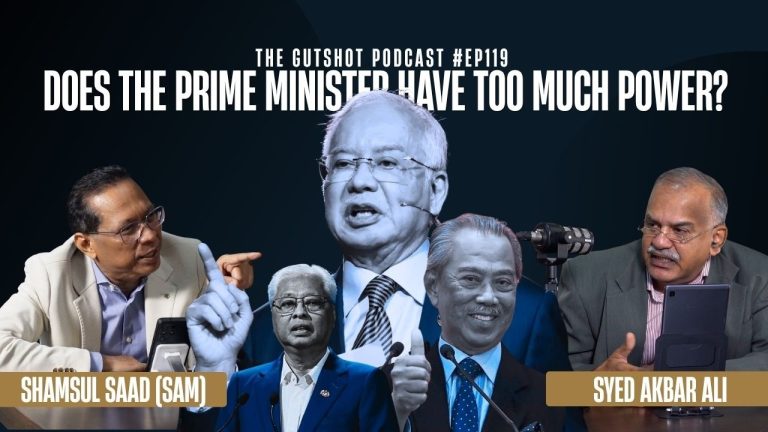
Does the Prime Minister Have Too Much Power?
Show Notes & Description
This is really a debate between ourselves worth considering: would Malaysia be better governed by a weak Prime Minister who is heavily constrained—or by a powerful Prime Minister who knows that every six months his government will be publicly measured, his institutions independently scrutinised, his critics protected, and his tenure constitutionally limited?
The distinction and debate is crucial: Don't make the executive weak. Make the executive accountable. A country needs somebody who can actually make decisions and be held responsible for those decisions. To give such powers, what characteristics must our leader in the executive branch possess?
This is the real proposition worth debating.
We Have a Country to Save
Jump to chapter 7 chapters
- 0:00 Empowered Leadership Versus Weak Executives
- 5:48 The Limits of Five-Year Electoral Checks
- 11:33 Enforcing Two-Term Limits for Leaders
- 14:14 Free Speech and Banning Executive Defamation Suits
- 21:14 Bi-Annual Public Report Cards in Parliament
- 33:06 Dismantling GLC Patronage and OSA Secrecy
- 37:30 The Citizen's Duty to Demand Accountability
Auto-generated from YouTube captions. Timestamps link to the video.
Once in a blue moon we will find that uh people in power uh get raided and we will find luxury goods and uh you know stash of Yeah. But my point is but your point regardless of that uh those are those are characters with serious flaws and personal character. So we go back to this topic of but we're talking about the office of the prime minister. Office of the prime minister. You see, you want you want, you know, you see uh so we got three prime ministers having two answers to answers. That's only in Malaysia. See the the excessive power or executive power uh
we don't want to weaken this powers of the prime minister. The the prime minister must have the authority maximum. He must have the power uh to do the things that needs to be done to run to manage a country. But that authority it must there must be check and balance. Uh you must have you know you must have transparency and u strong checks and balances. Ladies and gentlemen, welcome back to Gutshot Podcast. And here we have back again. Morning guys. Let's have a fun topic here. if we want to call it fun. Um, but it poses a very u, shall we call it a very specific question.
Does the prime minister of Malaysia have too much power? That's the basic question we want to ask and we want to talk about it and have you join in our conversation. Put your comments and what you think about uh the the the question that we are posing today. say the main thesis is that you know does the prime minister have excessive power not necess you know it's not necessarily we want or we intend to weaken the prime minister but it's basically with respect to the institution itself does the prime minister have too much executive power or authority and that uh you know transparency and
check and balances are therefore lacking as a result of that. Shall I throw to you first? Yeah, buddy. There I mean there's always been discussion about you know basically people the discussion is that we should curb or control the prime minister's power you know or or the chief executive's power. Mhm. Uh I think I read u uh I read a comment some time back recently again somebody was arguing this that the prime minister has too much power and how we should go about putting like controlling or putting curves on the power. Now the issue is uh how much power does should a
prime minister have you know or how much power does a prime minister need? Uh the problem is this question cannot be answered. You see uh it is not it is not whether I I have a different view. I'll be gohead. I'll just get to my point straight away. I don't think you should curb the prime minister's power regardless of who is a prime minister. I know we've had some some quite some characters who become prime ministers in our country. Yeah. Right. And one of them is in jail now ex- prime minister. That's how bad things have become in the country. Mhm. Do you know that recently three
former prime ministers appear in court on the same day to answer cases against them? Can you imagine? This is this is the first time in the in the history of the world where three former chief executives of a country appeared in court on the same day to answer proceedings against them. Can you imagine? Yeah. Only in Malaysia. Only Malaysia. Malaysia. Okay. But you know what? I'm a cynical person. Okay. So I also do ask the question why now you know and why this particular segment or minister? It sounds to me like how CCP works when you don't get along with the uh secretary
general, right? Do you know there's about a 100 people in tail company of uh of of a real stature? But I but but I'm digressing. You're anti-China. But I'm digressing in a sense that I'm saying in a sense I'm saying and I said in the previous in another episode you know is that once in a blue moon we will find that people in power uh get raided and we will find luxury goods and uh you know stash of Yeah. My point is, but your point regardless of that uh those are those are characters with serious flaws and personal character. So we go back to this topic of but we're talking about the office of
the prime minister. Office of the prime minister. You see you want you want you know you see uh so we got three prime ministers having to answer to that's only in Malaysia. Yeah. See the the excessive power or executive power uh we don't want to weaken this powers of the prime minister. The the prime minister must have the authority maximum. He must have the power uh to do the things that needs to be done to run to manage a country. But that authority it must there must be check and balance. You must have, you know, you must have transparency and u strong checks and balances
to keep him in check so that he he so that he doesn't stray from the straight path. But if you try to curb or control the powers of a prime minister first of all then he will not get the job done. Okay, hold on hold on. Okay, if you talk about check and balance, right? Who appoints the attorney general? I think it's the prime minister. Okay. She's supposed to carry out uh impartially uh the a persec prosecution of a case regardless without fear or favor. Correct. Uh that's a tall order. If nobody especially a politician for example is going to he has to pick
someone to be at what attorney general or auditor general or whoever right of course you'll pick those who are in his camp or who are friendly Republican presidents in the US will pick uh nominees to supreme court and all that who are along their line of thinking you know they not you not registered card carrying Republican party members But they'll check them out. So that is to me it's going to be difficult. The the the chief executive will pick people who are at least on who must be on the same wavelength as him to hold all these important jobs. Not necessarily every
appointment is a crook so that they'll help so that they will overlook his own crooery. I mean that is stretching things too far. But the check and balance for that is the elections. You know, we're democracy and we go to the polls and if the if the if the chief executive messes up in a prime minister system, presidential system, of course, the public has the has the right to go and vote and and uh replace them. But but nevertheless, the prime minister uh needs the power to do his job. Now the the the question is or the threat is when he starts abusing his power, when
he starts screwing up or when he just starts bungling, right? What are the mechanisms in place for the public to safeguard public interest before the next election comes four years away or 5 years away? We of course we can wait for the next election to come 5 years from now and then go to the to the polls and and vote for somebody else but in 5 years or four years tremendous damage can be done to the country the economy and the society is too long to wait. Yeah. So we must have uh uh present existing and functioning systems, systems of checks and balances which will make sure that the prime
minister or the chief executive does not overstep the limits, overstep the boundaries, does not go overboard, does not abuse power, does not get involved in you know aarent behavior, things like that. We must have mechanisms in place and there and we have we have there are ways of uh there are ways of getting this uh done. Uh but we are we are on planet earth and we are in Malaysia. So uh the reality is uh this part of the equation is uh very weak in in our in our country. So here's the question in our country. Now let's put it this question down. Now this is what we have to answer.
Correct? So let's say uh the AG um uh the the Bank Nagara governor uh let's see who else auditor general okay these are very very uh supposedly the chief of police chief of immigration chief of custo all those people the tabi the the tabi chief I had I all these people correct um And this is the part that that that that we have to address which is which is uh you know in between that particular period between you get getting the prime minister's job and and you having to face the riat for your reelection right um what's the check and balance what do you propose as a check and
balance I I'd like to hear your point of view first I I'll I'll tell what I have in mind so you see the the the distinction what is critical is we don't want to make the chief executive a weak office. So even if you put a superman hero in the office of prime minister and you curb his powers he becomes weak then he will not be able to do to do and do his job he was president you give him the power but make him accountable. uh we need the PM, the chief executive who can actually make decisions uh but he must be held responsible for those decisions on a daily basis continuously
not once every 5 years at the general elections. How do you do that? Okay, there are many ways you know for example uh number one we need to restrict the terms of the term of the prime minister and what happened to that to that adventure it was announced earlier in the year calling it Kabuki theater it was announced early in the year and then they said they couldn't assemble the required I don't know number of votes or votes or whatever okay and then it was it was postponed to June now it's already September still hasn't happen. So it's not going to happen. It's not going to happen.
I I think you can smoke opium and then uh it will so uh you asked what what needs to be done and that is very important. Okay. The restricting the term uh two terms for the prime minister. I like the Philippine system where you have only one term seven years. Uh of course the is presidential system. I like even better the American system. Two terms. Uh it's not two terms. Huh? Two elections. A a president of the United States can be elected maximum two times. That's it. So only two times you can be elected. Which that means you cannot go more than two terms. You cannot like
do one term then stay out of office for like a number of years then come back and then ask for another two terms. Go for another election. That's three cannot. So he's only elected twiceh. So the the American system the the terms are restricted the president is restricted to two terms but four years four years but after the first four years he has to be reelected so Biden lost Trump lost after his first term so that's a very good check and balance so the term limits are extremely important say I agree with you 100% on that okay what I'm still trying to get out of you is actually
within that term whether it is the four uh the first four the first term or the second term the term of during the term of election of being elected and being the prime minister what is the solution that we are looking at for check and balance yeah sure uh yeah let me uh I have quite some some suggestions here so now okay the two terms it's uh my suggestion is not just for the prime minister but also for the chief minister I agree with that too. Yeah. The state. Sure. So if you restrict these people this these main actors PM the chief executive of the country, prime minister and the
chief executive of the state mantri bus and chief minister we would have gone a long way towards uh you know this issue of uh uh whether they have too much power or not. If they cannot last more than two terms that takes that problem takes care of itself. So uh to me that is critical but we have to restrict the terms prime ministers and mantraas. The next one is there's no real freedom of speech in the country. There's no freedom of press in the country. Not real. Not real at all. Not real. We are very controlled. Yeah. And uh the one that we have spoken about many times in our podcast is a
defamation acts in this country. Even the prime minister can sue somebody if you say something now nasty about the prime minister. It is not impossible that you will get a legal letter tomorrow. Oh yeah. Saying that you said this about me. You know I'm the prime minister and you won't lie. Uh other countries that is not so easy. You know if you're if you're a prime if you're a public personality politician, prime minister, actor, actress, singer, whatever, billionaire, millionaire, uh people say things about you and then you want to sue them. It's not easy for them to sue
because the law doesn't provide for this. But in our country, the defamation act is very plaintiff friendly. We have discussed this before. So those are the changes we need to do. You you know you know one thing I've noticed when you talk about freedom of speech. I realize I've seen a few podcasts and uh some commentaries um we are so conditioned in Malaysia about this limit of free speech. Okay. That our people have accepted it as a fact of life that oh you cannot talk about sensitive issue. It's going to cause trouble. It's going to uh this is hate. This is whereas we come from a
tradition of education where we saw that say whatever you want to say so that it allows people to debate. you know, and let the debate actually then make people make up their own mind. And if it's if it if if it's truly defamation and liel, the threshold is very high for you to prove that, you know, and if you're public figure, you can almost forget about trying to get uh we need that here. Yeah. Which we don't have right now. We don't have. So uh the problem here lies with us the public uh the Malaysian public. We do not know what to ask for. We do not know uh what to demand from
the politicians. This what you said is very important. I hope the public who listen to us they will take this to heart and and talk among yourselves and get the conversation conversation going so that the public is informed and demand of this from the politicians. It should become the public should start demanding these things. If we don't ask for these things, it won't happen you know. So uh you know so freedom of speech we really have to abolish the sedition act and then some of those not all but some of the MCMC act uh certain certain sections of the penal code maybe
like reddrafted you know because the way it is now it is makes it rather difficult. Now I'm talking about freedom of speech and freedom of press. Uh so how do you criticize the the the penal the the punitive action? We're talking about punitive action. The p punitive action for writing, speaking and talking is sometimes uh too easy. Oh, it becomes a self censorship situation as well. Too easy. Yeah, of course. Then it imposes self censorship. Who wants to who wants to get uh uh called up or arrested or sued for whatever? Yeah. So you ask how do we go about uh checking the powers of the prime
minister? This is a extremely important uh point. I agree without a without this fre with this kind of freedom the prime minister has to be careful what he says and does you know. So um I we need to I have another suggestion a bit above and beyond that maybe this is uniquely for Malaysia. During the term in the office of prime minister, chief minister Mantri Basa, the public must be kept immune from being sued by the prime minister or the chief minister Mantri Basa. That means when the guy is in office 5 years as PM or as as mantrasa it's not a bad that's he absolutely cannot sue anybody for
liel and information that include for me and MPs for liel and information of course if you puma you stole his Mercedes-Benz he has to come after you but you know I I I would go even further say I would include member of parliament and actually state assembly man as well when they are in in the term in They absolutely cannot sue people for defamation. Yeah. Because you see um I mean you are you are a you are a powerful person Ghana and of course prime minister chief minister you have more power. Oh to even talk about that and that's why I keep saying I know it has power.
So the greater is the obligation for them to tolerate criticism right and criticism you cannot go and send people to papa dipl school of uh diplomacy and and how to talk nicely. Oh, screw again. People will say what they want to say, but we have to make the public immune from the chief executive who from the sitting chief executive. That means when they are in office, they cannot sue people for defamation and liel and things like that. M so this will really keep them on their toes because you know if they step out of line can you imagine the press the the social media the
podcasters whoever know will have a field day with them well I've had a taste of that so so uh this is what we need you ask how do we curb you know we don't want to curb how do we keep them in check the check and balance this is is absolutely critical agree Yeah. You know, I I hate to agree with you all the time, so let me stop agreeing with you. Can we talk about something I disagree with you? Go ahead. No, no, no, no, no. Quick time out, my dear friends. Our metric shows overwhelming number of our viewers are not yet subscribers. Appreciate very much those who haven't to subscribe and
like our episodes. It does not cost a thing, but 2 seconds to hit the subscribe and like button. It helps to spread our content further and build this movement to save the country. Thank you so much. Now back to our episode. Thanks back. I'm trying to disagree with say so difficult. Yeah. Say let's look at the I mean let's let's look at those position that you were talking about just now. AG uh MAC um uh go uh Bangara Governor don't you think that after appointment I mean in the American system in order to be appointed they have to get Senate confirmation. Mhm.
Right. We don't have such a system over here. Okay. It's a that's a very good system. Yeah. Right. Next one. Public scrutiny. Public scooter is open to the public. Oh yeah. You know and the select comm and the committee and the uh and and senate is actually giving questioning whether they are uh capable or not and whether they can be approved or not. Okay. Then I uh if I'm not mistaken when Congress is in session okay they have select committees that they have to come to report to and provide the reports and they are questioned dur by the select committees you know there's
it's not the president who's questioning them you know yeah there's a and it's open to the public as well there's a good reason why that American system works why it is effective why it has lasted so long and it's and and it's I mean it it it works well for them because the congressional committee the senate committee first of all major appointments like all the cabinet appointments the secretary of state secretary of defense whatever they all have to be confirmed by Senate Congress they have to attend a hearing to be confirmed so basically their elected representatives senators or congressmen
are the ones who actually give the thumb thumb thumbs up the approval for all the appointments you know so the why it is works is that the senators and congressmen are elected you know now I remember it right you know they have to go to the senate committee okay in which you have to go through that if you pass that then only it goes to the congressional uh to to to Congress and then Congress will have will vote there. So so you see so it's two layers you know. Yeah. The point is the point is these are powerful the function is a very powerful function. Yeah.
The Americans they are confirming the secretary of defense confirming the secretary of state or whatever through all these congressional and senate committees. When when you when you have such way around anyway when you have so much power invested in these committees to appoint these people that kind of power you want to you must be elected to wield this kind of power you know because there are some people who people who are suggesting in our country you know this ombbudsman ombbudsman I don't know I know you think from something like from the Scandinavians I think it's from
Scandinavia but I disagree with all Isla you are you are giving this ombbudsman character power and he's not elected and there's another suggestion you know appointment of judges in Malaysia they want a special independent panel to be appointed which will appoint the judges and who are these panel most of them lawyers but no cannot when you have so much power being vested in elected yeah they are unelected whether it's ombbudzman or independent panel. There is no such thing as an independent panel and let's not cheat ourselves. All right. But if elected people are involved,
they can be kicked out. Yeah. They are our representative. So it's fair. So this use of parliamentary subcommittees in Malaysia in our scenario we can use we should ramp up this usage of parliamentary committees or subcommittees to do things like we just discussed appointment of uh you know just now you mentioned the chief of police and whatever all those things okay sometimes you do not want to have we can we cannot go American system all the way but I suggest which we've discussed before We must have a a report card system where you know major major very powerful people who are not uh
elected who are appointed uh for example the the chief of police right the MACC the chief of immigration customs the governor of the central bank the chairman CEO of Tabohhaji the GLC's the chairman whatever They should present regular report cards. I would s suggest six month report card. They must go to parliament. They must sit in a public hearing. They must face a bipartisan committee. That means half government and half the opposition. And they must present a report card, you know, of what they have done. For example, uh supposing they had KPIs, what were
you supposed to accomplish in the last 6 months? what have you accomplished? Are there shortfalls that you fail? And then why uh and what are your plans the next six months? So, it's just a report card. It is not it is not um you know we're going to hold you liable. Then the guy won't do his work. You see, but you must report to the public. When you go to parliamentary committee, you you're talking to the Malaysian public, you know. So, you're reporting to the public who who elected our representatives what they have done. So this so at at the end of the day because all these people work
for the government it is not only they are presenting a report card for themselves and their departments they are presenting a report card for the government for the prime minister for the chief executive. So you asked yourself how do we you know do the check and balance on a continuous business. This is the kind of things you got to do. You know imagine I want to finish your point. Imagine if the Tabonghaji chairman or CEO had to present a report card to the a parliamentary committee every 6 months. Do you think Tabonghaji will have this the crap that happened? I I doubt it. I doubt it.
It's going to be a long story on that again. I doubt it. So we need this kind of mechanism and especially you see every country, every society like Malaysia, we have our own issues, we have our own dynamics, we have our own uh ways and Malaysia things things that we do and we also need uh specifically tailored boutique solutions to our problems which you which you may not work in Australia or Singapore or Germany. It may not but it has to work for us. And I think at this point in our history, we need things like this. Do do you know do you know talking about uh accountability and talking about
check and balance you know there's something I I I want our audience to uh actually ponder a bit about the American system. There's a there's something that people don't realize about the midterm election. what they call the midterm election. Currently, every you know the the president is uh on a 4-year term. Okay. On the second year, he the the country goes through a midterm election because why? Congress congressman has only two-year term. So, every congressman has got to go for a new election. Okay? And then the senate pull up because every state in the country in the in in in in the US has
got two senators per state. So what they do is 50% of the senate has got to go for re-election. They time it in such a way. Now what happens is this. If the president has not been performing, okay, he's going to he's going to actually lose for his party. in the midterms. So, he's going to probably lose Congress. He may even lose Senate, you know, which means his power to actually deliver legislation that he wants is going to get curbed. Yeah. But that's a presidential system. Presidential system which we don't have. Yeah. Yeah. We don't have it. But but I'm just trying to tell the audience
that there are various ways and means. The principle behind it is there's a check and balance every two years. every two years in the US is correct which is which we may which we may not be able to uh follow exactly but we can come close to it we can not by by reelecting our parliament because we we are a four five year system but uh you can have like this uh what you see what happened to the report card system for example it's a continuous check and balance say I was just I was just reminding myself of what happened in Joho in the Mil and uh you know because we staggered the state election
because we staggered the state election. That's a good point. Yeah. So uh if the state elections are not in are not at the same time as the federal election. Okay. Or we stagger it half of it is actually uh uh what do you call during midterm of the prime minister of the of the general election. We have a we have a report card system per se that the people can decide whether to to kick the ruling party or not. you know that is a you know that particular that particular sequence of uh elections that we have Johor Sabah uh Ngris Milan and coming up it's a it's a those were I mean uh the
results of the recent those were those were good wake up calls but uh they still have the majority in parliament so they can still not wake up correct they can still not wake up same like what the US the president I still I I'm still the president in the end of my term. That's right. So you know so we need um we need uh checks and balances which are more uh with the people that means freedom of speech, freedom of press and then uh having uh uh you know this heads of departments, government departments and so on presenting report cards, regular report cards to a parliamentary committee
meaning that they engage with the people. Yeah. And the press reports on them. So this is uh to me this is very important. This is a check check and balance that we are looking for which must we must have. What else do you think that um so uh I mean the the the sort of to wrap it up the prime minister he should have maximum executive authority. uh you don't you see if you curb the prime minister's powers and then uh he's not able to do something to his maximum 100% capacity so it doesn't get done or something is not achieved then you cannot go and tell the prime minister hey you didn't do this
because he will say you curb my powers you see the question of you know the the buck stops where so the prime minister will say the buck doesn't stop with me you already you already curve my powers you see so I couldn't finish the job so we must be careful when you say things like let's curb the powers that the prime minister will curtail no I think the prime minister should be should be empowered but within the constitution and the law subject to the things we have spoken about exceptionally strong mechanisms of uh of accountability we need those things but I do want to add one thing though
don't don't the guy I I think one of the worst things that is in our ecosystem that is inter interlin with uh politics is actually the GLC GLIC ecosystem. I think that ecosystem which we talked about in the uh in the episode that we call uh the Booby addiction to government spending. Okay, that particular thing need to be relooked at because if I were to to to look at that I would say we need a a dismantling of that particular ecosystem. Uh because there's too much political patronage involved in that. Yes. When you talk about GLC's and GLIC's uh the thing that goes off the alarm
bell that goes up is whistleblowers. Whistleblowers. We need we need whistleblower whistlers also can whistleblowers also that's the other thing that's we have punish sometimes yeah we have a whistleblowers act but how effective is it very uneffective you know I I have some knowledge about this if under the whistleblowers well I don't know under the act but in practice hh if you were a whistleblower right and then uh you went and spoke to the press right you lose your whatever whistleblower protection, you know, certain things which the the authorities can extend to you
for your protection. Of course, it goes out the window because you spoke to who as you to talk to the press. But to me, that's a wrong way of doing it. You you are punishing that fellow for for making known something that is not that is bad. And he's not talking to the press. He's talking to the entire society. He's sharing the wrongdoing with the country, with the people, with the public. What's wrong with that? Well, but uh he's penalized. Well, here's the problem. Almost every document become is an OSA document. All right. So, his official secret act including when our friend Rosley came on
this podcast. Okay. What he mentioned was that the toll contracts, the toll concessions are all under OSA. How can you have private transaction between government and the and and and and uh and concession under OSA? How do you do check and balance like that? Official suckers act. I think with that in mind, okay, on on that note of official suckers act, say can you wrap it up? So uh to me the the the you need the prime minister must be able to do his job. Huh. Now let's not be don't panic. Let's not be too worried about the individual characters who become prime ministers in our
country you know the last few years one of them is in jail. Three of them appear in court on the same day. Those are unfortunate. Um not random I suppose but unfortunate. I don't think it's random. Unfortunate. unfortunate occurrences that has been heaped upon us. But the office of prime minister must be fully empowered and authorized to do what what needs to be done. Uh maximum executive capacity but has to be uh sort of uh it has to be uh monitored and governed by checks and balances. the two-term li limit uh very strong parliamentary oversight now parliamentary uh oversight committees
that can question uh governance on a regular basis. The press must be free uh not only the press the entire public we must have freedom to speak without fear of being prosecuted or persecuted. Okay. And then uh uh the the chief executive of the country, the prime minister and the chief executive of the state. Matri Basa chief ministers they they should not be under the law. They should not be allowed to sue people for defamation liable during their term in office. A we should make the people immune from uh defamation suits by chief executive of state and country when in the term in
office so that basically they are at our mercy to comment and criticize. All right. So uh we must have whistleblower protection uh and uh that all this together will create a accountable and uh more responsible system of governors in the country and we don't have this yet. We don't have this. We may have some of these laws in place but they're not working. So uh to to close my my remarks, the Malaysian public must get up and demand this. The problem in this country is the public, the Malaysian, our people, the voters, our people, our society. We don't stand up and and say
these things. We don't stand up and ask these things. Of course, you can say these are your thoughts. You know, these are not our thoughts. Uh I disagree. Yeah, these are my thoughts. But these are the things that other countries have. Successful countries successful successful countries they have that successful democracies do things like this. So if you want to be a successful democracy, it's high time the people I want to appeal to the people. Forget about the politicians. Don't waste time appealing to them. They're not going to do anything. Too much at stake. We have
to appeal to the people. The people have to know their rights. get up, stand up and demand more. It is our right. And if they don't get what they demand, change the kick them out, kick them out. But if the people stand up and speak loudly, firmly and with one voice, no need to run wild in the streets, you know this uh reform roadside jalan. Just make your our voices heard in discussion. Bring it up among your friends, colleagues, you know, in the social media, whatever. Bring up these issues. start demanding more and this is we're not this is not something they give us you know it's the
other way around this is our right so we it's time that we tell them what to what needs to be done so if I can point some fingersh it's a people we have to get up and do something so ladies and gentlemen on that note our demand will come at the at the ballot box if you don't do anything at the ballot box we're not going to get the demand that we deserve. Let's put it that way, right? And it's just coming around the corner, you know. We get our act together, we talk among each other, and actually we make a point come the next time. Thank you so much. Say it.
Thank you. It's excellent. Always good to have you and we'll see you guys again. Bye-bye.