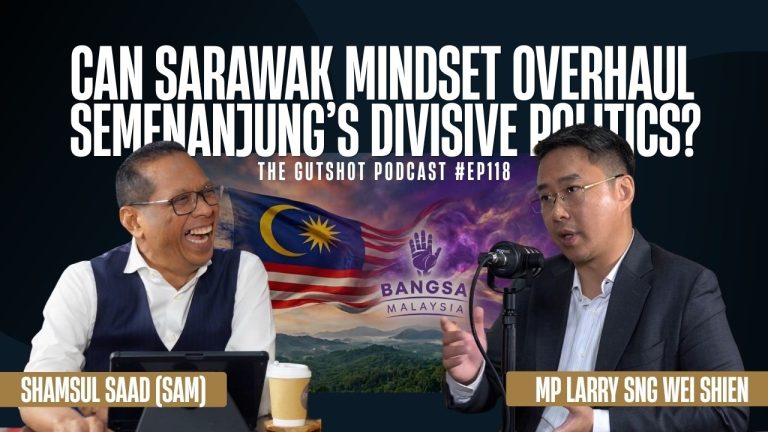
Can Sarawak Mindset Overhaul Semenanjung’s Divisive Politics?
Show Notes & Description
HAPPY MALAYSIA DAY! 🇲🇾
YB Datuk Larry Sng Wei Shien, founder and President of Parti Bangsa Malaysia (PBM), Member of Parliament for Julau since 2018 and representative for Pelagus for the Sarawak State Assembly from 2001 to 2011 is with us for an in depth Gutshot conversation.
We discuss his longevity as an ethnic Chinese serving a more than 90% Iban/Native constituency and why that is – quite an oddity for peninsula politics. The legacy issues within PBM, moving forward and vision for PBM and aspirations for expansion into Semenanjung politics, how he sees its chances and what he wants to provide to voters as an alternative to politics as usual.
This may well be an eye-opening insight of what may be possible for Malaysia as a whole to the current DNA of semenanjung politics.
We Have a Country to Save
Jump to chapter 8 chapters
- 0:00 East Malaysian Harmony vs Peninsula Divisiveness
- 4:38 Winning Majority-Iban Seats as an Ethnic Chinese
- 12:08 The Genesis and Identity of Parti Bangsa Malaysia
- 20:19 Exporting Sarawak Mindset to National Politics
- 35:07 Evaluating Unity Government Performance and Institutional Reforms
- 48:15 Political Appointments in GLCs: Necessity or Patronage?
- 55:05 Differentiating PBM and Attracting Independent Voices
- 1:10:09 Challenging Apathy: An Invitation to Lead
Auto-generated from YouTube captions. Timestamps link to the video.
Uh I mean why should that be an issue you know? Yeah. Or why should it be an issue where if my church and there's a mosque nearby uh next to each other why is that an issue? Yeah. It's not an issue in Sarawa or what is an issue in West Malaysia. That's nothing to do with affirmative action. Yeah. That's just a perception a mindset that maybe you know that uh that people shouldn't mix you know. Well and I think I think that is where it's really sad because uh that's not how Malaysia was formed in the beginning. Uh people were so much more relaxed. Yeah. You could have Malays, Chinese and
Indians in the same coffee shop. I remember this very well when you were much younger, you know. Yeah. And uh before I was born, you know, you can still see that in in Sarowak and Sabah, but you don't see that in West Malaysia anymore. So that's why I feel that uh in terms of the politics, you know, uh we need to be a bit more we need to build a a new political narrative moving forward whereby everyone has a stake in Malaysia. And as long as we find that the collective of individuals is greater than the sum of of uh is is is much greater than some than just the
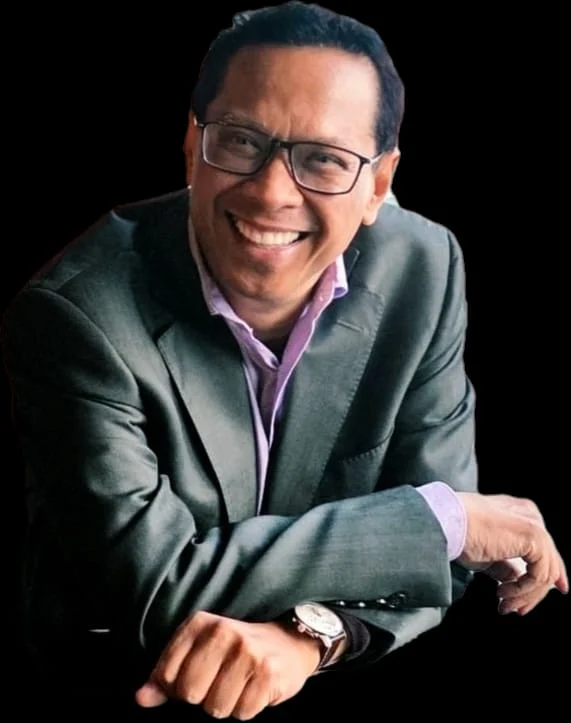
individual players. I think then we will appreciate that every single community, every single race uh have a role to play and we should give them the opportunities and also the support and also the space for them to to to live their lives as every other ordinary uh Malaysian citizen. Ladies and gentlemen, welcome back to Gutshot. Uh I'm Shamsho Sam, your host and today, what a wonderful day for us to welcome the Malaysia day. Salamat Hari Malaysia everybody and with us today um a very special guest from the land of the horn bills our MP from Julo uh in YB Larson um and uh he has how are
you sir very good sir thank you u and uh YB uh may I call you Larry sure thank you all right easier for us to converse and and whatnot Um has been a member of parliament for Julo uh since 2018 and he was the representative for plagus uh at the state assembly from 2001 to 2011. Uh very fascinating career that's what my research uh has seen. Um and you won Palagus under PBDS in 2001 and then under PRS in ' 06 and was basically an independent adon from 207 to 2011. Um and you today uh was also the founder and still is the president of Parti Bangsa Malaysia PBM.
Uh welcome to Guide Shot sir. Uh you're a brave man. despite many invitations and uh open or otherwise uh you are only the second politician that has come to gutshot. Sure, I'm sure there will be more. Um I hope so. Um if they can take the punches u and u uh I mean and you are also uh the first sitting MP uh member of parliament uh to come and do so. Uh well I have to say guys uh this is very nice for me uh as a fellow uh as a fellow Sawak. I call myself fellow Sra because I'm half Sawak. My daughter is a Sawak born and bread you know uh very proud of that I had eight years eight great years
in Mir Sra. Oh wonderful nice place. Nice place. Beautiful place. Pasau Wood Club was my favorite uh place to go during the weekend. Sure. Yeah. And um uh and and and I must say so I miss one thing. You know, I miss the um fresh umi. Yeah, it's delicious. Yeah, I know. So um you know what? Uh you know what, Larry? I think uh your kyu or hokan, right? Hoken. Your han, right? Okay. Julaw is 94% dban community. Um that is an impressive achievement in my opinion. And then Palagus itself uh before you stopping being the adun there that's a 96% Iban population. How did you manage such a support?
Okay. Can you please uh give us a bit of a I'll I'll give you the softball first. Sure. Sure. Sure. Sure. How do you uh how do you manage to achieve that? Well, I mean for plagos uh when I first started in 2001, uh the the delination exercise haven't taken place, right? So by then uh the population was about uh 80, you know, 80% uh Iban Mhm. and 5% Malay, right? And the balance was Chinese. Uh subsequent to that a few years later, they had a donation exercise. Yeah. And today as you mentioned probably is about 90 over percent 97% uh Iban in the case of Julo uh it's
definitely a majority seat 95% 94 95% and uh Chinese representation is only about 3%. Uh for me uh my politics has always been a di rule-based politics uh from the very beginning and it's also not by coincidence but because of my uh family uh uh what lineage so to speak. Uh my grandfather was also in politics. He started politics 1963. He was one of the earliest uh adun and also MP and my father also ventured into politics uh many years later. uh so he was also MP for one term in Julo and two terms in Lagos. So for me to uh to enter the political uh sphere uh at the age of
uh 22 years old uh came quite naturally in that sense and I would say also because of the the community the community in uh Sarow and particularly in among the dia community uh they are very uh they are actually accepted their acceptance of um of uh family uh passing down their their their responsibilities to their children or even their relatives to continue the political uh space is actually quite common. So I'm not the only family that that has been in politics for three generations. There are also many other families as well both in Sabah and also in Sawa and I
believe there are also a few in in West Malaysia. So that's how I started my political career. Yeah. Okay. Yeah. One thing I must say though, usually when even when they uh hand it over the uh the demographic uh uh the demographic look is not how yours look like. Yes. In the case of uh in the case of my family, we have been uh very very intimately uh connected to the uh indigenous community. uh from the very beginning uh from the days of my grandfather as a trader uh and his also is his large ex his large siblings and also family members uh they used to do a
lot of trade. So people used to uh mix and and travel and and and also have this credit system whereby they lend money to I mean they they sell goods to the local population and the local population if they can't pay they'll just have this ledger system whereby they keep tabs you know. Okay. Wrong way. So, so and then of course this all built on trust you know and when people came to town there were no hotels so they would stay in our house uh or my my grandfather's house and uh and that's how the relationship was built. You must remember that uh before independence uh Malaysia
uh as as we just say before it's called Malaysia uh people um people were very very interconnected and they didn't really focus that much on race. or religion you know and it's only after Malaysia was formed and after what happened in May uh May 13 that of course uh things became a bit more uh divisive but in the case of Sarawa we have always maintained to some extent a very close relationship so people although they may they they know for sure that I'm Chinese because I I am 100% Chinese uh but they don't base their support on the fact of my race or my religion uh uh but because of the
fact that I come from a political family that has served them for so many generations and that's why uh when I moved to uh Julo uh in 2018 I was able to get the support of uh majority of the the population who happened to also be supporters of my family uh my father so I I believe that that's how uh rule-based politics uh operate and uh I'm just continuing that space. Yeah. M well I well regardless I think the bottom line is you must maintain that loyalty because if you don't maintain that loyalty uh and that uh trust from the community whatever that has been
built by generations can be destroyed in just a couple of years. It can be destroyed very easily. Uh trust is something that's intangible. Yeah. And uh of course uh even though uh one generation may serve very well, doesn't that guarantee that the next generation will do the same? Uh I think for our case we have been quite fortunate to have uh to have three uh generations of serving MPs and who who have a good legacy and that's why people continue to place their trust in us. Okay. Um, yeah, I I I I wanted to hear that because uh uh it it was quite an interesting look at uh you know that
that legacy so to speak, you know. Well, Larry, um my research as everybody here knows on Gutshot, I'm really not a politician, so I don't have much political. Not yet. Not yet. I I so I did quite a bit of research on on on PBM and yourself to be honest. Um and um from from what I understand PBM emerged from former PKR defectors. Please tell me if I'm wrong. Okay. But that's basically what uh my you know my my information gathering had uh had said. Um and these uh politicians left after the 2020 Sheraton move. um voters in peninsula well they they overwhelming rejected PBM candidates in GE15
right you tried that um and viewing the viewing the party maybe as uh as a party of uh this XPKR opportunistic uh party hobo. All right. uh how do you how do you think um you're going to convince coming the GE16 you know if you're going to do this again that for peninsula voters that PBM is built on genuine ideology rather than um pure political survival or interest uh the same old way of what uh what they may see as what PKR has been now okay so I think there's A bit of a correction there, right? Uh when we formed uh to give you a bit of history on how uh PBM was formed um
post Sheran move uh there have been a group of MPs and also Ardun who were aligned to the government but had no political platform. Uh I think the plan then was to actually join Basatu. uh and uh had their own issues whereby they have uh varying factions within the group and for for a good 6 months uh many or 6 months or even longer uh those who have actually applied uh particularly those who were non-Malay uh they couldn't get membership and their membership form went missing uh so uh they applied more than once and so there was no uh there's no uh indication as to
whether they'll be admitted as members or not you know uh of course basu have their non uh non-Muslim wing um they what do you call it they they call it something as a persu I think but uh nonetheless um for the majority of those who couldn't get in uh the plan was to form their own party uh initially they had some resistance from within u the group aligned to Asmin uh actually asin himself rejected the idea that there should be another political party. But Zorida uh was very adamant that she felt that maybe uh there is no hope in Busousat to uh taking care of these
people. So she would like to uh come together and form and also to to find a platform suitable. Uh so we found uh SWP which was actually the formal party that I used to lead. Okay. In Sarawak and we brought it to national changed the name and it became PBM. Okay. So uh the members who comprised of uh the founding MPs and also adun of PBM were not just from PK they were also from DAP they were also from Waran as well. Uh if you were to look at some of the adun from uh from PAR, they were actually essentially the AP adun. Uh if you look at the MP and also former minister in uh in uh Sabah who
joined PBM uh he was from Warasan. Uh for myself uh and a few others uh we were from PKR uh and in terms of the numbers it wasn't really quite it wasn't really that important because there were also other people from NOS's as well. So essentially uh PBM had a very uh uh good uh pull uh in the early days because of all this because it was a vacuum basically uh and uh from there we uh we ventured into the general election unsuccessfully for most of the seats. We managed to retain uh Julo uh and uh but I think for West Malaysia it takes a bit more time. M um the party had less than
a year to actually promote itself to explain what what the what our party principle stands for and uh I think there was also because Pali there was also this internal uh rivalry within the leadership on who was actually the president uh which caused uh which which I think deterred some of the voters here. But nonetheless, having said that, uh I believe that PBM has a future in Malaysian politics. Uh in like in all political party, there is always uh periods of time where there's always uh uh some internal conflict. But nonetheless, the party evolves and it evolves not only because of uh of the
passage of time, but it evolves because there are new players, new political actors coming in. And eventually due to the new political landscape I'm sure we will adapt and we also evolve. Uh so I'm not so concerned about what has happened in the past but I'm more concerned about how we actually move forward into the future. Okay. Before we move into the future actually I just want to clarify one thing that's uh because uh it's it's not very clear maybe because I'm not uh politically inclined in that sense. Um there's quite a as you mentioned the evolution but maybe there was a chaotic
leadership dispute over the party presidency between yourself and Zorida. Mhm. um for a small party like this right when you have such a uh chaotic leadership struggle that that's a bit of a concern and in in that sense the question I have is uh how are you going to get voters to trust this um and what what has happened what happened and what has happened since then to actually um put things together put things right in a sense. No, I think the the issue then with respect to the party struggle uh the party uh leadership struggle that has already been resolved
has been resolved and has also been recognized by ROS. Okay. That there's only one legitimate uh party leadership. Okay. And that's actually the leadership that's held by me. Uh so since then we have no issu issues of leadership. There have been people who have left, right? There have also been people who have joined us as well. So I think that's quite normal in politics. Um currently I will say that our party is very stable. We don't have uh any uh any problems within our party. uh there have been some people who have just recently left but uh there have also been as I mentioned earlier there
have been some notable politicians who have actually joined uh uh case in point was like Ronny new for instance and I believe there will be others and I hope there will be others who are in different communities maybe you even yourself you know joining us one day you know who knows but uh I the the reason why I say this is because I do feel that um in Malaysian politics there is actually room for expansion although there may be um detractors who say that political politics is quite saturated at the moment. There are many political parties maybe representing the
same values and what not. But I think over the passage of time uh we will be able to see those parties that actually speak up and actually become that actually stick to their principles, parties that actually continue to struggle in irrespective of whether they succeed or they they they they lose. uh they will be able to one they'll be they will be the ones that survive and for me in my political journey I have also had my highs and lows as well and I believe that at the age of 47 I can still continue this political uh space for a considerable number of years ahead and I
do intend to continue to continue to build up speak for Malaysians speak for Sarakans in particular as well on how we actually should be moving in terms of developing and nation building and uh creating the sort Malaysia that we have uh uh seen previously uh prior to independence whereby every single race have a a voice uh every single committee uh should be represented and every single uh individual and citizen uh should have uh should have the the rights to transparency information and also uh uh the freedom of uh uh to speak up you know I think that's very important. Yeah.
Okay. I think um I think you this may sound a bit redundant this question but I just want to I I think I need to address this uh you have actually address it a bit uh but this east west uh identity uh PBM you representing Julo um and now you're putting the uh the party uh right square and center uh as uh completely Malaysian entity. Uh how do you think that uh how do you feel this uh uh this this this this effort or this initiative of putting the putting PBM uh within national politics um is going to be achieved and u uh and and how do you intend to do that? Asia.
I think for PBM uh it's important to to maybe the way to look at it from my political lens is that uh I'm a Saran. Yeah. I'm also Malaysian as well, right? And for PBM uh political history, it originated from East Malaysia. Uh it's an East Malaysian party registered with the ROS and then we rebought it to make it a national party. M so what's the harm of having a East Malaysian identity in projecting on the national landscape? I don't see any problem with that. I think there's so much to learn in terms of the wisdom that we can see from East Malaysia in terms of how they manage race relations
in building harmony, building up the community in looking at how the nation should be moving forward which is actually widely accepted by many of the liberal and also the the urban people here in West Malaysia. uh there are many people who praise uh what Sarog is doing or sorry how Sor is moving forward today and uh I believe that we can actually uh be that kind of uh the model you know uh whereby we give people the option you know to to see that okay there are many parties out there but why don't you consider PBM because PBM has the opportunity to to create the sort of uh
to project the sort of values uh and the governance that we would like to see throughout the country you know not just Sawa. Yeah, I I I I I do agree with you on that part because uh having lived there for 8 years, I thought that was going to be the longest time I would stay in any particular company. You know, I was with Shell. Sure. Yeah. And u and I was so in love with uh Miri. I bought a house in Miri. know that I bought a nice uh bungalow in Miri thinking that I would retire in Shell and actually you know come back and uh you know be in Mir and I was so happy actually the only
problem was actually after 5 years or so you get bored with the work not the place the work the community was good you got uh of course Gawway was always hectic and chaotic if you guys know what it means, you know, had a lot of fun. Um, but um I think you know there's a lot that us in Saranjung should learn from how Sarawaken lives and how the mindset works. you know if we can bring that kind of uh mindset into our politics that actually it is part of our social fabric you know things things will be completely different you know this is uh this is something I
always thought about but that's uh yeah that's that's the hope if you ask me that I don't see in Malaysian politics actually at least coming from the subanjong side you know but anyway Anyway, I think I think maybe I can I want to address this uh raised. I think the reason why Sarakan politics uh is so widely accepted by different races and also religions in Sarawa uh in a sort of harmonious setting is because um first of all you look at the demographics in terms of the uh population um you would say that there's no one particular race that actually dominates in Sarawa
you have the Malays you have the Chinese and then you have the dats the ds are the overwhelming majority but they still they are actually below 50%. And I believe the Malays and the Chinese are almost equal at 20 23 or 26% each. So everyone everyone has this respect you know for one another. And uh if you look at how um uh race relations are being handled there, whenever there's something that's actually sensitive when it comes to uh whether is it to do with the Bible or is it to do with the the word Allah, you know, in the the Bible for instance, um sometimes you you or
even issues that may be like for instance uh maybe deemed sensitive in West Malaysia but not in Sarawa, you will have different people leaders from different communities speaking uh for the minority or for the other community. So I think because there is this um this sort of uh support from different community groups uh no one feel left out no one feel discriminated and everyone feels that they have a role to play and I think that's how Malaysia should be. It shouldn't be just because oh because the majority is there's a particular uh one particular uh stock of people which
is the majority and therefore only the majority matters and everyone else doesn't. I think if we were to run the country with that kind of mindset then we'll always regardless of whether it's been 69 years or another 100 years for instance we'll always have issues of inequality in the mindset of people you know uh because they will feel that although we are all citizens we are some are actually more uh more of a Malaysian than others you know right and because of that I feel that there will always be a feeling whereby east Malaysia people will want to is Malaysian first and maybe Malaysian
second, you know. And I think for for for a national uh national based uh party and also for person who's serving in the parliament, uh we need to bridge that gap. We need to bridge that gap. We need to bridge that sort of uh that sort of discrepancy so to speak that discrimination if we can minimize it as much as possible so that people in West Malaysia will feel that they are as much valued as anyone else uh in the country. I think that is what you would like to that's how I would like to see the country moving forward. Well, you know, one of the things that
um that struck me when I first came to uh Miri was uh uh there was a church in Luton and there was a a mosque uh next door to it and every Friday the church will open up its parking space for the mosque goers and every Sunday the the mosque will open up the parking space for the church goers, you I it sounds very simple, right? But somehow or other even that was uh was was something that you know I felt it looks so nice you know um and the other thing when you mention about discrimination I mean I am this is going to sound very I'm going to have to do a segment on
this this going to sound very uh this one because we are so used to the word affirmative action. Okay. Uh I was uh uh I was educated in my tertiary education in uh Florida in the US. You're an economics graduate, right? I studied in the UK in LSC. Yes, correct. Economics. Yeah, economics. Which uh university was that? LSC. Economics. Okay. Smart guy, guys. No, but but I think I think if I before you go into your question, I want to point a very important point, right? Affirmative action in discrimination. It may seem the same, but it's really not. It is. It is a Yeah.
Well, here's my logic of it. Yeah. Okay. Because I've seen affirmative action which actually originated in America. Okay. Right. Uh my my I just want to digress this a bit and then let's go back to our question. Right. I I think it has been wrongly used in terms of uh even the word itself because once you use affirmative action you're going to discriminate. It doesn't matter. It just does discriminate because you're putting uh a determination in terms of result for economics. Well, opportunities and economics to me you have to actually provide opportunity.
Okay. In order to provide opportunity, you have to actually then spend money in all the areas that you are lacking. That's all one needs to know. But it doesn't mean that even if you have affirm affirmative action, there is a need to discriminate against race or in terms of religion. You just need to spend all it's just opportunities where people are and allow equal opportunity for everybody to get out. I agree. I agree with you and I'm actually not against affirmative action per se, you know. Uh because I I represent the 95% move. Mhm. M uh so I I can understand the
importance of having it and I believe that affirmative action uh even though uh although it may be very sensitive but in terms of actually how many people who are withdraw actually benefit from it uh you know as as well what I do it's not that big a deal you know simply because if you were so good and why is there so much poverty still you know uh so but I think I think the the crux of what I'm trying to get at is that um you can have affirmative action. But why is it that in terms of the religious aspect or the racial issues are still being played up until today, you know, after 60 years?
60 years. I mean, why would why would uh someone eating pork who is a non-Muslim affect the Muslims, you know, for instance, I mean, why should that be an issue, you know? Yeah. Or why should it be an issue where if my church and there's a mosque nearby uh next to each other, why is that an issue? Yeah. It's not an issue in Sarawa or what is an issue in West Malaysia. That's nothing to do with affirmative action. Yeah. That's just a perception, a mindset that maybe you know that uh that people shouldn't mix, you know. Well, and I think I think that is where
it's really sad because uh that's not how Malaysia was formed in the beginning. Uh people were so much more relaxed. Yeah. You could have Malays, Chinese, and Indians in the same coffee shop. I remember that very well. when you were much younger, you know. Yeah. And uh before I was born, you know, you can still see that in Sarowak and Sabah, but you don't see that in West Malaysia anymore. So that's why I feel that uh in terms of the politics, you know, uh we need to be a bit more we need to build a a new political narrative moving forward whereby everyone has a stake in
Malaysia. And as long as we find that the collective of individuals is greater than the sum of of uh is is is much greater than some than just the individual players. I think then we will appreciate that every single community, every single race uh have a role to play and we should give them the opportunities and also the support and also the space for them to to to live their lives as every other ordinary uh Malaysian citizen. You know, I I just want to pure on that. I tell you straight away personally for myself, if I go to my I I I know we have a lot of uh Chinese uh my friends being in
business in the private sector. I got a lot of Chinese friends, right? And then you have uh uh uh some festivals and they will have pork. I see I always say to my friends, if you're going to have pork, go ahead and have pork. Okay, I will come. Don't because of me you change what you have to eat or you want to go and eat because to me that would be insulting to me as your friend. You know I I this is what I wish we as a community in in in Samanjung would start with a dog which is actually what has that got to do? You eat in front of me. So what what is insulting about that? That's his food.
But you know the thing is in some restaurants there is no pork served and still you don't see the Chinese, Malays and Indians sitting together. So I think there not it's not just an issue it's the way mindset you know. Yeah. And I think this has a lot to do with how the politics has divided the people. Unfortunately true. It is for the purpose of divide and rule in order to gain support at the ballot boxes is to appeal to the lowest common denominator. There you go. That's what it is. Exactly. That's what it is. Exactly. Now shall I go back to uh this uh more a bit more on our you know I
mean uh um something that I have been thinking when I was uh looking at PBM right um a lot of critics and uh opposition supporters argue that Pakistan Harapan le unity government has failed to deliver on structural economic relief anti-corruption standards to today if you ask me the anti-corruption uh or or or the attack on the on the on the big wigs are really depending on uh which camp you want to whack rather than a uh really the principle of it. Um and institutional reforms are just not there. Uh and uh myself, my uh partner on the podcast Sakwa has been banging on this
non-stop you know because you come on the you come on board uh with uh with a promise and you have not really delivered this in uh this institutional promises that you have made. We still have uh the actor Hassan which was used on me dur dur uh to detain me for speaking the truth and you know it's not even anything right um so you are part PBM is part of the unity government uh from what I understand is not part of PH but you are part of the unity government. Yes, we are right. Um, so just like Barson National or Wars or GPS or GRS? Yes. Okay. U so here's my question to all these people
including myself are asking why are you staying in the government when so many voters like myself are looking at them as underperformers and you want to as you said show a new way of politics. Why are you still in the government? uh what actions are you willing to take to stand on your own principles? Okay, I think it's very uh important point. I think in terms of nation building there are few aspects to look at. Of course, the issue of parliamentary reform is very important. Uh is what PH was built uh PH was uh campaigning on uh in their manifesto and when the government was formed under
unity government it wasn't a PH government. Unity government together with PN, Waran, GRS, uh GPS and also other parties including PBM. So I think we have to understand that the government whatever is promised in the manifesto uh there are many manifestos out there you know it's not just one manifesto and the government when it was formed it had you had to take into consideration the time to actually compromise on certain issues and also to build up the economy because considering that the last uh term that we had we had three different governments you know
there's a lot of instability and voters and al not just voters but also So voters were worried it's one but also investors was also concerned how are they going to invest in Malaysia when Malaysia kept changing policies, kept changing ministers, kept changing prime ministers or even kept changing uh governments you know. So for this government to be formed uh in 2022 at the advice of the king uh young to have a unity government uh I think we have to respect uh that there is certain wisdom in that and so that we actually work to build up the stability for this country. Now
whe whether the government has failed the verdict is uh is is not it's not yet concluded until the general election. Yeah. Uh the government has been trying to push some reforms maybe perhaps not as much as not as many reforms as people have wished wish wished for. uh but we do have to also give some credit whereby credit is due you know whereby the economy is doing well uh in terms of our uh stability relatively more stable than previously and in terms of our stability in terms compared to the region you look at Thailand or Indonesia for that matter or what's happening in the Philippines I
think we're relatively quite stable in this Southeast Asia uh but having said that we want to be better we want to we want to see a Malaysia that is that is more inclusive And I think under this government they are trying they're trying to push some reforms. Maybe they have failed in some respects as as you mentioned earlier about corruption for instance. I mean I guess for prime minister is quite difficult for him to go after his friends you know who are part of the government. Uh if he really wanted to go after corruption for all the big wigs you know uh I don't need to mention who
but I think you and I we know who who they are and I think the vast majority of Malaysians as well. And that's that's frustration. There is frustration the of the electoral public because it's not a structural reform. It's a it's just going for political expediency. You know, there you go. Uh you wanted to get rid of certain people, you go for them. You know, uh those who you want to keep, you just kept you just keep them and just put their case aside. Um unfortunately, I wish that Malaysia has a better system to be honest with you. uh I wish that uh we have equal constituency funding so
that people don't have to jump from one party to the next you know to be part of the government to get access to funding so that they can take care of the people in their constituency. I wish that we had more reforms, you know, whereby the parliament has more independence from the executive. Uh, and I also feel somewhat disappointed that it hasn't happened. But I do feel that give it the rest of the term, there's still a year to go. Uh, let's see how much can be pushed through. I don't agree that resigning or pulling out from the government is the solution to getting
reforms passed. uh if you want to get a constitutional reform you need to have two/3s of the support in parliament. Uh currently the government today I think the the support has dwindled to maybe about two MPs you know because considering the fact that you know their three MPs have already quit from PKR. Um so I believe that we should give them the space and the time and then make our decision at the ballot box. I think that's important. And of course, if the people of Malaysia decides that overwhelmingly that uh a new political movement or new political force is
better to to manage the country, then then uh let it be. No, the people's decision will be the one that uh delivers the the final say. Yeah. But until that happens, I think we should give them the full term to see things through. Yeah. Okay. Um let's say that um I'll agree to disagree on the on on giving them the full term. Okay. But it doesn't mean that we cannot be vocal about it. There you go. It doesn't it doesn't mean that we cannot speak about it. Right. I mean I've been speaking on a few a number of podcasts uh about this issue. Yeah. And you you just now mentioned it as well.
I agree with that. And uh and also in parliament I've been also speaking about it as well. M uh especially in terms of equal constituency funding even from the time of 2022 2023 I've been talking about it um so it's not it's not suddenly I become a reformist you know no it's not that I mean people have been talking about it's just a question of whether the media has picked it up or not but I I I feel that nonetheless um there are many issues to be looked into and let's give them a little bit of time left to see whether they go through with it. Yeah. Well, a year is not that long if you ask me
and if you cannot achieve what uh sometimes is very difficult for somebody who has actually run corporations um to say that I cannot see one two three reforms that I can see such a lowhanging fruit right um and uh and these are the things that actually uh a real uh red flags you know I'll I'll give you an example before I jump into you know I mean I I just saw the other day uh the prime minister in India was talking about he's having discussion with uh uh India about the extradition of Zakay right talk about a lowhanging fruit and what what discussion are you having
because uh India has already submitted uh the the extradition notice in 2018. There's no discussion whatsoever. deliver Indonesia what I deliver India what they have already submitted simple can be done right I mean things that we as citizens can see right Indra Gandhi's daughter why she not deliver why is the daughter not delivered until today even though that happened prior to this current government Our police are are not shabby. You know that they're pretty efficient, very efficient, very that doesn't happen. So I'm just picking up what is on top of my head only.
Right. And these are about fundamental citizens right and that has not been delivered and that then you talk about economics you know um I'm going to do I don't want to take the time for this but the 6% GDP um of the last quarter to me uh is a mirage on what actually is happening on the And there's very clear reason why because you can have a headline GDP of 6%. Okay. Pushed by real estate, data center, electrical, uh infrastructure that has nothing much to do with wages and you know your median wages and uh employment. Okay. Uh cost of living is still rising.
So that is where our bread and butter issue are involved and yet our political parties are still talking about race, religion, um you know really things that are in the clouds. They're talking about this in West Malaysia. I am not talking about this in Sarawa. Uh you're right. Yeah. Because Sarah has already resolved most of these issues. So at the local level. Yeah. So in in in in a sense you're almost making a case of bringing the Saw mentality into Samanel. That's right. I I find I I think to address you have a few points to that uh few areas to address in respect to what
you just mentioned as far as what the prime minister could have done. There are many issues which are headline sensitive. Let's let's put it this way apart from the two issues that you mentioned earlier. But I I do believe that in terms of what's more important is the structural issue. Yeah. The structural issues needs to be addressed first. And if we can address the structural issues then hopefully you will avoid having individual uh these uh impromptu uh cases coming up and taking up the spotlight because hopefully by by uh by more efficient system that we have uh we
don't have to come to a point whereby communities have to argue among themselves about whether to keep a person or to to let it go of a person simply because the person represents certain particular race you know um I think the issue also respect to u what's happening with econ economy yes we have a 6% GDP which is probably quite impressive but in terms of what people feeling on the ground and the sort of discussion people have on the ground is very very different um I mean a lot of people who uh I've spoken to uh in East Malaysia in rural communities for instance they're talking
just about the price of oil talking about cost of living going up and they're talking about um uh the the I mean basically these issues dominating their their livelihood uh they don't have wages uh because they are very much dependent on the produce on the in their farms and if the community prices were to fall then you will affect them very very bad badly. So I I feel that uh uh what the government should have done uh should should be doing is to number one uh communicate uh better in terms of what they have achieved uh and also which sectors are actually
benefiting from it and what and how how is this trickling down to the normal people? How is that actually affecting to the the normal people on the ground? Uh that's number one. Number two, how are we addressing issues that will benefit those who fall through the the safety net, fall through the system, who are not getting assistance from the the welfare department, who are not getting uh benefits from uh from let's just say or not sufficient benefits from the subsidies uh that that we were all receiving um like case in point uh uh the buddhy booty 95 you know now
government has recently raised it from 200 lit 300 lit but what about conservation of people who are living in uh rural Sarawa or rural Sabah for that matter who are traveling even more than the the the usage of 300 L uh per month you know um I think I think there are these issues that need to be really tackled uh because every single person counts I think that's what's important and for a government uh which is which is uh looking after people from pis to Joho Saba to Shawa I think we have to address that regionally ally there are differences regionally there are
intricacies which need to be addressed at the local level which may not be addressed at the national level and so there needs to be a little bit more uh uh delin uh uh delination of powers so that at least more resources can be addressed at the state government level so they can actually tackle those discrepancies or where people are actually left out I think that is how we should move forward you know M I I don't disagree with you. I mean the thing is the the issue is always um the political will for institutional reform, right? I mean sometimes I think about it, right? I mean why do we have
monopoly of rice? Why do we have uh uh some of these GLC's boggle my mind you know why are they competing against uh our own people who are doing businesses. So these uh structural issues that you mentioned about um uh what do you call the the political funding and the GLC GIC ecosystem becomes a pie that the political parties go for because they need the political funding. So there's all these issues you know. So if you are looking at that and bringing a change in the culture it's a real overhaul you know but I I I want to say that with respect to the issue of appointment of
politicians into GLC's and GIC's I am not totally against it okay and not because of the fact that I'm also sitting in one uh statutory body as a chairman for Malaysian Timber Industry Board but I do believe that if you look at the government we have today right uh There are those who are executive executive and those who are not right. Of course, those who are not in executive are overwhelming the majority compared to those who are. And if we were to empower our politicians, our backbenches for instance to one day bring them up to lead the government to be part of the executive. They need to
have certain experience in how the government functions. I have been in state government for seven years as an assistant minister. Now they call it a deputy minister uh for three different portfolios and I can tell you for the first two years it's very difficult if you do not know the mentality of how the civil servants civil service works and likewise in the GLC's government GLC's there's also a certain mentality as well. So hope I I believe that what we need to do as a country giving politicians or backbers the platform to actually have some decision- making uh
role in how they can address the in industry or the areas that they are actually leading will give them the sort of experience for them to be promoted one one day to become uh members of the executive and I think that's important for transition purpose if you look at for instance today PH yeah PH has only been in government once in 2018 for 22 months and subsequently later now they have the MPs uh who serving as uh ministers in after 2022. But in terms of the level of experience that they have compared to those from Bars National for instance is still a big gap and I think in order to bridge
that gap for most of the politicians is actually to go through the GLC's to go through the GIC's so that they can actually have some experience in decision-m and I can tell you from my experience in the past uh having seen some of the politicians who are also serving in the same boards uh some of them don't really actually contribute Thank you very much. Yeah. And today they are become ministers. So hopefully hopefully uh whatever it is we need to have a training ground. We need to give them exposure. We need to give them certain uh um decision- making role and so that
one day when they do get a bigger position uh they can actually execute it quickly. I would like to to try change your mind one day. But that doesn't mean that doesn't mean they have the free the the free range the free will to to exploit to corrupt the system etc etc. I think that's important. Here here's where I I I I I hope one day I can change your mind. Sure. Okay. Because I think it all depends on uh at what level uh at uh who do we elect first of all to get into parliament and actually become uh somebody that goes on uh a board or uh a position of uh of of executive decision.
For example, if you elect somebody who's already incapable in the first place, I don't care how long he has the training for it. Number one. Secondly is actually if you elect somebody with the uh characteristics or motivation that is not for national service but more for political for political position. Um because a lot of these people come from uh uh uh joking into political position in their party and then end up joking for position in government. You're not going to achieve no matter how much you think you want to train because at the end of the day that determines just like
any company you know and government is the ultimate form of uh a corporation if you ask me. So I think I think in the case if you look at Singapore for instance Singapore what do they do recently they gave a raise to all their MPs you know especially their prime minister as well and also their ministers. So I think what Singapore model is trying to do is they're trying to pay high enough a salary so that they can attract the best talent into the political system. I think in Malaysia uh we uh we should be heading in that direction simply because we also want to
get the best people to be in the best jobs but a lot of good people they don't want to get into uh to to to to public service simply because they can probably earn better outside you know so I think we need to we need to find a way to to bridge that gap bring in better people upgrade the level of uh of excellence uh whether it's in government service Oh no, in government service or in the political uh arena and hopefully that will also bring in better policies for the people. I think making one bad policy decision is more detrimental than considering how much you actually pay extra.
Yeah, I agree. Or you know the positions you give Yeah. to to people. Yeah. You know, and unfortunately, yes, you're right in the sense that there are people who intentionally make bad decisions so that they can profit from it. And I think that's why we need to have a very good system, a very good political structure uh governance as well uh to ensure that there is no uh loopholes uh whereby those who are corrupt and those who break the system have to pay for it. Let's move ahead. We've got now actually quite a fragmented system, a fragmented party system. Okay. Um
uh you got Muda, you got now Bama, you've got uh uh coming out Wawasan. Um, how is PBM differentiating itself with respect to uh how do you manum, how do you want voters to see you u as a party uh yourself as the leadership of this party um moving into the next general election. If you have this aspiration of moving the nation to a different political landscape. Well, as you know, as you know, Sam, uh politics is political organization led by politicians and leaders as well. And every single leader bring a different uh flavor or different uh political
um uh different political um what do you call it um flare to the to the political arena. So in our case, we are from East Malaysia myself and therefore our outlook our our outlook is very much East Malaysian uh and we believe that our outlook for East Malaysia should be the outlook for West Malaysia as well or for whole of Malaysia and therefore uh the things that we'll be advocating the things that we'll be looking at in terms of addressing issues will be from that political lens. uh I think different other parties like Muda perhaps they are trying to appeal to the younger
community younger group uh simply by the name of their political party as well as the people who they represent and I think the other party as you mentioned Basama they have their own they're looking at PKR 2.0 you know, as mentioned by uh Wong Chen recently in his podcast. But I think that's where we're different. You know, we are we're not defined by PKL politics. We're not defined by just simply addressing the youth issues, but we're also bringing in people who are vocal, not necessarily uh young, but I think what's important is with experience. I think it's very
important to have people who have some inkling of where the country should be heading. which is why I was very happy to uh receive Ronny uh Ronny Leu uh into PPM and give him the position of uh information chief because I believe that his brand of politics is one that is uh which is which may not be accepted by all but at least he's able to speak up on issues which may be of concern to the minorities which may be a concern to certain people in certain part of the country and I think we need to build PBF not just with one or two leaders. We need to have many leaders you know and
the more leaders we bring in from the Chinese from the Malay from the DA community the Kardashan uh community or from from Sabah or from others Indian community PBM will evolve accordingly. Yeah. The most important thing is that we need to be able to test we need to be able to last the test of time. Uh as long as we can survive as long as we become as long as we remain relevant where we have representation in parliament uh we can voice we can be the voice for those who have voice without a voice you know so to speak we can speak for about issues which not every other
party will be talking about and I think that's what we are prepared to do. I brought up some uh rather uh sensitive issues recently sensitive in West Malaysia, not so sensitive in East Malaysia. For instance, I feel that maybe we should give uh Budra status to those who are non Bumies but who have been in Malaysia for three generations. I mentioned that for SA that's interesting for Sawa. For Sarah, I mentioned specifically for Sarawa. Okay. Because I think Sara is ready, you know, maybe not for West Malaysia, but I think Sarah is ready. I did also mention about
other other subject matters but um I believe that yes it's important to bring up these issues because not because anyone particular is talking about it but actually we need to always challenge the system challenge our thought process so that we don't just become a population of people who just accept whatever that's given from the top to top down you uh I think Malaysia should have critical thinkers I believe Malaysia should be uh one whereby the society find a way to advance you know and in order to advance we need to challenge the system that's how it is
that's the nature of that's how nature works anyway you know we need to actually always challenge ourselves so I believe that that's how uh my brand of politics will be uh I'm not a very I'm not always a I'm not really a conformist uh some ways some people think I'm a maverick but um uh I believe I speak the truth and that's how I intend to do and I believe that other people who join our party will also be talking about uh the truth as well. Do you think strategically if you look at uh how you think you want to expand? I mean especially um with the Well, I was quite
quite taken with uh the inclusion of uh Ronnie into your party. Yeah, cuz uh that's a maverick if there is one as well. Um it's uh it's it speaks a lot to uh you being able to handle as a leader uh somebody as somebody as a as as I don't intend to handle handle people. I think everyone has a role to play to speak up for for the role that we represent. I cannot be speaking for people from Slango or I can't be speaking for people from Kada or Clantan or Dangano or Joho. We need to have our own leaders in those respective states or even in Sabah, you know, and let them be the voice of their
people. No. Uh I think that's important. M if if we are looking at uh I mean the PBM as um um not just being a voice in parliament because at the end of the day I think Malaysians are just fed up. Seriously speaking, I can tell you uh when I speak to a lot of my um a lot of my peers, a lot of my friends even uh and that include funnily enough, especially the donlay population, right? They feel uh they feel like giving up. In fact, the right word is actually apathy. um in a sense that they don't think anything will change. Um and a lot of the people I've spoken to are talking
about not even coming out to vote for the next election because they feel nobody is representing them. Nothing is going to change. Uh you know and that's very unfortunate. How do you give hope to all these people that uh and and the same goes funnily enough that even the same goes to the younger Malay population they're stuck in dead end jobs you know uh more than 70% of them are in the gig economy nobody is really looking at their problem you know these are all the structural reforms you talk about yeah for me I'm all I'm always uh optimistic in uh in in my outlook and I believe
that Malaysia will change because change is the only thing that is going to be consistent is that is definitive. Um I believe that the uh the political uh landscape will also change post the next general election and uh whatever happens in Malaysia's politics uh it is it's almost like a pendulum in a way you know like in the clock where it goes from left to right and it goes back to left again and um and as you can see in today's uh what's happening post uh Joho elections elections I think uh in the next general in the next government it's going to be pretty much maybe as what
many people speculate a BN PN government you know whereby it's going to be basically a Malay uh Malay based government so to speak uh whether or not parties in PH or other parties who are not in PH but also representing trying to cover the same space including PBM uh that will be a time for these parties to actually restructure themselves to build up a new set of leaders to build up their new narrative of how they will provide or they'll serve the people of Malaysia if they were to come to power one day. And I think it's important that um that in this process we actually
build in build bring in the best people who have the ability who have the thinking on how and what what we actually went wrong in the in this government and how we can improve should we be in government again in future. Uh I think that's very important. Let's put it this way. All right. I think um I think Malaysians in whole as I said just now is looking for hope. You know they need uh they need a change from the same old politics that has been going on. You mentioned uh leaders that talk about you know from all these fragment party even calling themselves PKR 2.0 Oh, right. I
think people are tired of the same old politics. Okay. What is it that you are offering to from PBM that will make the people that I mentioned just now apathetic, helpless and hopeless to be able to see hope again? Where do PBM stand in all this? I think Sam we need to overhaul the system as simple as that. Uh those who have been uh talking about change and who haven't delivered on change I believe the voters also eventually change them you know but I think for us what we do need is we need people who are willing to speak up. We need people who are not afraid uh to
speak up as well uh to talk on issues and also address those issues um effectively. I think that's how we can actually move forward. We need time to build up the trust. We need time and space to actually find the people go down to the ground and that's the way we can actually uh to to to build up the credibility for PPM not just in Sarawa, not just in Julo but throughout the country. Uh I believe Malaysia has so much potential. I think you agree with me, right? Oh, I've always said that Malaysia has so much potential potential. So much. The the problem is I think time is well
in business we say time is of the essence. Of course. Of course. Right. And we must have a sense of urgency. We need to have impact. Whatever we do, we need to have impact. We need to talk to the people that matters the most uh on the on the ground. those who are actually the the the those who have no hope, those who are the poor, those who are the ones who have uh who have no voice, you know, and give them that voice. Uh we need to be the champion for these people. We need to be the champion for even if you talk about industry for instance who are currently even suffering you know during
the this economic situation because of cost pressures uh being squeezed out and what's happening internationally. I think there's so many groups out there that needs to have their voice out there and uh PBM uh will be their voice. Uh we need people, good people to represent us. We need people from all communities. Uh not just the Malay or the Chinese or the Indians or the Karazan or the Ibans. We need everyone. Uh we cannot represent just one particular group. And we shouldn't have the outlook that uh politics of the past, it should be the status quo. Uh I believe that having
this brand of politics from East Malaysia, we will be able to do things fresh. We'll be able to do things new. We'll be able to address things in a very pragmatic manner and we will get it delivered. Let me ask you a question that is PBM with your leadership willing to take that leadership to the people of Malaysia and telling them this is the change that they are going to get if they vote for PBM. I believe so. And the reason why I say that is because I'm I'm prepared to bring in people who are vocal. I'm bringing people like Ronnie for instance to come and join us. People who have no
fear of uh who are who have no issue of uh fear of favor, you know. Uh and I need more people like that. Uh simply because we need to be able to be brave to speak up on issues that people are not talking about. You know, um PBM is a still a very relatively young party, you know, if you think about it. It's only been there for a few years. So there's no there there's a lot of room for us to to actually evolve. There a lot of room for us to expand. there a lot of room for us to actually uh reach out to to to the the marginalized and the and the minority communities and also not to not
to mention to address issues which are of national interest. I think that's what we'll do moving forward. I am almost thinking to myself in this manner. Okay. I mean uh a small relatively small party that has been overhauled from all the previous DNA like what you have mentioned. You have the absolute opportunity to actually uh change the landscape if you're aggressive enough. I mean had not evolved but actually almost revolutionized the the landscape of Malaysian politics. Don't you think so? I think with the people like you coming in and also people other people coming
in I think we can make that change. No, we can make that difference. So why don't you join us? You know if you want to make this country better place people like you should join us. Know that's how we can actually move forward. Everyone who wants to see change should take the initiative to do something about it. I mean apart from just talking about it or being us on the sidelines watching how the country evolve uh seeing it go in the wrong direction for instance u I think that is not how we actually should build the nation. I believe that every Malaysian should seriously think that
their role and responsibility is not just to turn up at the ballot box, but also to be able to put themselves up in the front and also to bring about issues that they feel most concerned about. Everyone has a role to play. So Sam, I think we have talked about this for for at length. I think what we would like to see for Malaysia is people who are willing to come and stand up, you know, and to speak for the Malaysian people, people like yourself. So why don't you consider taking up a leadership role in PPM, you know, join us, you know, uh you're a Malay corporate leader. Uh we
have people from like people like Ronnie who who served in the executive in Slangop. Uh myself, I've also served in Sawa. Why don't we all come together and build this country, you know? Yeah. then at least we can affect change. I think that's what's important here. There's all this talk on the side looking at things as an observer. That's not going to help. That's that's not going to help Malaysia, you know. You know, we should actually take up the the go to the front lines, you know, speak to the people. Uh affect the change, you know, make it possible, bring the hope, you know. Uh I
think that something you can offer. Please do consider. Yeah. What do you think? Wow. I'm not politician, guys. You see this proposition, let's put it this way. I think uh it's something that um uh it's not something a businessman starts off with, right? But you know, we start this we do what we are doing here uh on this podcast at Guyshot actually uh is is to see a change in Malaysia, right? Um it's important as I said before the country needs leadership. Okay. Um let me consider that. Let me seriously consider that. Um uh and um you have made quite a compelling case.
um the the but an overhaul is really required and that overhaul must only come at leadership level. So I think guys I'm I'm a bit out of it now. Uh and uh let's uh let's wrap it up at this moment. Um I would like to thank uh YB Lar for coming. Uh thank again for that proposition. Most welcome. Um, and don't take too long. Okay. Thank you so much. I appreciate it. Thank you very much. Nice talking to you. Appreciate it. Thank you so much.
What viewers are saying
127 comments on YouTubeNo comments yet. Be the first to weigh in.
Join the conversation on YouTube ↗