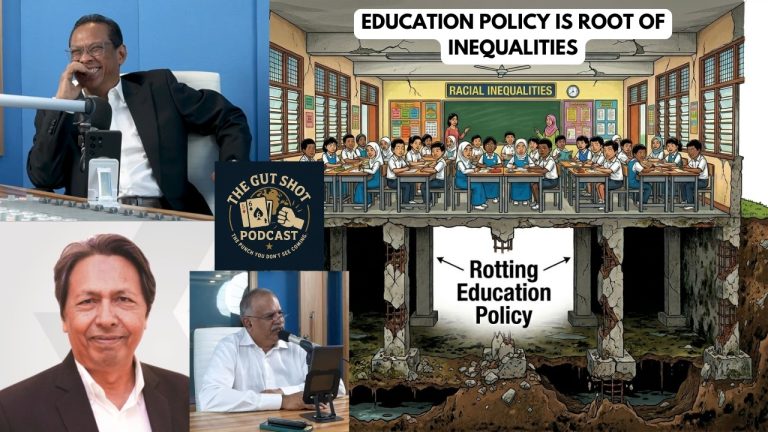
Education Policy is Root of Inequalities
Show Notes & Description
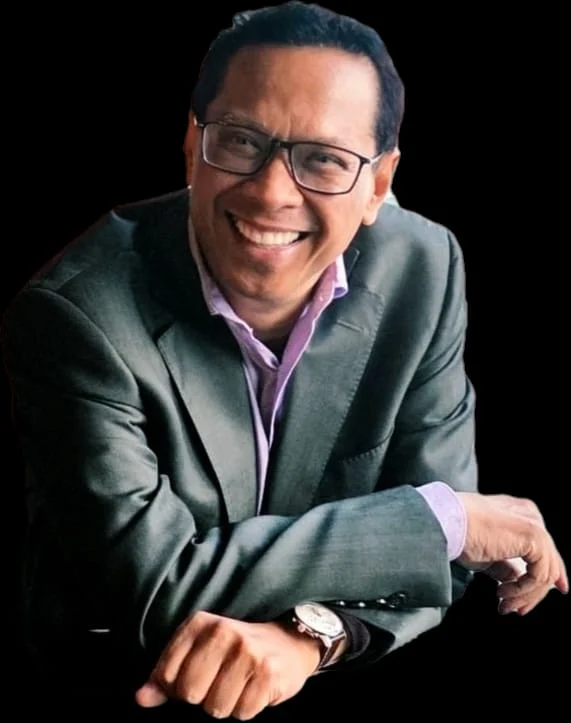
We are in conversation with Dr Rosli Azad Khan, managing director of MDS Consultancy Group, PhD in transport economics and one of our leading expert in transport and logistics sector. We expand upon his recent article written on FMT titled "Inequality in Malaysia Rooted in failure of education policy". It is an interesting angle that is worth more than a ponder of how education itself has made our different racial groups remain on an unequal footing to ever achieve any semblance of true equity in spite of all the affirmative action in place for decades.
This is the link to Dr Rosli's FMT article:
https://www.freemalaysiatoday.com/category/opinion/2026/04/12/inequality-in-malaysia-rooted-in-failure-of-education-policy
Welcome to another crucial episode of The Gut Shot Podcast! I'm Shango Sam, and along with my co-host Syed Awa, we are joined today by the brilliant Dr. Rosli Azad Khan to uncover the uncomfortable truth about Malaysia's widening inequality. If you've ever wondered why our nation feels stuck while the rest of the world races ahead, this conversation will completely change your perspective.
We break down how the root cause of our massive socio-economic divide isn't just about money or housing—it traces directly back to decades of disastrous education policies. Dr. Rosli reveals how the "fatal mistake" of abandoning English as the medium of instruction deliberately cut off our youth's access to global knowledge. We expose the frustrating reality of politicians treating our education system like a political experiment—from the "ding-dong" flip-flopping of teaching Math and Science in English, to the terrifying consequences of abolishing exams that leave secondary school students unable to even read or speak properly.
But we don't stop there. We ask the hard questions: Why did Singapore thrive by keeping one unified pathway while we fractured into multiple vernacular and unregulated religious schools? Why are Gulf States like Saudi Arabia aggressively importing Western STEM education while we retreat into an isolated cultural bubble? We also confront the deafening silence of our intellectual class, who are too afraid of losing their promotions to speak out against this systemic failure. Malaysia’s protective "cocoon" is about to burst from massive global competition. Politicians take note: fix this broken system, or prepare to keep losing elections. You cannot afford to miss this eye-opening discussion!
**Chapters:**
*(Note: As specific minute marks were not in the transcript, these sequential timestamps represent the chronological flow of our conversation)*
00:00 – The Shocking Wealth Gap Right at Our Doorstep
05:15 – The "Fatal Mistake" That Broke Malaysian Schools
11:40 – Why Singapore Succeeded While We "Ding-Donged"
18:20 – Funding Inequality: Malaysia's Educational "Caste System"
24:05 – The Generation That Can't Read: Life Without Exams
31:50 – Religion Over STEM: Preparing for Heaven or the Modern Economy?
38:30 – The Silent Academics & The Call for Nationwide IQ Testing
45:10 – Why Saudi Arabia is Beating Us at Our Own Game
52:00 – The Bubble is Bursting: A Final Warning to Our Politicians
Jump to chapter 9 chapters
- 0:00 The Shocking Wealth Gap Right at Our Doorstep
- 5:15 The "Fatal Mistake" That Broke Malaysian Schools
- 11:40 Why Singapore Succeeded While We "Ding-Donged"
- 18:20 Funding Inequality: Malaysia's Educational "Caste System"
- 24:05 The Generation That Can't Read: Life Without Exams
- 31:50 Religion Over STEM: Preparing for Heaven or the Modern Economy?
- 38:30 The Silent Academics & The Call for Nationwide IQ Testing
- 45:10 Why Saudi Arabia is Beating Us at Our Own Game
- 52:00 The Bubble is Bursting: A Final Warning to Our Politicians
Auto-generated from YouTube captions. Timestamps link to the video.
I hope they will listen to us and do some uh policy change or revamp the education system entirely or they can lose the elections.
Welcome to the Get Shot Podcast. I'm Shamshul, Sam. We are back here today with my friend Said Aqua and we have special guest today, uh Dr. Rosli Azad Khan. Uh Dr. Rosli is the managing director for MDS Consultancy Group. He's a PhD in transport and economics transport economics from Cranfield University and basically I would say one of our leading expert in transport and logistics sector. Uh we are having here today interestingly is we want to have a conversation to expand upon his recent article which was written at on FMT titled "Inequality in Malaysia is rooted in failure of
education policy." Doctor? Yeah. So, um I think Said, um I've read the article, so have you, right? And his the contention is quite literal in the title itself. Doctor, maybe uh would you like to give a bit of an expansion or brief to our audience? Yeah. Uh on on on on your thesis. Yeah. Quickly on it, yeah.
you. Thank you for having me. Yeah. Very Thank you for coming. It is my pleasure. Uh yeah, I I wrote that piece. Um you know, it stemmed from my son actually who's studying in the UK and he had to do this uh paper on geography, human settlement. And the subject that it was given was inequality and when he did this during the holiday school um uh Hari Raya holiday and um he he used Malaysia as a sample. Right. And I think it was a good idea because um as I went through with him on the subject of inequality I think it's not that difficult to find it in Malaysia. Right. Uh to be honest,
I think for him to look at the sample uh which we live in Kota Damansara and and we are surrounded by uh different levels of housing facilities uh in Kota Damansara. Next to us is Tropicana. And there are areas that are called um whether intentionally or by default um PPR. Perumahan Perumahan Rakyat. Okay. Which is Perumahan Rakyat which is the low-cost housing.
the low-cost the low-cost housing. supposed to be low-cost housing, but now instead of building it as a landed property, they built into flats. Okay. Yeah. Uh 20-story, 25-story flat and so on. And these places are basically housing uh people who are you know, in the manual labor category basically. So, and then you know that's what has been done. So, they are housed there. And they are surrounded by uh expensive uh houses. You know, Tropicana is one of them. So, they are just right at the doorstep. So, you can see straight away that there's a major inequality that exists in term of housing.
So, and that is as you delve deep deeper into it of course, it's related to uh the background of the family living there the education that they have attained the employment that they have um they are doing and so on. And then they have got whether they have got access to recreational facilities or health services and transport and so on. So, it's it it brings out a a long list of uh factors that you could measure easily. Mhm. Yeah. How do you then actually relate that um to education policy as being the root of I mean, whatever that comes and and and like a domino effect shall
we say of that inequality that it is rooted in education? Of course, we we it's it's quite easy to point out that you know, the the fact that inequality exists uh as a result of the education policy, but education in itself is very complex. Uh we have gone through um so much changes uh of our own doing. Um I remember when I was young uh I started in a Malay primary school and then they had standard six exam where they selected the bright students and so on and sent to boarding school. And those boarding schools were the medium of instruction at the time was English. Mhm. Right? So, um
that was I thought that was a good policy to expose rural students from uh low-income families and so on put them in boarding school and educate them in English because education promised them a better opportunity in terms of work, in terms of income, in terms of progressing to a different level which I thought was good. Mhm. But at some point in time we reversed that process. In what way? We we changed the the the medium of instruction. Okay.
From English to Bahasa. All right. Right? For whatever reason in 1978 they they abolished MCE and they replaced it with SPM. Mhm. Right? So, um I mean, now I know because back then of course, you you you did not know that this is the government policy of of that era. Uh now we can we can look back and say that was a mistake. Mhm.
You know, you shouldn't have changed the medium of instruction because because the the students at that time they were progressing well. They were doing very well. In fact, if I I would If I may. Yeah. At that at that time when the the boarding school system really started taking off. Yeah. Uh it was in English and the rest of the country was largely Malay based and traditional. So, it was felt our policy makers at the time who made the right decision. It was felt that you know, for Malay students especially
they did not have as much of a chance for exposure and learning things quickly in the traditional system that we had at that time. So, they they removed the good pupils, the students who do well and isolate them and put them in a sanitized environment of the boarding school system. They speak English. They have a disciplined system, very strict discipline. Mhm. They have good teachers and then they have this uh prep classes and all that.
Mhm. Various activities. So, their lives were very regulated and disciplined and it was a good quality education and it was in English. English, yeah. I I I knew friends of mine who went to boarding school. They'll talk about debating in English and you know, various societies they would discuss things and all that. Mhm. So, that was a the the English-based boarding school system which was a sanitized atmosphere from the rural environment of Malay average Malay
come from, yeah. where they come from the villages, come from traditional environment, very not conducive for them to compete with the real world. So, the the boarding school system gave them that that uh apani specialized and very it it was a crucible where
enabled to motivate and form this new generation of young Malay students Yeah. and give them a lot of exposure and they were and they were able to move fast very quickly in life and a lot of successful Malays of our generation and even slightly older they are from that system. Mhm. But as Dr. Rosli says later, the system changed where language MCE was abolished and brought in SPM and all that. And there was other things like religious education and all that. Mhm. But until by now today, the curriculum and even the atmosphere in the boarding school system Mhm. is not
much different from the environment from which the students came from. Yeah, I see. So, they have leveled it between the There's no There's not much difference between the boarding school system and tradi- and the Sekola Menengah system in the in the the daily school, right? especially in terms of well, the the the syllabus, the medium of instruction, things like that. Sure. There's nothing so special about the boarding school system anymore other than the students themselves. Students are still top scorers. Uh but Mhm. but other than that, you can say that
yeah, it is I think pretty much Yeah. back to square one. Yeah, yeah. I I I I yeah, you are right in pointing out that they they were taken away from the environment Uh to be to put in a special uh boarding school and so on. Yeah. But the fact of the matter is that there were other national school, there were other schools that are not boarding school, but they were also taught in English. Right? There were plenty of um schools uh Every school the missionary school system Yeah, you know. All the well-known famous schools like those days. Xavier Now, no more. No, no. But it's it's it's not um
it's not the the the type of school that you go to, but I think the important thing here is that the medium of instruction, medium of instruction in the school that you have adopted. You know, it generates quality of education, exposure, because if you learn in English, uh there are a lot more books for you to read. There are a lot more magazines for you to read. Uh you are not limited by the language, your your capability in the language. So, I found that after they switched to Bahasa, then the student progress is more or less slowed down slowed down. I call it access to knowledge because
why? You're limiting the access of knowledge via limitation of language. Yes. You know? So, Dr. Said, I I want to ask you. So, why did they do Why did they do it? Why did they try to fix something that is not broken? Not broken. It wasn't broken. The English system was not broken. That's a good question.
The same system Yeah, yeah, yeah, yeah. They still have in Singapore. So, why? Why? I mean, Singapore did not abandon that. Singapore never abandoned Exactly the same system. So, they continue Yeah. And now they are developed country.
they removed they removed uh the the another pathway in Singapore. They removed the Mandarin pathway. Mhm. And concentrate fully fully on English. But we decided that we have got so many pathways. Mhm. Right? We allowed so many pathways in in the school system. We have got the you know, basic primary education in Tamil, in Mandarin, in Bahasa, in Arabic also. Now, so why we allow this? Yeah. We we got to have one pathway and you can have sub pathway within that main mainstream. You if you since you talk about that, there was another point that you made is that that the parallel religious
schooling. You mentioned the proliferation of Tahfiz and non-standard religious schools and also the the the the the the and and I mentioned in a couple of podcasts back as well the the apparently the increasing religious religiousization of of our academic system, you know. How how the and and minimal focus on STEM that you know, left many lower income Bumiputra student, especially Malays without skills needed for the modern economy. Yeah. Is it Okay.
So, how how how do you see that making making that problem from your People have heard from us. So, I I want to hear your opinion. Yeah, let's let's take a step back, right? Right. And when when you talk about education, you are channeling people's mind towards a certain target to be educated, to be qualified, and to develop their intellectual capacity. Right. Right. So, in those days, I think we had a big group of intellectual people, intellectual Malays, Chinese, Indians, you know, in the country and so on. And these are the group of people who put their heads together and develop
the system for for for the whole country basically, yeah. Okay. Now, if if you are from that I mean, I'm sure in the Ministry of Education, there are a lot of qualified intellectual people who knows what they are doing. Right? Now, and then here you are, you have got another group of people who came along and decided that if you um learn by heart, right? Certain script, right? Which I think, you know, the the way I look at it is that, you know, if you say decide to learn Greek, for instance, you you learn by heart all the words, everything and so on, but you do not know the meaning.
You know, people used to say that it's all Greek to me because they don't understand. Right? So, now you have this group of people who say that this is what you need to do, right? And if you do this, if you learn Greek by heart, you can go to heaven. Now, Okay. What do the intellectual group say? I do not say it, but what do you do the intellectual group say? in our education system allow this sort of narrative to be sent to the parents, everything and so on. And the parent believe that. There is no culture of of speaking up. The the the people you are referring to,
they the intellectual group, the the professionals, they know better. But in our country, there's no culture of speaking up. So, so at the end of the day, the politicians who think they are very clever, they what they say is implemented. They call the shots. And they have been doing this. They have been doing this now for decades. The education policy has has failed because you see, yeah. We try to fix something that is not broken. See, as you said, Singapore continued and Singapore has done very well. And we went and changed it. We even created the boarding school system
to teach the the students in English, which is still going on today, I think. Some well-known boarding schools until today they speak they teach all in English. Yeah. They even prepare students for baccalaureate and all that in English, yeah. So, we have again we had this another system in the country. Different pathways, yeah. For the ordinary students, especially ordinary Malays, they go to Sekolah Kebangsaan and they suffer all the whatever things that go on. Now, they have Sekolah Sekolah Ugama. Then then you have these boarding schools which are supposed to be like elitist and they teach
different. So, what is this? I you mean like the ordinary Malays, ordinary Malaysians don't deserve to get same quality of education as the boarding school? Whereas the boarding schools paid for using taxpayers' money. So, we have this caste system coming up and elitist caste system. Okay, you're a good student, that's fair enough. But the moment you're a good student, you get selected and sent to this system which the by intention by intention is supposed to be a cut higher than the normal school. But every it is paid for by taxpayers' money. So, this already not fair.
And and then the system is not really is not really Okay, it's not breaking down, but it's not performing as how it should. We are not. And then over the years, excuse me if I may finish your point, and then along the way, you know, the the some the same people who designed the system realized that it has gone wrong and then we try to compensate. You know, half big job. Remember this maths and science in English. You try to bring it back. Well, it was a clever tactic because at university level, there are some universities, technical universities, we teach only science and
and engineering, so they went 100% English. Uh but that that lasted a few years and then Dr. Mahathir retired, the new prime minister came in, they switched back the policy. They said, "No, we don't want maths and science in English." So, we are in this ding-dong Yeah, yeah, yeah, we we yeah. This year, this year recently is the first I mean, yeah, the first SPM results where the students have gone through form one to form five without any examinations. Yeah, yeah, yeah, yeah, yeah. It's evolved further. Now, all examinations are abolished. I mean, school examinations. Yeah. So, they straight
away sat for the first SPM examination without any inter intervening school term exams. Yeah. But of course, they announced that the results this year were the well in years. I I know I got no comments about that. No, I I I have a comment on that because not only that that is So, so you see, there is a up and down, you know, to and froing, ding-donging We keep changing. We keep changing. You you're messing with people's future. You're messing with the country's future, you know. Well, it's actually I I I don't think the right word is messing. Um sorry, Said. I think it's already
messed up. Messed up. Right. Yeah. So, the people to me like as what you mentioned just now, the people who seem to call the shots in almost all these policy making Yeah. are the politicians. What the Who may not know anything about education or who may not or who may have other calculations in mind. You know, political calculations in mind when they support this policy and that policy, yeah. So, it's it's uh I you can I mean, a lot of people aren't happy with the ways our education system is performing right now. A lot of unhappiness. So, but they are not fixing it. They are not
fixing it. No, my I mean from what I've heard as well, what has happened with us is okay, we don't like our PISA score, we don't participate. And then what has happened the last few decades is actually also the lowering of the standards by actually if you're going to the the the passing marks has actually gone down. 40 is a passing mark from what I understand now. Yeah, so A that you see today would have probably be uh I I don't know. Maybe yes, uh you know, B or whatever.
but we don't hear good things, lah. Yeah, so here So when you have got That's why I tried to correct say it in a sense that I don't think we are messing it. We have already messed it up for the last four decades. Yeah. The the education minister who pulled us out of the PISA assessment system, he later said our education system among the best in the world.
Well, I don't know. You are you employ people. You employ people. I employ people throughout my you know, from my mid-career onwards, I've seen actually the deterioration of of people coming out of school, yeah. Every year I can see the difference.
Yeah, don't talk about graduates. Just the school leavers. Yeah, just the school leavers. You know, I'm I'm quite shocked to see that some of the students even in primary five and six they can't even write properly. They can't even speak properly. This is a problem. This is a problem. Wow. So so by the time they go to secondary school and like you said, no exam, no bar to be achieved, no bar to cross. There are cases, lah. There are quite a few cases where students' reading skills are very poor at form one level. You know, I mean I I'm I I I want to hit on this proliferation of
Islamic schools and tahfiz schools and all that, you know. I I think it's about time that and and the non um existence of intermediate testing and testing at the proper level, right? Because we if you build a building one, Yeah. right? You first check whether the the foundations are is strong, right? Before you start building the the the flooring. Yeah. And then by the time you start building the flooring before you go to the second floor, you make sure that the sec the the the foundational structure is solid, right? We don't do that and all of a sudden we end up, okay, now
we're going to put the roof. Yeah. And then we find out that it's not just going to lean, but it's probably going to collapse. But we we we we can compare to a lot of other countries. I mean, there's nothing wrong in in the UK, there's nothing wrong with students who who are interested to learn the Bible and to to memorize Bible by heart. There's no issue. But you don't That's not for everybody. Because you still have to produce engineers, you still have to produce doctors, you still have to produce accountant, you have to still produce scientists. You still have to produce
teachers as well of a certain caliber. Yes. But you know, if everybody memorize Bible by heart, what will they become? What sort of job do you think that you know, these people will go out and work as? Yes, yes, yes, using that as an example, lah. Yes. Yes, okay. You know, they don't do that. But I do I I I sort I sort of like want to ask the government.
become Bible preachers. Yeah, that's what happened. In UK now, they are also multiracial. But when you go to send your children to school, you still learn in English because that's their language, right? You don't go to school and learn Urdu or you learn Tamil or you learn Chinese. No, they don't That is another subject that you want to study. But the the whole pathway is based on English language. Everybody goes to school whether you are whatever national whatever race you are in the UK, you go and learn English and everything is Because the access knowledge is is from the I'm not
defending English as such, but because we all agree That's where the the the knowledge is. It's a global language. Correct. And then and then you see there is It's all political, lah. To me, I look at the politicians has messed up the country. You know, uh they have said that English is difficult for the uh rural children to follow, especially Malay rural children to follow. They said they are struggling and we are forcing them. No, I don't I disagree, yeah. Because they have no qualms, no problem teaching Arabic. Everywhere they teach Arabic to the students. It's like the in thing, you
know. And I can tell you I will learn Arabic. It's it's For us, lah, for me it's much more difficult to learn Arabic than English. than English, yeah. Simply because we have a huge and very long historical presence of English in this country. We know that even the weakest person in English can can understand English. So the learning of English and the teaching in English, the infrastructure already there. Uh we we we threw away something that already exists. And then we started chasing so many other things like you know, wanting to go to heaven and all that. So
learning languages that will take you to heaven. Uh but it you miss out on on practical knowledge, practical language in an age now, 21st century, English is more vital and important than ever before.
going to the inequality of the races that you will forever be unequal. Unequal, yeah, yeah. You are forever going to be unequal. You have nobody else to blame but yourself and your politicians that has actually created this system to ensure you're always not able to compete. Let me let me say a point in defense of the Malays. Mhm. Actually, if you are given a chance to learn in English, I I can assure you the Malays will perform well. Mhm. Because there are so many examples in the past where Malays who speak English, who can learn in English, they became some of the top
practitioners in the media in our country. Mhm. They were Malays those days. Well, I think you are you are Malay, too. Yeah. You've done well. The strength if we do if we do a SWOT analysis on the Malays, I think this one of the strengths that they have is that they can pick up language, English especially, and also they have got a strong culture of learning. Well, we I think we have maybe partly destroyed that culture of learning and social media does not help to a certain extent with all these TikToks, you know. Uh and and when you've been teaching them to be um uh to to not have
the skill required to compete in the proper economy, uh you start having ambition to be TikTok influencers, you know, and you can't go anywhere else and But you you can in the Malay language if that's your focus, lah. Yeah.
But it's limited, lah. It's limited, lah. limited. You are limited. But you're limiting yourself, lah. You know, I I wanted to say this. I think before we go there, uh but Well, here here it is. Um the I think the people is owed um uh an assessment system. Mhm. I don't know whether you agree, yeah, doc. Uh I'm going to ask the same question when I have time around, which is I I think we need to actually do an IQ test on every student that we have at primary one not primary one at about form three level. Okay? Because why? IQ test, yeah, is is not about knowledge. Yeah. IQ test
is about pattern recognition Yeah. critic and critical thinking. yeah. Yeah. It has got nothing to do whether you know English or you don't know English. I can do an IQ test in Bahasa. Yeah, yeah. Right? Okay? So I want to see the differences between uh what we have today, whether it's particular school, sekolah kebangsaan, sekolah agama, sekolah tahfiz. I want to see the IQ test of all these students and and and see where they are at the IQ level. You know? And I think it should be published. Because why? This will tell us exactly where the system is. Is whether the system
The Yeah, exactly. The outcome of the system. I think It is very useful. They make it transparent. Yes, you make it transparent. Uh yeah, you you In the way, you know, you recognize their their strength. By doing that, you recognize their strength and you design the education system to meet that strength. Yeah. But you There you go. There it goes again, right? The purpose of the education system is actually not to teach them to memorize, you know. You got There are part of memorization that is important for you to be able to think critically. Because in order for
you to think critically, you must be able to uh actually uh what do you call extract the knowledge in your brain, recognize the pattern and come up with that critical thinking. Yeah. Right? So, that's part of it. So, access to that to multiple knowledge is important.
important, yeah. Right? Yeah. So, what we've done, if you ask me, on top of that, I think going to your basis or your article, on top of that, the politics, uh I think ever since Mahathir left behind the education ministry, every education minister has been not up to par, if you ask me. They are not qualified. They're not qualified. If you have a theological degree, I don't think you're qualified to teach uh to to this one. Yeah. You know? If you have a degree in literature, you're not a qualified person to think about education. At the very minimum, if you ask me, you
need a STEM punya this one because your your then you can understand your experts that they say when they tell you Yeah. what actually be done. Yeah. So, this is going back to the intellectual group that I mentioned earlier. What are they doing? If they do exist in Malaysia, the intellectual group, what are they doing currently? What are they saying about our education system? Where are they? Why are they not speaking up?
They work for the government or they are paid one way or another by the government. They depend on the government. No, but if you are doing it for the country, you will be doing it for the society. They are so afraid to speak up. Because they don't want to get Yeah. You know? In Malay, they call it They call it
up, you probably you you're probably not going to get a promotion. sideline or cold storage. Yeah. Hey, we just recently have just for for criticizing the Prime Minister, this lady got called by the police. You know? What the hell is that? I know I know of academics who I mean who say that they were basically cold storage because they were too outspoken. Yeah. Challenging the the status quo, things like that. So, that unfortunately that kind of feudalistic thinking permeates the even the the entire education ecosystem at the higher levels. So, everybody they go like I'll just
take care of my career. Is that the reality or perceived to be that way? That's reality. No, but I can I don't I can tell you this because my sister is a retired lecturer. Okay. Okay? Um and um and that particular culture is very pervasive even at the university level. Is is is if that's the reality, that is very sad for the country because we won't be
no, as you said, they don't they don't speak up. Yeah. Okay, we can we can You know what? They don't speak up. They you have a culture where and and and she And my sister is not the only educationist that's been telling saying this. Even our our friend that come on my podcast also will tell you the same thing. That if you go to especially public universities and all this, you know? Yeah. Um the culture is even this. The people who the people who should know better, they don't speak up. No, not just that. If your grade they their KPI is based on what their students' grades are. Mhm. So, pass
rates. Yeah. So, for them is actually even if they artificially increase the grades, okay? Or allow a student to have a better grade, it become a buttering situation, you know? In order for them to be able to get to meet their KPI or exceed their KPI, that actually uh have impact on the bottom line of what they get in terms of their their promotion, salary package, and whatnot. So, yeah. So, I mean if if that's the reality, then the the the issue on inequality will continue. Oh, yeah. We continue. So, you are not well educated, your your opportunity for employment
will be limited. Mhm. But your income will be low. There is There is facilities and so on will be poor. There is some hope, lah. So, since 2008 2018, they have been losing the elections, these people who make these decisions because the public doesn't like them. Yeah. The public doesn't like that the future of their children of our education system. Many people are totally unhappy. So, these people get kicked out of government. 2018, the ruling coalition lost. 2022, nobody won. Everybody lost. Now, we don't know what's going to happen. So, the politicians got to realize that this is
These are the issues among the major issues why they cannot win the elections anymore because people see the education system uh we we I mean we are not happy. Yeah, we can be we can do much better than this. We need to do much better than this, but it's not happening. No change. Decades, no change. In fact, new experiments, you know? And then they say things that oh, everything is fine. We're doing very well, this and that, but the people are not convinced.
Yeah. So, as as a result of which uh this this is a message for the politicians. That's why you lose elections now because people don't vote for you because among many other things in the country, the education is one of the big things. They think they're doing all the right decisions. Now, they they think they're doing all the clever things, but they don't realize that people have stopped voting for them anymore. People just don't like it. I mean, if you think about the funnel, the funnel of this education, it funnels right into society in terms of whether the worker can match
the requirement. It's also funnels out people who are actually whether they are qualified to even be leading as politician or not. So, if we've got like four to five decades of this, four to five or three generations of this, we we basically have got um people that are at the top that are making policy decisions that are not qualified. They are very uh what do you call this? Blinkered vision, they they cannot see a very like tunnel vision. They cannot see too far left or right. That the politicians, especially Malay politicians, they are of course they're catering for the Malay voters, uh but
you know, the the real world is much bigger than that, isn't it? Yeah. And at the end of the day, we all have to exist, compete, interact, and do business with the rest of the world, you know? Yeah. This is where you are denying your people that access into to to Correct. Yeah. Yeah. And then you complain But you're hoping that our cocoon is enough to maintain us. It won't be. This is This is the thinking. And we have this we have this safety a bubble, uh which we can exist inside this bubble, Mhm. uh this cocoon, and we really do not need to interact too much
with people or the rest of the world. They seem to have this kind of thinking. Unfortunately, probably that's all this We can be self-sufficient just by ourselves. That's not going to That's It's not working. It's It's not just not working. It's not going to happen. That's the world. That's the world from Shanghai to Beijing to anywhere you go. It's so cosmopolitan, you know? People all sort Everywhere in the world now is multicultural. Everywhere people travel, they live in this from from Asia, they go to Europe. From within Asia, they travel to other cities and countries to
work for a while. You have done business, you know, in other countries. You have to interact. Doc, you were at Dubai port. Okay, at one certain part of your of your career, right? How do you find the way the the the Gulf states uh treated their education system? Oh, they are they are very forward-looking. They are they are comparing themselves to the European. They don't look at anybody else. They don't compare even among their own peers. Right. Their own fellow countries, like different Arab countries and so on. They look at the European. So, their school system is basically
uh apart from learning Arabic, of course, the English has been there all the time. Really? So, yeah. They they they they set up all the colleges and universities and so on, and they spend a lot of money uh bringing in foreign experts. All three of us have Cambridge University certificate for our MC.
Of course, MC, yeah. Yes, MC. All three of us. I I No, no. Me, no. I was the first generation Non-Cambridge. SPM. SPM. Some of the year. Yeah, I I was the first generation SPM. 1980 onwards is all SPM. After that, it's all SPM. Yeah, okay. I I would say, and this is where uh Penny, just to continue before that before I go into that point, right?
Yeah. This is where I'm going to I'm going to tell you also because why? I do quite a bit of business in Saudi. Mhm. Right? Yeah. The Saudis' English are top notch.
yeah. All right? They import American lecturers to teach their schools and their universities, right? And here we want to be jago kampung, you know? Uh here we have tahfiz school. There there there in Saudi, they are bringing up engineers, they're bringing up doctors, they bring up I tell you Yeah. we are left behind by the GCC countries like nobody's business. Yeah. Yeah. You know, I I would just want to add one which I find very funny. Okay? I normally don't comment on or TikTok or on or social media, that. on on the public sphere. I did this just for experiment because this so
one so-called professor was saying this about history. So he he said that look at all this sejarah this history that is being written by the white man. Okay, so they they they are biases are towards from their own point of view as a as a as white colonialist blah blah blah blah. So I made a so he said that you know we should have our own so it comes from our own perspective. So I injected a comment. I said well if you if you're going to make comment to have your perspective, right? Then you're not being academic. What you want to be academic about is actually you should be objective. You
should try as much as possible to exclude as much prejudices as you can on any subject including your own society. Right? Dude, look at two of them. You see all the Malayu comment, okay? They don't comment on the on the critical thinking of it, you know. They shoot the messenger. All you get are at homonyms and actually uh what do you call it because they cannot argue. So you have a professor that also called professor I've no blood idea whether this guy is real or not. You know, but who cannot even give a critical thinking argument. And then you have followers
who can who can only attack you on personal basis. This is what we have created. You you got you brought a good point there because the whole objective of having an education policy is for the people to be educated. You can it's two different thing between educated and qualified. You can produce whatever technician that you want. You can produce accountant. You can produce managers. You can produce uh engineers and so on. But if they are not educated enough their performance will be different. So you you have to have an educated engineers and educated technician who can see the world view.
It's not just about their profession and they are caught like what you say in in their own cocoon and they don't care about any anything else. So you need to produce an educated workforce. A degree a degree gives you a skill set. But it need not qualify you to be an accountant to count all the beans. But it doesn't mean that you are fully and properly educated. But if an educated accountant will be different from a just a qualified accountant. Good point. I think on that note said you want to add anything else before we wrap up? I mean it it's relevant and it it has caused major
non-achievement in our society. Low achievers. Low achievers. Non-achievement. Low achievement because at the end of the day I mean any society you know you need education. You need to go to school. Uh you don't just need to read and write and count. You need to be able to think a bit higher than that. Uh you know a higher level of civilization comes with higher level of realization. So when you restrict this access this opportunity to gain as much knowledge as possible for whatever reasons but in this country the restriction usually political. Then then don't expect your your young
generation to be able to fit in with the rest of the world. It's not going to happen. I agree. I think that's where we I hope we get that message across. Oh yeah. I I can I put this point when you talk about the cocoon. I think the cocoon is about to burst. Okay, the cocoon that already bursting because what I see is actually we are going to have massive competition from China. Okay, the Americans are also uh going all out in the sense that the way they see the world is that you know and Vietnam is coming up. India is looking at Yeah, so the whole world is is moving beyond their cocoon.
But we are in the cocoon and at this time we have a small little dinky war in in in in the Gulf. Right? And we are already raising prices here. That is uh that is already a sign that our people should take that the protection of your cocoon is going to disappear. I give it I I give it maximum 5 years. Okay, on that note um shall we wrap up for today? Thank you so much for coming. Right? I hope they will listen to us and do some uh policy change or revamp the education system entirely. Or they can lose the elections.
Thank you so much. See you all again. Please like. Thank you.
What viewers are saying
132 comments on YouTubeNo comments yet. Be the first to weigh in.
Join the conversation on YouTube ↗