Tariffs – Trump Will Win, Mostly
Show Notes & Description
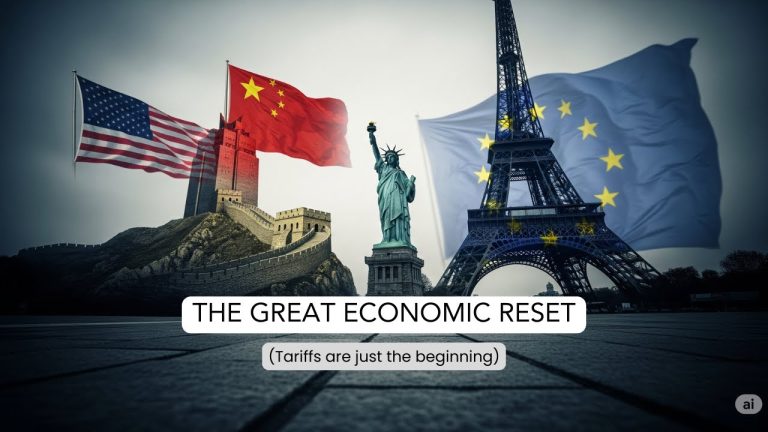
Episode 6 boldly dives into the real-world implications of tariffs, offering a refreshing counter-narrative to conventional economic discourse. We cut through the theoretical fluff, explaining that tariffs aren't a simple binary that causes inflation or company collapse. Instead, our hosts, drawing on practical business experience, reveal them as a shrewd negotiation tactic. The US, as the world's second-largest market, wields immense leverage, often forcing foreign suppliers to 'swallow' the 10% baseline import duty to retain access. Countries heavily dependent on US exports, such as Canada, have little choice but to comply.
We unpack Donald Trump's tariff approach, presenting it not as chaotic, but as a deliberate 'method to the madness'. This strategy aims to rectify America's staggering $36 trillion debt and vast trade imbalances, challenging the notion that other nations have 'played America for the fool' for years. Our discussions expose the myth of 'free trade,' arguing that while the US market is highly open, many countries, particularly China, employ significant non-tariff barriers. We delve into China's overproduction and global dumping, noting that the EU also employs anti-dumping tariffs against Chinese goods.
Our hosts present an unconventional view on China's demographics, questioning the reliability of its official population data and suggesting a potentially much lower actual population, facing an impending demographic collapse that severely impacts its productive capacity. We highlight how tariffs are inadvertently relocating manufacturing from China to other, more tariff-friendly Asian nations like Vietnam, Malaysia, and Thailand, with Singapore being a key beneficiary.
While Trump's policies bolster American economic strength, we explore the provocative idea that they could also inadvertently foster a 'world minus one America' scenario, accelerating the decline of the US dollar's global dominance through initiatives like BRICS. In stark contrast, we critique Europe's self-inflicted economic wounds, from stifling innovation to mismanaged welfare systems, which have left it lagging far behind.
We celebrate the US administration's 'Genius Bill' as a brilliant, swift strategy to cement the dollar's global reserve status by backing stablecoins one-for-one with the US dollar. Fundamentally, we frame Trump's policies as a 'Main Street takeover,' a crucial effort to reverse decades of policies favouring Wall Street and asset owners, aiming to revive the hollowed-out American middle class with employment and higher wages.
We also offer a controversial take on tariffs' role in developing countries: they can expose and combat deep-seated inefficiencies like corruption and bloated civil services, forcing these nations to improve their economies by dismantling entrenched patronage systems that act as non-tariff barriers. We consistently challenge mainstream media, asserting its prevalent anti-Trump, left-wing bias, which we believe distorts these vital economic realities and feeds a biased narrative to the public. Ultimately, our podcast aims to provide a 'different dish on the table' for our audience, fostering self-analysis and unique conclusions by daring to see things before others do.
Jump to chapter 8 chapters
- 0:00 The Commercial Reality of Tariffs
- 7:23 America as the Global Supermarket
- 13:22 Non-Tariff Barriers and Global Trade
- 21:20 Supply Chain Relocation and BRICS
- 27:12 China's Overcapacity and Demographics
- 46:20 The Genius Bill and Dollar Dominance
- 53:55 Main Street Revival Versus Corporate Interests
- 1:02:09 Patronage Networks and Malaysian Monopolies
Auto-generated from YouTube captions. Timestamps link to the video.
Good morning. Okay, so I think what we're going to talk about today essentially because we're like about a week away from that August 1st deadline that uh US President Donald Trump has imposed in terms of tariff discussions, right? And of course there are some which are going to happen mid August, but I think the the key deadline is August the 1st. We're about a week away from that. So we're going to try and do a deep dive on the wise and the wear force of tariffs. And I think we're going to start off with a little bit of a clip um about your participation on the two-way podcast in
America and your comment that essentially businesses should um well in some sense digest the the increase in tariffs essentially. And we also saw how the economist on the 2-way podcast Steven Mo had to say about it. Right.
Yeah. Yeah. Okay. So that's going to cut into the clip. Okay. So, so you heard about Steven Moss said, uh, Sam, um, what was your thought when you heard his comments? Well, the first thing that I thought about when I when I heard that comment is that's the difference between theoretical economist and business people, right? Um, actual business people will have to deal deal with throughout their career uh, real situation and negotiation. It's an art of the deal, so to speak, you know, to to to to uh to reference how Trump would put it,
right? But um I was uh sort of taken a back that for an economist to punt on the on the question of tariff and inflation and then um and and and yet use the uh the the reasoning that if they don't increase the price then you know and pass it to the consumer uh then if they they lose money and they will close down. Um the issue is actually a lot more complex. It's not binary.
Of course not. Yeah. Um tariffs uh is tariffs on its own uh does not determine whether inflation goes up or down. Number one. Number two is the market itself. What are we talking about? Right. It is very interesting because it depends on your supply sources. um the competition for you to bring in the um the supply sources, who is willing to bring down their prices or increase or swallow the tariff in order to access uh a lucrative market like the US. Okay. Um basically globally the US market is like the second biggest market in terms of uh for example I believe uh for for the world right. So,
so it's it's it's not um it's it's it's not something that you simply say I'm going to turn around and not not compete for this marketplace.
Okay. Now I want to jump off into this discussion actually which the economist Stephven Moore mentioned which is steel t the tariffs on steel and it's a direct correlation according to him on inflation on inflationary pressures
right he is not wrong to a certain extent but it's a question of then um one how much actually is the uh is is is the US importing steel number one number two who not importing, do they have other sources of imports? Okay. Uh and can they play the the the uh the import partners um uh between themselves, right? Um the other thing you have to look at actually if you if you look at steel completed steel uh completed steel imports into the US it basically accounts for about uh around um uh what is it around%
about a fifth about 20% yesth about 20% that's it so 80% the vast majority is is US produced and they rely on the fifth of their requirements from outside right exactly and there's essentially four or five main uh input suppliers which is I think Brazil is one of them.
Um the Canadians is one of them, right? A couple more I think the Koreans are also suppliers, right? Yeah. So you got top four uh top four uh exporters to the US, right? Canada is a top one. U Canada comes at about
uh at around 8 billion, right? And then you've got Brazil and then you've got Mexico and South Korea, right? Yeah. So what you do is actually if you look at you look at each trading partner
right there's a diff there's a there's a asymmetry in terms of each uh each trading partner negotiation. Y Canada exports 77% of their goods to the US. That doesn't give you much leverage.
You have no choice. Right? It's the biggest market. Right? It's like the Germans in the European Union. They have no choice but to keep the union together because who else is going to buy your washing machines and your cars and your drills and what have you. Right. Because your production is your production has you you can't simply see especially steel. Right. Steel is a bulk purchase.
Correct. Right. It's not um a consumer item. So it's your biggest customer. You have no choice but to play ball with them. You got to suck it up. Correct. Right. So you have to somehow play ball for Canada. They have to play ball. Correct.
Right. Now when you go to Brazil for example then Brazil is a difficult difficult uh different cattle of fish right Canada is about 19% of their GDP um it the the export to US is is approximately 19% of GDP number 19 one nine right but you go to Brazil it's only 1.2 too.
Yeah. So the American the Brazilians can tell that the Americans don't bugger off. Canadians can't. Right. Sorry. So it's a different ball game now, right? And then you go to uh and then you go to Mexico,
which is a different situation. Mexico needs the US more. The leverage that that that US have on Mexico is higher, right? Um and then South Korea, we know that the relationship between the US and South Korea, they are pretty positive from South Korea information themselves in opening up their farm market and all that. So I think they'll come to a deal with the US
on uh on tariffs, right? And and we know that the Trump administration is already transmitting to the world to the marketplace that their baseline is 10%. M
so that's the import duty. So your margin the question when you negotiate with your uh importer I can tell you more than likely you're going to have to swallow the 10%.
Yeah. At the end of the day I think people lose what it means about the terrorist because the problem with the financial media they make everything sounds so complicated. At the end of the day what does it mean? It means if you want to do business with that customer, right? And that customer is worth 350 million people is going to be sold to you in US dollars, right? And essentially that the wallet per customer for that client is bigger than the rest of the world, including in China. If you want to do business with that customer, you take that hit. What are you going to
do? Right? What are you going to do? It's only 10%. For Malaysia, it's 10%. Right? For some countries, it's more. Maybe for China, it's more. We'll talk about China next, right? But if you want to do business with the biggest dog in the room, you got to take the first nonsense. It's not not nonsense, but
well, let's put it this way. He he is trying to write what he perceives as fine, right? But you got to take it well let's just let's let's make this analogy, right? Uh that the US is a supermarket.
Correct. Right. If the US is you I mean if if you've done business with supermarkets, right? For example, the rules. Okay. You want a shelf space. Okay. You have to pay a premium to them for the best chef space. High eye level. Exactly. You're paying, you know,
right? And you give the best price to them, especially if they a big uh they they are a big supermarket chain, right? So imagine that is what America is to the world. Actually, it is the biggest consumer market with the with the uh highest per capita uh income.
Yes. Right. So, you've got the purchasing power in that market and you got the size of the market and you've got the size of the market. The leverage is tremendous. I I think people don't realize because because people vilify Donald Trump. Oh, he's a bit of a psycho and this and that, right? He's trying to kill he's trying to the world economy. The thing is I see what Donald Trump is trying to do. I'm not a fan of his. I I think he's a bit chaotic, but that there's a method to the madness. Look, at the end of the day, the US economy is in is $36 trillion of debt. Its blended
interest rate per year on a nano basis is 3.3%. Right now, they're paying $1.2 trillion a year in interest cost alone. And because the government runs a deficit every single year, there's no hope in hell right now of paying that debt down with income from receipts essentially, right? From doing business. So, he has to write the wrongs of the world. And everybody else has kind of been playing America for the fool in his mind for years, right? So he has to grow his way out and to correct those imbalances because he's doing business with the rest of the world and people
are selling stuff in America which America is buying cheap Chinese televisions, cheap Mexican avocado blah blah blah blah blah blah. You think about it in in this way as well. Not just talking about the supermarket and the shelf space cost that you have to pay as somebody who wants to sell to the supermarket which then sells to its customers. Right? That's the US, right? So you want to be on the best supermarket, correct? You want to have the best self shelf space, right? You got to pay for your for your sport. Okay. Now the question then becomes actually so the question
they become we we already see that they have choices for steel and they only have to close a gap if they want to have 100% self-sufficiency of about 20%. Right.
That's only on steel though. That's only on steel. Yeah. I mean we I'm just taking steel because Steven Moore brought the subject of steel and steel is not just um not just any product it's also a strategic uh economic product.
Absolutely. you know that you as a superpower need to ensure that you are not held hostage right so that so when I look at that situation right you know um uh Canada South Korea uh and and probably Mexico is going to come to terms a reasonable term right in terms of opening their market because why what people don't realize when they keep saying the problem with the media is the mainstream media is very anti-Republican and hugely anti-Trump. So the mainstream media pushes back all the time. So the message is not coming through right of what they are they they're intending to
do or and also u how this whole thing is going to play out right. So if you look at the if if you look at for example one thing is the example of the of of of the supermarket right I mean in America if you if you have a premium market like Costco
the members pay some more of course right in order to shop there of course you know so and they get cheaper prices of quality goods you know so sources are important different sources you play them against each other Right. And that's why Trump is not uh a fan of uh of m multilateral uh trading uh multilateral agreements. He rather trade with you
on a on a bilateral basis. And it makes sense because if I'm a big purchaser, right? I want to play the competition, you know, and I will get my best deal depending on which competition gives me the best deal.
I get it. And I'll go so far because let's talk about repercussions. Right. Right. If America doesn't write these imbalances, what you think is which it thinks are imbalances, right? America gets more and more ill. Yeah. An ill America is bad for the rest of the world.
Correct. Do you know what I mean? Right. So that's those are the wider repercussions. Remember when we used to say if America's gets the you know sneezes we all get the flu. Yes. So I think a lot of people they don't realize all these terrorists are crazy. He has to do it. He can't. He doesn't have a choice.
Not just that, let's put it this way. Trade between countries is actually a butter. Yeah. Okay. It's a It's a butter situation where you are trading. Correct. It's like I want to do business with you, right? S you want to sell your your stuff in my shop. My my shop is called Costco. You want to sell, you have to pay the the levy 10%, right? You want to be like maybe at knee level, you got to pay only 5%, right? But if you want to be seen straight at level, you got to pay 10%. If I if I think your shop is worth being inside, I will pay the 10%. But only if my margins can
support it. Only if my efficiency if your margin cannot support it. Then I cannot die. You die. I'll go to somebody else whose margin can support it. So I I go and sell to Thailand. I go and sell to Indonesia. I sell
if they can buy your your stuff. Correct. Correct. So this is business, right? Because business is at the end of the day it's it's cutthroat, right? It's the fastest horse that wins. It's the most efficient horse. The horse that is 20 kg overweight cannot run the race.
Yeah. Let let me let me go to um another point with respect to what is this you know um a lot of the negative talks saying that he's destroying free trade. The world is not a free trade area. It is ne it has never been the US is the most free trade area ever. And yet if you go to different markets you practically cannot sell
into their market because of mainly don't even tariff barriers mainly non-tariff barriers right Japan has high non-tariff barriers on uh on on their their on on especially agricultural products right China has non-tariff barriers plenty of non-tariff barriers actually all right so
and and not just that as as we mentioned in the different IP protection is a huge problem, you know. So the the the you cannot be allowing people to sell to you and you end up with a trade deficit so humongous that you that you know then at the same time the opposition is saying your debt is too high. So what do you want him to do? So I I think the biggest problem for America is is China because China has been a large reason why it's debt problem has gotten so big and it deficit continues to run. Now the the thing is it's a changing world order, right? Why how did America get so big in debt,
right? It's it's essentially been been been binging on unnecessary stuff. Yes. At home that they spent a lot on on ridiculous stuff, right? And we can talk about all the inefficiencies that Doge uh uncovered, right? in for example the generals that have bought multi-million dollar packages uh incomes every year with no discernable KPI right so the thing is is the relationship between America and China that I think has been discussed in the changing world order by someone like Ray Dalio right so Ray Dalio says for example that it's been producing cheap stuff right selling to
America like washing machines like televisions like whatever cars right and then America buys this cheap stuff right but in order to fund America's own uh excesses in terms of spending It sells government US tea bills to the rest of the world including China. So they've got this relationship going where um America buys Chinese cheap Chinese stuff. China buys America's debt and the whole thing has ballooned to a point where it's come to 36 billion $36 trillion of debt. $1.2 trillion in annual interest cost. Right. Y
uh and if the thing is that 3.3% is way lower than the current um 30-year u yield of about 5%. So essentially, people don't want to buy American debt anymore. They're saying if I'm going to buy your 30-year government bond, you're going to have to pay me 5% a year, right? Which is a ton of money and it's a lot of money. So they don't So the thing is America knows it's got a problem. It's got to grow its way out of it. And one way it's going to grow its way out of it is with these uh tariffs, adjustments essentially. He's got no choice and he's on a timet. So in
essentially 7 months, 6 months, he's pulled a rabbit out of the hat. you know, he's performed bloody miracles. So, I think a lot of people don't realize that he's actually done an amazing job, right? And people have come to the table because you're right, they want to do business with a dog, with a big dog.
You don't want to do business. Hey, hello, bro. 350 million people, right? Biggest wallet in the world. You don't do business with me, off, right? So, come come. Yeah. Right. Yeah. Well, I I was uh uh it actually reminded me um I haven't thought about it for a long time. Um I was the head of procurement for steel products in uh when I was in Shell. That was in the mid uh no not mid it was around the early 90s.
Okay. So you know you try and negotiate with me when I'm the the biggest buyer in the region. You got to play ball. Otherwise don't do business. Correct. That's how it's done. Yeah. And I'll tender it out.
Right. I still get my you know I got seven more suppliers. Correct. Right. Especially today, I think when you mentioned China. Yeah. Uh here's the interesting part. I think we'll talk about China more in depth maybe in another episode. I wanted to I want to compare China and India, right? Um
but the interesting part that I find with u with with with China, China is basically the the factory for the world, right? It's trying not to be anymore, but it's still there. And fortunately, if you ask me,
fortunate or unfortunately, they they grew and they did a good job with uh when uh with D's reform, you know, and and build the GDP. Uh because I think that was the metric that that the CCP has in terms of its political leadership. However,
there is always uh the double-edged sword is this. I think China is uh uh is uh overproducing most of their most of their goods.
All right. Um beyond the cap beyond the capacity of not just their domestic market because they exporting mainly, right? They're exporting. So I think it's also beyond the capacity of the world market
if you ask me. I'm almost coming to terms with that. And if you have factories that are churning out goods um in surplus
to the market demand, what happens? You flood the market. You're basically dumping. Yeah. You're going to dump. Right. We've seen that in our little country in Malaysia, right? That is why still still has been dumped before. Cars are now being dumped by Chinese manufacturers. Right.
Right. Do you know that uh I mean I I wonder whether uh our audience realize or not that the EU has put anti-dumping tariffs on China goods right it's quite high and you don't blame them because why they can see the cost of uh of of of produc and the prices that are being put to them right so if the EU is doing that
why is the American media going so hard with what Trump is doing. You see the problem because I work at the media. Right. Right. Right. And I have to say unfortunately there was a time when I was working ago when the media was unfettered. It was balanced. Right. We saw two sides of the story. Today it's being led by lobbyists. There's agendas to every news narrative.
That's the problem. So the audience, the the general public, they don't realize which media are you are you are you reading? Which which way do they lean? They don't know because they they believe that what they read in in the news is generally gospel you know
and that's where I you know I hope actually our podcast come in because well that's the thing so so then we become a philosophical discussion right what is the truth what is real neutrality
I think there is no new trans I think this is where we come in in a sense that we we put forth from our business experiences right and our understanding of business and finance
from a practical standoint point. All right. and and point out that number one I have a I my assessment is with the market that uh America provides
that Trump is going to mostly win you know in the all the neg in in most of the negotiations right and actually if you look at even with the trade in with China right
whilst you know the deficit the is in u the hundreds of billion you in terms of the lopsidedness of the trade deficit, right? You can't continue to be doing like that. It doesn't make sense, right? That is why also with what is happening with American tax tariffs and all,
people are already moving out not just because of cost of manufacturing in China. They are moving out of China into Vietnam, into Malaysia, into Thailand, right? And in I mean I I quote an example Intel is basically moving almost everything out,
you know. So, actually, if you ask me, the timing for the Trump administration could not have been better in terms of negotiation. So, here's the flip side, right? We know why Donald Trump does what he does, why he's doing what he's doing, right?
But what he's doing is also inadvertently causing the world to splinter apart. He wants America to be first in in the eyes as you have talked about in the past the way the way the Americans look at the world is there's only a one number one. There's no shared number one. There's no two lions on the mountain top. Right?
But the problem with these tariffs is that it's causing um supplier countries who cannot stomach tariffs to look elsewhere to do business. And you look for example some days ago uh Lieong the prime minister and I think mentor minister or or senior minister Lieong he was talking to some TV host and I thought I think he he said something which echoes a lot of business people right supplier countries who don't want to or cannot stomach the tariffs are looking at a world where it's an it's an American minus one. So if I can't sell into it to America because of these
impunious tariffs, I'll try and and and hitch my bets or look for alternative markets, which is essentially what the BRICS is, right? So inadvertently, he's also causing their own withdrawal possibly as the number one dog in the room. The Russians and the Brazilians and the Indians and and the Singaporeans and all that, they're looking for alternate. So they'll sell each other stuff without these tariffs or or they'll make do with the arrangements that are pre-existing. I I think so.
So, I think that's what he's alluding to. I get it. Right. The the problem with I get it. Uh Shanlong is he's no longer prime minister and he can say however he wants to say it, right? But um but Singapore is actually is a a a pretty good beneficiary of all this.
Absolutely. Yeah. Because their tariffs is very low. So they theirs is 10% there's only 10% which is the baseline. Correct. Right. So maybe what he's doing is he's doing an advocacy role. He's trying to pressure the US.
He could be, right? Who knows? It's it's not going to work if that's what he thinks his role is, right? But I look at it this way actually. I look at it that um here's the problem for the rest of the world if you ask me. Okay? Who are you going to sell to if all of a sudden uh arguably the first or the second biggest economy in the world um you're not going to you're not going to access where you going to pivot? You're going to pivot to the EU.
The EU also have non-tariff barriers. You want to pivot. I mean everybody is for themselves, right? Do you know what just the difference between how America has been managed the last 20 years and how the European Union has been managed the last 20 years. You've talked about this in your Facebook profile, right? how Europe has basically shot themselves in the foot not once many times right including in the world of climate and the environment and workism and etc right
you want to talk about it in a few minutes fine right but essentially I saw some statistic recently right the market cap of Nvidia at 4.2 2 trillion US dollars is bigger than the economies of U of the UK and Germany.
That means the entire economic output of an entire country, not even one country, three countries in the case of the UK, right? Is still smaller on an annual basis of one stock. Do you know what I mean? Right. And that includes Germany as well.
Yeah. And and that's how far behind the And not just that, you look at how they have shot themselves in terms of energy supply, right? What is it trying to do? So energy equals development. Correct? So then we ask ourselves this question, right? Where you going to pivot?
You going to sell to China? China has its own uh rules that you cannot penetrate into because they're selling everybody's stuff. Okay. So let's go a little bit further. Right? So some countries who are not as economically strong will be crippled, right? They'll be crippled. Then what comes what happens after that? What has history shown you?
Well, here's the thing that I found. History has shown us that stronger guys will come in and scoop up the remains, right? And then own them. Yeah. So maybe that is is that a wider object? I I don't know. Well, you you see here's here's the thing. It's again not a binary situation.
It's not binary with respect to for example breaks, right? You can see this administration I find fascinating, right? because they are fighting on multiple fronts with really capable cabinet secretaries that are actually shooting or or or have their target, you know,
very focused on how they're going to manage being the number one dog in the room, right? So, they've shot down breaks. Yeah. If you ask me,
putin is well, I'm I'm I'm going to make a bet. Let's put it this way. We we play poker, right? That's part of the gut short thing, right? You know, and I'm betting um on on with the policies that Trump is putting, right? The US is economy is going to be hot the next two years at least when you when everything start to to uh to to to to be realized, right? And
you look, I'm going I'm going to tell you something about China that is very interesting, right? I as I said I think they are not just over capacity their market has actually shrunk in my opinion right
based on what statistics let's put it this way okay I was looking at the just the data set that is coming out of China is so much uh filtered by the party by the CCP you really cannot rely on their data set
right the biggest problem that is a huge problem okay I want to dive into this when we uh on another show but here's I'll just give a hint okay from 1979 to 2015 approximately 35 years okay um you are looking at their population today they are supposedly supposed to have 1.4 4 billion population from about 970 million population.
Okay. In that 35 years in that years. So that's that's where we are we we are looking at right from 1979 to now. Right. So to to about uh let me see about 1.4 1.3 something plus almost close to 1.4 already.
Okay. Remember yeah in 1979 is the implementation of the one child policy. It ran for 15 years. Okay, let's do a simple mathematical calculation. If you have
one for one, it didn't go for if you have no if you if you want to have a stable population, right? It's 1.2. Okay. If you want to have the stable population, if you want to maintain,
each woman must produce two child. No, 1.2 maintain maintain maintain I've told I've been I reading it's 1.2. Wow. Okay, let's look at the the math is very simple, bro. Okay, because why? The the the the man is not producing a child.
Correct. Is the wife correct? Right. So So each marriage each each woman must produce two. Yeah, but not every womanation. That's a problem. Isn't it? Isn't it? I check Grog.
Yeah, I did. I did that. Let's talk about you know how much you know what he come out with the number 2.1. Sorry, 2.1. Correct. 2.1. Not 1.0. 2.1 I 2.1 2.1 correct. There you go. And the reason for the 0.1 even it's more why the reason for the.1
is because of the mortality rate. Yes. Right. So that's so sorry the 2.1 right. So how in the hell do they go from 1 billion to 1.4? Impossible.
The data is not right. So what exactly is the population in China? I they you know can I ask you something? Yeah. What's the population in Malaysia?
Does anybody really know how accurate is the consensus is the census estimate? Right. In fact, I I was going to say every almost every economic statistic is inaccurate to some extent to some extent. But if you talk about population per se, right, if you talk about citizens, right, it's actually relatively easy to check. Number one, betts,
right? So I I used to go with a girl, right? And okay, go. True story. True story. Okay. Okay. Her dad had two wives. Okay. The first wife produced nine kids. The second wife produced nine kids. She told me, my ex told me, right, when she was born because they lived in the jungle essentially a fela estate, right?
Right. Her she got very far to go to town, right? She wasn't actually taken to town to get a birthert for literally she doesn't know how long. Maybe a a year, year and a half. So for the year, year and a half if a census is being taken, right, she was not counted. Yeah, but he here.
So, Bets is not the be all end. Correct. That's what I'm saying. But and then and then because Malaysia is is a is a is an it's an island country, right? As America is because it's got oceans on both sides, right? It's poorest. People come and go all the time, right?
That's why that's that's the reason I preface the answer. They land on boats, they live on boats, you don't know, right? But I I preface the answer by saying that number one, are you talking about population or citizen population? Ah ah okay number one I'm very precise all right okay that's one
okay so if you take the anomaly of of uh of of children like that okay which getting with with technology and and the uh and and the civilization getting more sophisticated right there less and less of that consider compared to during the days of our parents
right so like my dad right I'm not even sure whether he was born in 57 exactly Right. Exactly. Okay. So, but you know, by the time it come to me, I think most of us have got I still I I was just going through my uh my old photographs last night, you know.
Uh I saw my birth certificate, right? So, um and that's 1964. Yeah. Okay. So, now 60 years later, okay, I think our census is pretty good. Then you've got registration at school,
right? And then you've got when somebody dies, okay, you've got to do a police report, right? So the data set uh especially now is pretty reasonably reliable. However, and that's where we come to China, right? That's why we come to China because your data unlike democratic countries or even compared to because at one time Russia actually open up remember okay so that's why Putin has to kill off more people uh you know compared to China having to purge you know um so it it's the the the most countries data set are pretty accurate
if they are in the real high-end developing world like Malaysia, right? Know um so going back to our story of tariffs and economics of where I think the negotiation whilst the negotiation is very lopsided in terms of trade deficit and the the the the dependency so to speak of China exports into the US. I think it's going to be um it's going to be tough for both countries.
Okay. Tough in the sense that the CCP cannot afford to have people not working as well. And you have to understand the current situation at the moment. I'm pretty sure I'm going to go into a deep research into this and we'll talk.
You should visit China. Actually, I did. Yeah. Visit China. Uh I was in I was in Beijing right up going to a few cities right up to Tangjin uh uh uh a year plus approximately a year plus ago right
um and something struck me which is I I I don't know which cities uh whether it was Tanzin or or somewhere in between and I was like it's oddly not as packed as I thought it would be with all the buildings that they had. Okay, but that's not a good data set so to speak, right? That is
it's not empirical. It's not empirical. So I want to go into empirical but already I have a problem with their population data. Okay. Um and and and the the why they have been able to grow in that manner is because their communist party system uh since then has been very effective in terms of translating political uh rise to actually how you uh how you grow GDP at a local level. So it is a very interesting I find it a very also another fascinating economics uh study to look at right because the metric mainly is actually at GDP level
so you look at it it's pretty meritocratic relatively speaking you know uh in spite of the 96 million CCP members loing over I don't know 1 billion maybe less people
you know I'm not sure there are some who says it's 800 million population there are some who even says it could be as low as 400 million all right because that is 15 years of one child policy you know they were dumping babies
right so right now I think there are two things that are hitting China one is population collapse in a sense right that cannot sustain the the the production right and That's why we get Everrant. That's why we get uh solar panels being dumped. Okay. And not just that the production is so much because the party at the regional level are building manufacturing because their metric is about how much production am I going to this to to build and and how much can I sell. So they rise with that. Okay. And at the same time there is no control. It gets to a point where you
there's a tipping point. Okay. Where you are producing more than can be consumed. So therefore also what we are finding is is their cost of cost of uh production is also get going higher and hence the manufacturing is going out. So you've got a double triple whmy going on there. So the negotiation is going to be very interesting. Then on the political side, there is an interesting development going in China right now whether really Cining is holding on to power that is brewing within the last few months. Right? So again here's another question that we all the same thing is happening in Japan
actually the political leadership is in an unstable situation. They don't know whether the prime minister going to stay in power. Well, that's nothing new. They've changed a few prime ministers in the last few years. So, who are you negotiating with,
right? So, that becomes also a problem in terms of negotiating the tariffs, right? Because on one hand, you put a hard deadline. Okay? On the other hand, it's not because you don't have leverage. It's because the other party really can't negotiate with you
because their house is not in order. I understand. Yeah. Yeah. So that is going to be played out I believe okay more than um people think but that's why I say Trump is going to win mostly okay because some are going to be a bit more protected they will have framework right that they are going to they're going to do in order to actually then come to uh each sectoral uh uh tariff situation. So the the this administration has taken the bull by its horns which has never been done the last two decades at least if not more
you know and saying the the market the global market is not free. It's never been free. You're deluding yourself to say that the global market is free and therefore I open my doors to everybody who wants to screw me. That's dumb. I think people don't realize what's at stake here.
Yeah. You know, and and in in in in our I mean in in in in our case as well, right? So if we don't I I was making one um one comparison. I said who are we competing with, right? Say surgical glove. Okay. Surgical glove. I know one of the bigger uh uh uh surgical glove manufacturer actually has already got their factory in the US. Yeah.
Okay. Super Max, I think. Right. It's a top glove. I think it's super max if I'm not mistaken. So, and and and therefore actually then it's only the raw materials that's going to get tariffed,
right? I mean, think about it. You would think that um we are cheaper. Why why go to the US? Because that's their market.
Yeah. What the producer sells there. I get it. I get it. Yeah. He wants be he wants production to be based in America. He wants to bring jobs back. I get it, right? Let's take let's take uh let's take textile and clothing. Okay. Who are we competing with? I mean, who are we competing with? We're competing with Vietnam. We're competing with Thailand. We're competing with Indonesia. We're competing with Mexico,
Bangladesh. Bangladesh. There you go. So dude, if I if if if you're buying clothes and you've got 10 people on on Shopee, you're spoiled for choice.
You're spoiled for choice. Yeah. Yeah. Right. So and and and know so I think I think the the the other the other part that I if I were in the Trump administration, I would have actually uh my my messaging would have been slightly different. My messaging would have been do you want to get uh do you want to remain number one? Okay. And not be dependent on others uh for your survival and your supremacy to have your living. Hold on a second. Right. Okay. And in fact even sacrifice a bit. Okay. In order for us to maintain number one. I'll tell you something about Americans. You can sell that
message. They will they you can sell that message. You of course that is that is I think if there's any misstep in terms of policy uh messaging. Yeah.
That was that would be how I would message that policy from day one and then I go into explaining the way I've been explaining how we're going to negotiate and do the best. But Americans be what they are, they will sacrifice. I can tell you that because that's what happened in World War II. That's what happened when 911 happened. People volunteer to into the army, you know.
Of course, there was a huge amount of loyalty for the flag. Patriotism there is off the charts. That's the American culture. Yeah. But it's not transportable. So that in itself is inherently troublesome for the American. That's why I disagree with the whole American way of thinking, the ethos, right? Number one, win at all cost, zero sum game. I get it. That's the American style. But the rest of the world, they don't
that that that messaging doesn't travel with them. It doesn't resonate. For example, in in in in more um equitable Asia, for example, where where you know there's there's consensus driven uh management and so on and so forth. Look at India for example, right? Um when you have someone who is obviously so abrasive and with a lot of beggar, they don't understand the Americans that the world is changing. It's a multilateral world now. If you create enemies of your biggest trading partners, they're going to do business without you. And that's what bricks is. That's why there's a devolution of of
currency of choice from the US dollar to alternative currencies, whether you want to call it the ruble or or the or the dinar or or or the basket of goods in a in an SPDR. You you can see these things happening. Of course, it's still early days. It's nent, but the move is happening.
Wow. So, you see, that's the thing, right? So I I get what Donald Trump is trying to do, but the rest of the world may not find the messaging so resonant. I I I would say this. The only thing that is shocking to the world is that because they have always been able to enter the free market of the American economy, right? And all of a sudden and and not reciprocate that free market and all of a sudden they've been told uh no. Okay. Uh there is a word for that.
Uh it's called entitlement. When you've got when when when you've got privilege. Yeah. Which is what the rest of the world are doing to the US market. Okay. They have they have that privilege you that privilege that entitlement right when it's when it's equal you see that as discrimination. All right. So you know reflect on that my Malaysian viewers. So anyway, so this is what actually is happening. Number one. Number two, yes, there is a rough part of uh the New Yorker in Donald Trump, right? Um
in America generally though. Yeah. But here's the way you throw the world, right? Here's the thing I wanted to say before I forget. Right. I remember uh who
Yeah. uh in the in the early 90s in the early 90s when I was when I was uh when I was uh heading procurement uh work and all that in uh in Straell right um we tried to have a basket of currencies and we were doing that
you know in terms of uh purchasing that was that long ago you know right and look at what it is today still right So you ask to you ask me why it's so difficult to pivot out of the dollar.
It's because number one that's the biggest purchasing economy in the world. M number two is that even if you say like like Sholom was saying right um you got to find other um other markets okay minus the US really
you know do you know what is the percentage of the global GDP America represents a ton there you go a and then where is the market for you Africa
what's the capital GDP per capita I get it I get it but that's the thing. That's the thing, right? You're forcing the world to look elsewhere in some sense. In some sense, right? In some sense. If you cannot afford to swallow these tariffs, you've got to look elsewhere.
And there's the many countries around the world have had years of of of plateau of plateaued economic growth, right? And what about for those countries who don't have America as their biggest market? I don't know. I I'm just I'm just going to say whether it's Laos or or or Fiji or Tuvalu or the Oceanana Islands, right? They don't really necessarily rely on America to sell their stuff to, right? No,
they can do business with them. Think about it, right? Really, it all depend. That's why I say it's country to country. Correct. Right. I mean, you go to Mauritius, right? What's their main product?
Tourism. God knows, right? Yeah. Probably the best countries in the world to retire in. Yeah. So, so every nation is different, right? So, to me, um, how how this administration is handling
is very very micro in terms of actually execution which is very impressive from my standpoint as a businessman. Yeah. Right. You know that somebody is making the hard decisions. It's hard. It's like you're taking a a PN17 or a chapter 11 company, right? and you're bleeding 50% of your uh of of your uh of your revenue to this division or this subsidiary
that is not making money but you know you got to chop it off and close it correct that's why I agree with you because there I've seen so many transformation agendas right but little by way of execution this is in warp speed a transformation agenda and execution at warp speed which is very unheard of especially in administ ministration especially with sovereign nations and it's on multiple fronts as you you talk about right you talk about how the US is in $36 trillion of that debt you know $40 trillion more on paper with this whole latest triple B bill right the big beautiful bill right
people don't want I mean reportedly right the the dominance of the US dollar has gone from like 65% to maybe 47% in global trade now still a lot but it's declined directionally it's on the decline right what does the US do it it signs into into law the genius Genius bill. What is the Genius Bill? I'm sure you read about that. You got the Genius Bill and the Clarity Bill. That's on the blockchain cryptocurrency front. I know you don't really look at that, right? But what the Genius Bill does is it it it regulates the whole utility of essentially stable coins like Tether or Circle or or USDC,
right? which is then backed one for one with the US dollar thereby guaranteeing the sanctity of the dollar not just in the traditional physical brick and mortar world but the digital world on payments on settlements financial markets blah blah blah that's bloody genius done and done in war speed you know so this is why I'm like wow
you know what I bought the genius bill that actually was like actually I I I did go into that because why I I I I realized I can't afford to ignore that right because this is essentially the whole genius whole resison detra is basically the preservation of the US dollar as the global reserve currency I get it this is why and you have look if you're going to buy stuff in the in the digital world right
whether it's buying some weapons in your game or or or settling to buy some Ethere ether or whatever you're going to be using stable coins you know you know and that's backed by the US one for one
I mean It's amazing, impressive in terms of implementation, execution as a businessman. Correct. Looking at there's always a flip side. We talk about the flip side. The flip side is it alienates you, right? But but that's he has no choice. He has no choice.
That's exactly it. There's always a pull and push factor when you do certain things, right? That is where you as a business, so to speak, as a as a as a you got to make your choices. You got to make your hard choices and then you've got to know how to manage with it, right?
So that's why I was very I mean I was very impressed how he went and caught uh the GCC and Saudi countries first, you know, because those countries has got money to to throw, you know, and I'm like I'm like
they got more money than God, man. Right. So you can see it's really a business person's ideals in terms of when and that goes to I would and that goes to me reflecting actually the Obama administration right because I think let's not even talk about the Biden administration it was it was a catastrophe
go to the Obama administration he came in with all this flowery oratory Right? But really there's at the end of the day when you look at it, there was no substance. What did he do?
I can tell you what he did, right? Which is pump money in bailing out the banks and then the banks pay the executives bonuses. I It's And that's why partly why your your
my bank friends get sensitive when I say these things to them. No, they do. You right? You got you made a lot of money, right? What about Main Street? Main Street is going. They're going broke, bro. Exly. So, so this is in essence, if you look at it, it's a it's a Main Street takeover of the political establishment.
You had the 1% move and sorry, the 99% move, right? So, take Wall Street and all that. I get it. I get it, man. I get it. Yeah. Because for Wall Street, for Wall Street, uh you know, if they make 5% more on a product in China,
okay, their stock price go up because they're only on on stock price, okay? But then your citizens don't have work at all, right? So you got a hollowing out of the middle class that can't afford to actually even buy a house.
Okay? They don't they have to they you know, some of them got to do two to three jobs. Yeah. You know, so you got to be you got to find a balance in terms of and that goes to what I just said,
a short-term sacrifice, maybe even maybe not. Okay? But for you to see your children um have that opportunity that your parents had okay which is actually one person household in those days in the 50s or 60s7s you know can buy a house you don't need a two parent household
you know so let's talk about repercussions right repercussions Donald Trump is trying to save the dollar I get he's trying to do his He's trying to basically fix uh the American fiscal problem which he's trying to do with his tariffs. I get it. Right. That could be one possible outcome. And right now it looks as if he's winning. I get it. Right. So that's a possible outcome. Right now the rest of the world also is think thinking to themselves either I play ball with this guy or I look for alternative markets. So this whole America uh the world minus one America right idea that's going on
with Lee Shanlong and the BRICS movement. So that's possible repercussions. What other repercussions? We talk about Main Street, right? The the the death of the middle class. What do the Trump policy decisions have to do in terms of middle class? We have seen right now the S&P is at a record high.
Bitcoin is at a record high, right? Asset owners, right? I you know, people are stocks and real estate and and and other monetizable um uh um um instruments of of value are smiling. You just had a big massive chaat smile, right? Cuz I assume you own assets, right? What about Main Street? Does Main Street own assets? Will he be left behind? People like professor guy standing has talked about how the rise of the precarat people who rely on on income salaries where the wage growth does not keep up with economic uh with with debt growth right they're being left behind and they are very precarious
in terms of the position they're left with feelings of anxiety depression because they don't know when the next economic shock is going to come from does Trump's policies address these people I don't know because right now the way the asset growth is going with the way the markets are rising Everybody's happy if you own an asset. If you don't own an asset, what happens? Do they get priced further out of the market? Do they get further left behind? I don't know.
I think this is where actually this is where it really matters to the to blogs, right? Joe public. There you go. This is where actually the coming back of uh of of of employment. That's to where the employment numbers come in for you to look at as an indicator because whatever that has
labor statistics has been has every time for the last I can't remember how long every time there's been a revision upwards. Yeah. Right. Which is the wrong direction. Well actually if you look at
sorry downwards which is the wrong direction but actually if you look at uh the the the employment statistics right um the last few the last few months uh you know it has exceeded expectation
okay now right look at the definition of what a job amounts to in America right let's put it this way I I would say this I would say like this okay here's how I've seen it even before Trump
okay okay even before Trump 2.0 O okay this whole problem that actually is inherited from uh at least three decades of policym yeah which favors uh basically wall street corporate owners asset owners
uh compared to main street all right so how do you get actually when does main street really benefit when actually your manufacturing and services employment goes out right so you have to either bring back some of that or you have to build new things that actually is so
I think it's much more fundamental than that right now right the pay of a CEO on average in America is something like 45 times the pay of the lowest worker it's never been this high do you know what I mean right so even if you bring jobs back to America which right now he's trying to do right onore manufact production right will the wages be paid commen transer it with with productivity. I I don't know.
Not especially in an era of AI and robots. If I can replace your job with a robot who doesn't take leave, who doesn't go to sleep, who doesn't have relatives that accidentally fall dead and then you can take emergency leave, right?
I'll bloody well do it. And you can see a lot of companies around the world are replacing humans with robots with AI, right? So that's the other thing we haven't really talked about. I think governments around the world are seeing that there's depopulation going on. You have talked about it with China. I get it. Right. Most countries around the world are seeing populations plummet. Many reasons for that. Let's not go into that.
Once once your population get wealthier, they tend to have less children. There's an inverse relationship between education and and prosperity and birth rates. We get it, right? Look no further than Singapore or Thailand or even us.
Correct. Okay. So that's the thing, right? What is the what are the major inputs into GDP, right? Which is output. You need energy. You need uh uh labor and you need those labor people or people to be productive.
If you have no labor because birth rates are plummeting, there is no GDP to speak of. Sovereign nations all around the world are racing essentially to produce the latest and greatest AI artificial general intelligence super intelligence to replace workers.
Now even if you on production in America, will people be hired? Well, let's put it this way, right? Will the gap between the CEO and the lowest the common denominator narrow? Bro, give me give me give me this one. You're going so much too many things in there. I want to synthesize it's all related. Yeah, I know. I know. I want to synthesize uh your your your yoursis into two two aspects. All right.
One in terms of getting things getting getting to the target which is getting more people employed at higher wages. Okay, that's the target, right? That's the target, right? Yeah. The only thing you can do as a sec as a CEO
of a company or the or the president, right? Is to implement policies that works towards that. Put you on a path, right? Put it on a path. Exactly. That is the only thing you can do. Okay. Because then you let the chips fall the way it it it can fall. All right. Because that is really the the only way you can do just like any businesses you can only do and say I'm going to make sure that the cost are cut so that I don't have uh I I don't have uh what do you call um I don't have excess cost uh to produce my my my product
but at the same time I don't want to cut it so much that actually um uh that that I'm not investing into right? I'm not investing into the growth of the company for example. So there's always that
those variables that you've got to manage and as a policy maker, as the CEO, as the president, um you can you you must do the policy right first. Okay. So that is the way I see things and
and then at the same time there's something you cannot control which is technology change. There's an evolution. Oh, you can control that. Okay, you can govern it, right? But the problem with governing it at at at sovereign level is that well you if you throttle let's just take the European Union as an example, right? While the rest of the world was innovating, they throttled innovation, right?
Yeah. Yeah. You see what happens? Yanos Zavarakis, the former Greek finance minister has written a book about this, right? Yeah. They say in in Europe, whether you're in Italy or Albania, right? There is no European Facebook, there is no European Amazon, there's no European uh um um Apple. It's such a bureaucratic.
They're either using the American version or the Chinese version. China has its own web ecosystem. It's boss. It's bindto is all these other things. Tencent and and what have you. Right? There's two digital ecosystems that are parallel strength and parallel size in America and China. Europe doesn't have right. So Europe has throttled innovation. It's as you wrote about in your Facebook post. has shot itself in his foot not once many times it's used
energy energy right environment right envir so I mean they they are basically they have basically actually and their their welfare system is so high correct that they out tax all their people
correct money is not coming in yeah and and and their policies of immigration have caused huge civil strife back home in the cities right etc etc item we can talk about these things right so so when we talk repercussions of these policies. We have to think about all these things, right? What does it all mean?
What does it mean? What does it mean for the guy on the street? Yeah. Right. So, I mean from a from from a CEO standpoint or the president's standpoint, he can only do what he's doing now, which is basically deregulate, cut the bloat.
These are not popular in terms of I mean depending on where you are from or which side you're from, right? Because somebody can frame it that you know you you're just cutting jobs, right? And yet net net they still their unemployment rate
it's still decent, right? So to me the question is very simple. You don't see the result of your policy really until they feel about maybe after a year plus of its implementation.
Okay. I mean construction for example, how long does it take for you to build a a building on production? That's a whole process. Even though Trump has said we're going to fast track it, right? It's going to take at least 6 months to a year to take more than a year,
right? You got to build a damn thing in the first place, right? Yeah. Yeah. So, so that's why I said there's always a lack time. I' I'd like to see Joe Public benefit from all this. This what I'd like to see cuz I don't want to see Right. I don't want to see people being left behind because that's a problem. So here's here's where if you ask me right third world countries or developing countries okay one of the problems of developing countries and why they are stuck in middle income traps okay it's one of the biggest thing if you look at from from an economic soil is a is good at
pointing this out you know so Thomas okay right who's ah he's uh he's uh I think he's still at the uh Hoover institution Okay. Uh who who were Yeah. Um he's uh was quite old now as an economist. He was uh
he's um uh he commented a lot on the on the on the black situation in America cuz he's a he's African-American. Okay. Yeah. He he was basically a brother.
He's a Milton Friedman guy, you know. Um so anyway um one of the biggest problem we face is actually our any developing country right that are not as efficient
is because of why leakages in terms of corruption um uh and u and and and bloatedness in terms of uh our uh uh what do you call uh civil service and um and regulations right so this throttles our development Yeah.
Okay. And it takes money away from where actually it becomes productive. Right. Now the problem that a country like this faces and this is what this is the dirty thing that uh policy makers in de developing world doesn't talk about because why um they have to then actually in order to be efficient
and actually swallow those costs right the the tariffs right. Okay. or open their market up. That means their the the the uh this these in inefficiencies that fuel
their um their their political survival and and and uh uh uh their their base of support the patronage. Okay. Yeah. The patronage system is decimated.
Y right. And you can call them non-tariff barriers, right? These are the non-tariff barriers. So for For developing countries actually if you really look at developing countries there are so much scope for us to actually reduce our costs
very much to reduce the cost and increase our political will but exactly that way because their friends and their family are benefiting. So you think about big buffet table they're all guzzling themselves. So, so, so you think about what we just talked about, right? We were saying, right, oh, they're going to be feeling unfriendly. They these guys are, but actually what is being hit on
is look, you're not efficient. You you're you're wasting your citizens money. Okay. Um, you you are you you're using the money for you're using your GDP for patronage,
right? uh the people who are not benefiting actually out of all this. If only you do all those things. So it's almost like a whack-a-ole, you know. So if only you do these things, your people are going to be better off.
So that's why I say we talk to our governments. I mean trying to advocacy levels, right? They're not willing to do that. Yeah. They're not willing to dismantle these things, right? Can you imagine how much policies which are which are narrated for the good of the public actually it's a it's a monetization machine
John think about this very simple right rice import in Malaysia okay it's a monopoly right one entity if you want to say it yeah so you know it's it's it is who
so it's one entity right it's one entity imagine if our market is free yeah be beautiful do you know how cheap the rice would Yeah, it's it will be beautiful. Yeah, you don't need to have you don't need to have price controls.
Correct. Price controls is actually unnecessary. Yeah. Right. How many airport operators in Malaysia? How many energy distributors in Malaysia? How many defense man uh uh suppliers in Malaysia etc etc etc etc etc. So here we are being fed this uh mainstream news from because why the the news media in developing countries or outside of America gets their global news economic news globally from who? From AP from uh from Reuters from CBS, CNN um you know
Bloomberg Bloom all of these leftwing news I used to work at two of those places. So the first thing they should do is outlaw personal ownership of media assets. But do they do that? No. Why? Because it serves an agenda.
Exactly. It's, you know, it's corporate. Corporate once it becomes big, right? And what it does is actually because why? You don't grow uh organically anymore. You start swallowing up things, right? So actually media itself become reasonably monopolistic or at least an oligopoly, right? Yeah. So
and then when you churn out in colleges, remember colleges are very leftwing. Yeah. Right. So you're churning out all these people the last four four decades, right? And where do they end up with? They end up in corporate media,
right? So they are just they are regurgitating um Democrat leftwing talking points you know it becomes an advocacy rather fair journalism
because I remember when I was in college it was not like this the the the the they there is a I mean it is still a slightly leaning left but it they there is a bit of a fairness to it that I see that I don't see anymore
you The last time I read the Wall Street Journal was about 3 years ago. I used to love I do still think Wall Street Journal is not bad to a certain extent. Yeah, I used to I used to um hero worship, you know, the financial times.
Yeah. It's not quite the opposite. Not bad though. But I mean still because the UK has gone quite woke actually. Yeah. Yeah. So
what are you going to do, right? Yeah. So I mean that's the thing, right? Um this discussion doesn't go away, right? Yeah. The worst the best we can do is constantly I think in conversation there comes discovery there there comes a self analysis and there comes certain conclusions that we reach or semicconclusions that will help guide us in our decision- making right whether as husbands or business owners or or or fathers or whatever right because we have to try and make sense because what we read in terms of input from the media
a lot of it is just bullet you know there's an agenda behind it we got to try and make sense of it which is I guess why we're doing Yeah, because what what we what we want to do, hey, uh like and subscribe.
Okay, I' I'd like to say this, right? 97% of the people who come and visit the gut chart are not subscribers. So, if you can, please subscribe, which should enable uh Sam and I to talk to more people. Yeah. Yeah.
Have more discussion like this and try and make more sense of this crazy world that we live in essentially, right? Yeah. Because we're just normal people trying to make sense of it all. Yeah. I think that actually the type of discussion that we have here is uh we we put a different uh different dish on the table for you guys to think about.
Yeah, we would like to do that. Yeah. And and I think that's how uh in a way same in the in the business world. Um how you get ahead of the rest of the crowd is actually differentiating in terms of how you make your decision. Yeah. and actually implementing things that the rest of the crowd are not doing.
Yeah. You know, it's the same in investing, right? When the rest of the world goes zigg, you go zag. When the people are fearful, you're buying. When people are optimistic, you're selling. You must be ahead of the curve. Correct? You must see things
before others do. Correct? And you must see things what you must be able to see uh things that other people are not able to see. Yeah. you know, and that's how you actually uh uh uh uh I mean get ahead,
get an edge. Yeah. Yeah. You know, so on that note, um please share, like, subscribe, all that nonsense. And uh hopefully we'll still be around in uh the next time we do more of this content. So, thank you. Thank you.