Rubio in KL/China-US narratives/The Mind of Donald J Trump
Show Notes & Description
Join us for a dynamic and no-holds-barred discussion as our hosts dive deep into the complexities of global politics, the future of warfare, and the true character of one of the world's most talked-about leaders. Get ready for some passionate takes and controversial insights you won't hear anywhere else!
Here’s a sneak peek at what you’ll discover in this must-listen episode:
• Decoding Geopolitical Signals:
◦ Unpack the unexpected significance of Marco Rubio's high-level visit to Kuala Lumpur, seen as a "signal from the Trump administration that okay you guys matter" to ASEAN nations.
◦ Learn why his meeting with the Russian delegation was about "geopolitics," not trade, highlighting a very intricate game of chess between global powers.
• The Evolving Nature of Conflict:
◦ Hear our hosts passionately argue why traditional "World War III" is unlikely in the nuclear age, thanks to "mutual assured destruction".
◦ Instead, they contend that global conflict is "upon us already" in the form of "wars being fought by proxy," where major powers fund groups like Hamas, Houthis, Ukrainians, and Iranians.
• Challenging China-US Narratives:
◦ Get a contrarian view on China's "peaceable, prosperous society", suggesting this narrative is "sanitized" by deep censorship, unlike America's "chaotic experiment" with a free press.
◦ Debunking the "50-year plan" myth: Our hosts reveal that the Chinese Communist Party (CCP) is "not a monolith" but rife with "factions that are joshing for power all the time" and periodic "purges," making long-term planning less straightforward.
◦ A critical discussion on whether Southeast Asian nations like Malaysia might be "forced to make a decision in terms of our allegiances" amidst intensifying US-China rivalry.
• Media Bias and Its Impact:
◦ Discover why our hosts express deep frustration with the increasing "coloration" or bias in mainstream media, arguing it can no longer be "taken at face value".
◦ Hear shocking examples of media misinterpretation, like an "innocuous" tweet being twisted into something "sexually deviant," and the misportrayal of a decorated military figure.
• The Mind of Donald J. Trump:
◦ Gain a fresh perspective on Trump's character, with a passionate defence of his "blue-collar entrepreneur" origins that makes him "so relatable to the bluecollar people," directly countering mainstream narratives.
◦ Explore Trump's "businessman and a dealmaker" approach to international relations, where he "sincerely feel that he could do a deal with Putin" and prioritises "good outcomes for both parties" over formalities.
◦ Get an exclusive look at "Trump 2.0" and his "deep bench" cabinet of "complete and utter loyalists," praised for their "quality of decision making," "competency," and "intellectual capacity".
◦ Our hosts highlight the unprecedented diversity of thought in his potential cabinet, including figures like Tulsi Gabbard, Robert Kennedy, and a gay Secretary of Treasury, challenging mainstream media portrayals.
◦ Hear blunt critiques of the previous US administration, with Kamala Harris described as "incredibly stupid" and Joe Biden as "not of this world anymore," warning of "deep trouble" if Kamala were president.
◦ The episode expresses optimism for the US economy under a potential Trump administration, predicting "asset prices which essentially go through the roof and financial success for the US," which would be "good for the rest of the world".
◦ Gain insight into JD Vance's growing role, seen as a strategic mentorship by Trump for a potential successor, showcasing a "deep bench" within the Republican party.
This episode offers a truly unique and unfiltered perspective on the forces shaping our world. Don't miss out on the deep insights and lively debate!
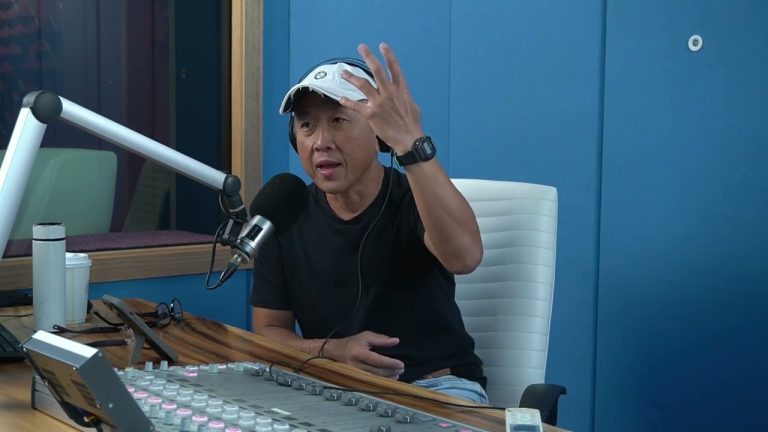
Many thanks to CITYPlus for their collaboration with The Gutshot Podcast, in whose studio this conversation was recorded. CITYPlus is Malaysia's first Chinese business radio station, dedicated to delivering in-depth analysis on local and international current affairs, markets, and businesses.
Jump to chapter 8 chapters
- 0:00 Rubio's Visit and Geopolitical Chess
- 6:26 Proxy Warfare and Nuclear Deterrence
- 10:19 Deconstructing the China-US Narrative
- 33:24 Navigating Pervasive Media Bias
- 39:45 The Mind of Donald J. Trump
- 55:44 Assembling the Trump 2.0 Cabinet
- 1:11:14 JD Vance and the Republican Bench
- 1:15:43 Market Optimism and Global Dealmaking
Auto-generated from YouTube captions. Timestamps link to the video.
Good morning. Good morning, brother. Good morning, John. Yes. You know, the more I see you, the more handsome I think you are. Oh, you every time I see you, uh, you get more and more better dressed and I'm worse and worse dressed, you know.
No, no, no, no. I'll I'll tell you what. I I purposely wore this dress. Uh, this shirt. This shirt. Sorry. Sorry for me. No, no, no. This shirt this shirt is is a R sh no longer but no longer I think. But my daughter when she was uh after her uh SPM, she was uh working uh there. So I'm always proud to wear
chair. I thought you were dressing up for Marco Rubio or Oh no, I was trying to bum into him. I went to uh I was I had a lunch meeting uh at Mandarin Oriental,
but apparently I got the wrong because you were trying to doors stop him like in media circles like media terms. Oh, is that what it's called? Yeah. Yeah. Yeah. Door stop. Doors stop. Yeah. So, it's interesting because the US they don't normally send someone so senior, right?
So, are they trying to are they trying to um um you know signify something because he's secretary of state. Yeah. Secretary of State is top three, top four, right? Yeah. Yeah. Yeah. Defense obviously, right? Um Treasury I mean uh
so in terms of hierarchy, which one is it? In terms of if I'm not mistaken, hierarchy is probably third or fourth in line. Yeah. So number two is Treasury. Of course, he's VP, right? If you're talking about from the point of view of actually if anything were to happen to the president, right?
So, it goes, you know, VP and I think if I'm not mistaken, it's the secretary of state, you know. Yeah. So, number three, right? Yeah. I got to I got to refresh my my my knowledge on that. So, it's just interesting because I found I mean, obviously, he was here to to represent US interest, but he also came here to talk to the the I think the China foreign minister. It was actually the foreign minister's uh congregation in KL, right? Um so it's kind of like seen as neutral ground in some sense.
I think they're going to have another round with the Chinese in Switzerland. Yeah, this is an ongoing series of discussions to keep things sweet because they've got this trade deal going on this trade impasses and everything. Right. But I think it's more um it's more the discussion. What what was more interesting to me
was actually they met up with the uh with the Russian delegation. Yeah. Right. Because you see the secretary of state is about foreign policy. The secretary of state will not really negotiate on tariffs
because that's the area of Howard Lnik uh which is the commerce secretary and also the you know basically supporting the commerce secretary is the treasury secretary sorry the yeah I mean which is uh besson right. So I think the I mean I was expecting actually uh the under secretary to come to to to be the one here uh you know I mean that's normally what they would do but for for Rubio to come to KL for the ASEAN summit that was interesting. I thought it was in essence it felt like it was almost a signal from the Trump administration that okay you guys matter. It's interesting. Uh you're
still important. You're still important. And I wonder also because uh uh the Russian delegation down, they had a specific uh meeting with the Russian delegation. Um and definitely that's not talking about trade. That's basically talking about the war,
geopolitics. So it's weird because um it's like a very intricate game of chess, right? The Russians and the Chinese and the Americans. The Chinese are funding the the Iranians because without the Chinese economic engine, Iran cannot survive from a fiscal standpoint, right? The Russians are fun obviously in a conflict with with the Ukrainians
and um so there's this whole breaks movement going on. So in public they seem to be having a a dialogue or some kind of conversation. Behind the scenes there's all this pressures brewing and and and kind of simmering away. Um I I personally as a lay man I don't know what they talk about and how much progress they make. Or was it just for optics of just seeing being seen as having a frank and dialogue? Do you know what I mean? In terms of keeping things sane and on an even kill.
Yeah. Because beyond the below the surface, there's all these things going on, right? Yeah. I think that was I mean it's very interesting if you look at uh how Trump operates, right? Because um Trump is a businessman and a dealmaker. So he tends to operate from um from that standpoint which is a very unusual um or unlike almost any uh world leader that we've seen.
Yeah. So in that sense um I think he came in really sincerely. Um I I know a lot of people don't like uh you know to look at him from that point of view considering you know all the negative media especially mainstream uh uh on how deranged they are with respect to Trump but I think he sincerely feel that he could do a deal with Putin right and uh unfortunately I think uh that has reached a stalemate and hence Um I mean recently just recently UK uh Russia had another drone strike which is uh you know quite massive. So I think he is sending more arms to Ukraine. Um
it was said that I mean the the word he used was defensive armament right. So I think um I think there must be a there will be a different strategy which probably would include more sanctions if things does not improve. Um and um I think it's uh it's it's a chess game between uh how he is dealing together both uh uh Russia and China. So let's see. I think it will be an interesting 3 to four months if you ask me. You know, people talk about how, you know, there's a risk of there's a heightened prob probability of of um conflict in the world and then people say, oh, you
know, um is World War II coming and all that. Um some people might say that actually it's upon us, but actually the the way world wars are being fought now, it's not like the way it was fought in the 1940s, you know, in in in today's era, it seems as if there's this ongoing phenomenon of of wars being fought by proxy because you got the big world forces, right? And they are just funding they are giving intelligence to they're giving arments or or fiscal uh support to countries like Hamas or or or the or the Houthis or to the UK Ukrainians or the Iranians etc. But it's it's a tussle
between the world wars between the global forces right and you could say that actually it's upon us already. I I I love the way you you know what I mean, right? You know what? This is a very You know what? This is why you and I uh sort of mesh together even sometimes when even we come from different point of view, different worlds.
Yeah. Uh fundamentally we see things um I I completely agree with what you're saying. Yeah. Right. And that goes exactly why in the last podcast I was just remembering how we finished it off on that conversation where I say I don't think that there will be a big fight and and um and whatnot. It's exactly that is because the wars of by proxy.
Yeah. Yeah. But because exactly the reason is if if two persons know that they will cause great damage to each other by going directly at each other they will fight. So they'll put the the front lines of conflict in third world countries which are less to lose right from a collateral standpoint but they need the arments they need the financial
and the reason I tell you is very simple cuz we are living in the nuclear age. Yeah right the threat I mean the this this mutual uh assured destruction concept right has really taken hold and everybody knows that. So I and as I said in the last podcast is I don't see a fight between the world powers directly at all. I'm not I'm not really concerned about that and it it's not being optimistic. It's being realistic. They they they are not mad men in that sense. Right. Uh and that's very different and I was saying that again. That's very different from a theocratic regime. A theocatric regime
doesn't care about uh about this world, right? But a secular regime have to care because for them this world this this how they live, how they're going to survive matters. So um I don't think you will see um a Russia uh US, China, Kinetic war ever happening.
Yeah. Okay. So it's all fought by a proxies. Yeah. Right. The question now is actually what is going to be very interesting is to see how Trump maneuvers all this because whether we like it or not um however your your bias or your pros uh towards any side come from. Okay. um the US being the democracy between the three, right, is going to be the most reasonable of all on how they're going to handle things uh from the short-term standpoint because they've got elections every four years for the presidency, right? Whereas the other team can play the long game and and do whatever they
want to do with their proxies on the long game. So that's that's that's uh uh that's that's how I see it. That's an assumption, Sam, because we have been getting we've gotten used to the American way of life and we are very in tune with American soft culture, right? Um we don't really know how China operates. Our assumption is that they are the ones, you know, we we tend to stick with the devil we know rather than than the devil we don't. Who's to say that the Chinese kind like, you know, um phenomenon won't more acceptable to us in in Asia? I I I I I don't I don't
know. I'm just playing the contrarian side. Do you know what I mean? I know. Um what I do know is that with every election cycles being four or five years in America, right? There's a lot of short-term noise. There's a lot of like um there's a lot of short- termism in the in the way America's politics play out, right? It's a bit like um quarterly earnings and public listed companies, right? You know, right? You don't focus on the long term necessarily. just focus on your three year tenure as CEO which has obviously delterious effects with China they've got 50 year plans 100 year
plans if they plan for the long long term who's to say that that is not more palatable in the future I don't know but what I do know is that I was looking at a map of trade um maps right from the year 1990 to the year 2024 just I just saw it on the news last night in the year 1990 the US and Europe dominated global trade in terms of the colors the dark blue is America light blue is the Europe Union and then China's trade uh footprint was largely confined to Asia. Right? In 2024, the Chinese red had overtaken most of Asia and Southeast Asia including Australasia. Okay? As
well as Southern Africa. Southern Africa, the bottom twoirds on the eastern side, the rest of Europe to a small degree, Europe and of course uh America, Canada, Mexico, uh the red of America. So they don't like it. I mean they believe in domination and and so the thing is which one because my concern is that we will we might be forced to to make a decision in terms of our allegiances in the future in Asia, Malaysia, Southeast Asia, right? That is the concern. Do we get pushed I mean are we vulnerable enough from a third world party standpoint to be pushed into making a decision in the future?
I think if you would if one if I look at that from from from that point of view of what you were asking I mean do are we going to be forced to make uh because Malaysia has always been known align right as with has it is with Saudi Southeast Asia.
Well let's put it this way I think it has been done before and it has been done successfully before by Liu Kuanu. All right Singapore has threaded this line extremely well.
An era of peace and harmony. Yeah. Yeah. But as we enter this this new era, well, it's I it's still the era of peace of harmony if you ask me, right? The thing is even during his time, right? China was already rising with Deng around and it was inevitable. You can see that coming. Okay. The influence was uh getting more in Southeast Asia. Uh and uh and if if I go back to some of the interviews that uh Quanu did, right, he was very open about how he was handling it.
Yeah. And I see still the same way. I think that you can be uh uh you can be positive to both sides without being um what do you call so-cal uh so align to either side but you know having said I mean that is a practical businessman way of doing things and you know one thing that I think people misunderstand about China as well when people starts taking talking about oh they have a 50-year long game and what not it's not really that true either I have been lately actually trying to understand more of China because u uh obviously uh business are more affected and
finances financial uh backing seems to be getting more and more coming out of China in terms of uh uh uh funding uh capabilities. So I've been trying to understand a lot more about how China is China operates internally, how the CCP because effectively what you're thinking, what you're looking at is a one party system that is akin to the PAP in Singapore, right? So there are factions in within the CCP that wants to have a PAP model being implemented. And then there is a faction that is very much uh aligned to uh how uh the current secretary general has rise to the point of becoming almost
a cult-like figure. So there is a certain um shall we say uh friction or a realignment happening within China itself at the moment that has yet to see what is the exact result. At the end of the day the CCP is not a monolith. You know that is what I have found and this is less talked about in the mainstream media because um either they are blinded by it number one be uh number two nobody really understand what goes on internally in China because unless you are there and then again the information coming out China coming out of China itself is deeply censored.
Exactly. So it is completely the polar opposite of how America conducts. I mean in terms of the current US administration, it is probably the one of the most talkative, one of the most transparent and communicative in recent administrations, right? You've got Lightning talking, you got you've got Besson talking, you you got Rubio talking to the press, you've got Trump always out there, you got Caroline Lever constantly communicating ideas and and philosophies to the rest of the world, right? Vance, etc., etc. In China, how much do they talk in a in a in an open
and independent setting? Almost nothing, right? You've got a very sanitized version of the Chinese government's philosophy with the rest of the world outside of the outside of China. We don't know what's in their mind. We're constantly second guessing them. Do do you know how I mean not to be so uh I I think the I mean I'm not that familiar with Malaysian uh internal political mechanicians because that's never been my um my um uh my my my my interest you know uh but it's almost akin to if you remember at least for me uh the days of Amno
right when Amno was in power. Um we were a lot of time working on rumors. There was a lot of we used to call it you know used to move ahead of development. Yeah. We used to say you know there's a wang kool being played you know the shadow play you know what is seen in the newspaper is not actually what's going on. So if you put that on steroids that is China CCP right. So I am not on one hand uh if you understand that from that standpoint that gives you an in into how you're going to research what goes on to China. That's what I felt. So I've been going into um a bit of a deep dive and I
hope within the next uh few months I would be getting more uh in tune with what I can get because I do have uh business contacts in China, right? and they don't they won't talk to you p I mean on camera but you know they will tell you so I can get from some of the uh what you know is published in South China Morning Post what's published in NIK and then uh what is coming out of uh certain commentators and also fact check also with uh my business contacts in China
so that's going to be very interesting you know because I looked at it from as as you well know what we we like here. How does it impact geopolitical business, you know, the economics of things, right? So, this is this is going to be something that I think people really to go back to what you you were saying, people really have a misconception. It is really not a 50-year plan because why? You've got three or four factions that are joshing for power all the time. There are purges that goes on every 5 to 8 years, you know. So, it's not as uh it's not as clearcut
um uh uh uh romanticized as what people are saying. Yeah. I mean the CCP is about a hundred years old only, right? essentially and remember the the episode of Cho and Lie he was here then he just went and then where he go nobody knows right so you're probably right but I've been to China a lot in the last couple years and I do see what
in China I've been all the way east to Beijing and Harin I mean all the way west to Tibet and and Kuning right and I saw one commonality it is basically um a peaceable society
a prosperous peaceable society that is highly obedient because there's the presence of militia and and security everywhere. There's cameras, there are cameras everywhere, right? You contrast what's happening in the US. There's in incredible social disorder. There's incredible um divide of wealth. There's a lot of pain and suffering in American society. Something like 50 or 60 million Americans are going they are on uh um they're on food stamps, right? There's there's basically um fentinil refues all over America like in Atlanta for example. I mean what I'm trying to
say is that you've got two different systems, two different outcomes and you've got these two superpowers essentially jostling to rule the world. One ostensibly wants to be number one and that's it. The other one ostensibly seems to be of the belief that there's a common interest paradigm. I don't know. We are going to be caught in the middle of push back on that on that narrative.
Which one? The fentinil. No, no, no, no. On the narrative that you've got two system with different outcomes with with different outcomes. Okay.
I would beg to differ. Yeah. All right. The the the the the reason is very simple. Most of the time when we travel, we don't travel um and see um the rest of the countryside.
Yeah, I agree. Okay. Yeah. uh we tend to uh we tend to uh or be be assured either because of our tourism interest or our business interest
to the sanitiz to the sanitized areas. Okay, that's one thing. Yeah. Okay. And the other thing that's we got to be very clear in our understanding of uh of of of the system. America has always been a chaotic experiment. It's the nature of it. Number one. Number two, because of the free press, we get both sides of the argument or the pictures. If you want to see the worst of America, um you just rely on the party that is not in power and the media that supports them.
Yeah. Okay. If you want to see the best of America, you go to where the party in power is supported in the media. Okay. You don't get that in the in in China.
No, you don't. Right. So, it's basically from your conclusion in that, right? Your narrative is being shaped by a media narrative that is one which is a free-for-all, right? you get both sides of the story. Whereas the other you've got a sanitized version. Okay? It's almost like if you come to if you come to Malaysia and you come and stay with me. All right. My my my friends who come and stay with me, they're going to see the I mean the the first class of everything.
Yeah. Right. Yeah. They're not going to get the the the mad Sam, you know. So you you know No, you're right. No, you're right. You're absolutely right. So that's the first thing. I do stand perspected perspective. Right.
So that's one thing we have to be very clear and I would tell you one thing from what I've seen. Okay. I tend to actually when I go any place uh I tend to read between the lines and see things that actually gives me indications of how the re the real thing is in terms of or the how it really uh how it really is right so for example let's take America okay so if you go by the mainstream um uh narrative from either how China would portray America to their citizens or to their or or or to um uh or from pro-China media or pro-democrat uh sorry or or or pro um uh Republican media. Okay.
on democratic cities. You would think that actually um it's all burning down. Okay. I go to Dallas, I go to Houston, um I go to Miami.
Boom. Boom town. It's boom town. It's not just boom town. I mean, it's like it's it's it's beautiful. It's safe, right? Okay. There are areas you don't go just like in in KL,
right? But it's clean, it's organized, right? But then then you go to Fox News, right? And you watch you watch uh uh you you watch LA, you watch how they uh San Francisco is covered, right? is a fentinel infested meth town
um with homelessness at every corner. Yeah. Right now you go to you go to uh CNN or you go to uh MSNBC u they will describe the riot in LA.
Yeah. As being oh just some people burning tires you know having fun. Yeah. Right. So that's the difference that you you in terms of how you must look at things. Now how I look at it when I uh when I'm I'm I'm the last trip I was down in the and we were staying in Santa Monica uh right across from the uh from from from the from from the pier. I I was staying at the Georgian um and uh which is only about a few a few hundred meters from the pier. Here's the difference I saw which is um if I go back four years ago when the the previous time I was there or three years
ago the previous time I can't remember all right there was hardly any homelessness across the the the Santa Monica Boulevard but the last time I was there last Christmas I could you know there were people uh putting a few tents
across from uh Santa Monica So that tells me already it's getting worse. Okay. So that's like what you know that's like having homelessness if in the in the in the uh two or three tents at the KCC park, right? It's you shouldn't be seeing that. Okay. So to me that's an indication that California uh in spite of Gavin Newsome's uh slickness has not done a good job you know so so that's democracy democracy is democracy in its proper form it's always chaotic democracy is aligned with capitalism and what is I think undeniable where capitalism is concerned is that It it
tends to leave people behind because capitalism uh um well not just condones it but it encourages um a concentration of wealth, property ownership um equity ownership and those people with assets have tended to do much much better over the last few years than those who are just surviving from salary paycheck to pay to paycheck right because inflation itself I'm going to push you back then on that as well.
Okay. So, so what I'm trying to say is that in most of the developed world when I've traveled to them, including in Italy, including in the UK, including in the US, there's an increasing swath of society which are being left behind by the system.
Whether or not the powers that be can address that inequality, I don't know. But what I do know is that history tends to repeat itself. And inequality has always been one of the key ingredients behind social descent, which has then led to uh um populist leaders such as at the time Mussolini, Hitler and so on. in in the current era Marine Le Pen and to some extent Donald Trump even though he comes from a wealthy background that's where the concern lies because that inequality has led to popular leaders saying popular things like for example make America great again I'm not saying
what he's doing is wrong I believe in a lot of his doctrines but what I'm saying is that there's there are a lot of people being left behind in developed societies much fewer I think anecdotally at least than in China because in China there seems to be an approach to say let's not leave too many people behind us, bring them all along in this big, you know, tidal wave of of of prosperity and uh let's not have too many ultra billionaires and too too many um you know um homeless um penalous people cuz I mean when I was there I saw nothing of the kind.
Let me tell you let me let me put it this way. All right, let me put it this way and I think that's this is the difficult part about analyzing China. Yeah. Right. Because the statistics are coming from the CCP government.
I'm not looking at statistics. No, no, no. Not just talking about statistics, right? But even the narrative that that that comes out. All right. Let's let's just put it this way as an indicator. Again, as I said, when I go anywhere,
yeah, I look at the under underlying indicator and it gives me flags on how what I should look at, right? And I, as I said to you, I have this sneaky suspicion of certain things that are beneath the surface that are not apparent uh in the way a democracy works. Right? If you go to developed countries, if you go to the states, if you go to UK, you go to uh Australia, you know how the rich China uh children lives, they are very ostentious.
Ostentious. Yeah. Yeah. Yeah. Now when so when we say when when they when when they are living outside in that manner okay with when their children is living outside in that manner and it's very clearly can be seen you can almost see a divide
between the uh between the students or the youngsters that is coming from China compared to youngsters coming to Malaysia. Asia from Malaysia or from Singapore right the divide is huge right something is telling me something okay and you you may not see it in China itself but there is an underlying that we can't see the other thing is also but that is just
so you're suggesting that there is obviously wealth inequality here in America but also inact I agree Not just that. Here my here I go again, right? How do we sweep? Just think about this, right?
Just think about this. All the homelessness in San Francisco went away, you know, when they recently, if I'm not mistaken, they recently had a uh uh uh what was that? uh when there was a visit from um it's escaped
they just cleared the the mess. He just cleared the mess and all of a sudden it's beautiful because the last time again because when I went uh for Christmas we normally stay in this area called I think it's it's is called is is Union Central where actually um where where most of the shopping the the the the high-end shopping are because uh obviously you know the wife wants to go shopping right and uh and and and you know the previous time I was there compared to the last time I was there it was like night and day but if you can sweep it down like that why didn't they
do that all the time right so you can obviously it's almost like when people were saying oh it's election time so all of a sudden now my village uh roads are going to be tred or the bridge is going to be fixed right so so I think I think I'm going to take everything I have I have taken everything with a pinch of not a pinch of salt. I mean a a truckload of salt.
Yeah. Here's a difficult because when I consume the news now, right, I've got to consume everything with a pinch of salt. Oh, yeah. I've got to try and read between the lines and understand where the source of information from, what allegiances that platform has with who.
And that's that's the big problem because I think a lot of people who are trying to make sense of the world today, they don't have that. I I think maybe they don't have that experience because I've been in the news industry a long time. Yeah. In the old days, you used to be able to take them at face value, right? Whether it's the economist or the Financial Times or the Wall Street Journal, they more or less told the truth more or less. And there was a certain amount of balance. Today, I don't think you have that whether from Asia or whether from the from the from the West.
So, here's the thing, right? To be honest, it's always been colored. It's always been colored. I agree. Okay. But it's the extent of the coloration. I think for at least the last decade or so, I think it has gotten worse.
Gotten much worse. So, so what does this mean? Right? Like my old at the age will say, "What the does this all mean?" Right? What does what does it mean when we talk about this thing? Well, for me, it's always been what does it mean for us as a father, as a husband, as a son, as basically someone who's the guardian of my immediate family's future, right? How do I position myself to deal with this uncertain world with all these all this noise going on around me, right? China, US, geopolitics, conflict here, there, everywhere, right? That's what I'm trying to make sense. I
mean, that I think in some sense that's why we have this conversation as well, right? What does it mean? You're a business owner. I'm a business owner. You're slightly bigger than I am to some degree, but we're trying to make sense of this all, right? What do we how do we position our chips for the future? How do we position? So when I look at Donald Trump and I see Zingin Ping, right? Donald Trump is a businessman. Okay, he's great at dealmaking. Well, ostensibly. Zinping seems to be much more of a strategic tactician, right? Is Donald Trump a chess player? Does he
play 10 15 moves ahead like Nanu used to do? I don't know. To me, between the two, does Xinping play chess 5 to 10, 15 moves ahead? Probably more. But I don't know. I He doesn't speak publicly very much. And if he does, I don't understand what he's saying cuz we're not talking about
we going to do it dive on on the minor Trump. Why not? Right. I mean to some degree what you see with Trump is what you think what you know you're going to get. He is what he he's he is the typical whisw wig keyboard. Right with Xinping there's always second third. It's like a bloody onion. You know
that is the let's let's do this. Let's do this then. I think okay let me preface it in the in this way. U I absolutely agree with you in the sense that this is exactly the reason why we have our podcast and this conversation
is because I think we want to bring our audience a perspective that hopefully is unique. Well, if anybody's even listening. Yeah, I know. I know. I know. I know. And I think that actually um I pride myself to a certain extent again with all humility. I I have to try to say that
I don't think any humility I know you know is that in my in in the times I've uh in my career from the start I've realized one thing that in order for you to get ahead you have to be ahead of everybody else in terms of how you perceive the world how you p not just the business world but also uh what's going on in terms of everything, right? So, um and then and and and business is exactly that. Not just currently what's going on, but actually what's going to happen. Yes.
Right. So, you have to be the ahead of the curve, constantly, constantly reading the tea leaves, ahead of everybody, right? So this is where I personally get into trouble with a lot of my friends uh or associates in my outlook of things. But I do find it's also the source of where I get ahead because I read the tea leaves and I think you do the same. We read the tea leaves.
We try and read the tea leaves and make sense of it all. Right. So, I mean, I I think let's to to to try and and and and and uh unpeel the onion of two persons uh at the same time is going to take too much of a you know, let's leave Zin Ping um out of it for the time being, right? or more I would even say this um because when you talk about Jin Pang you probably have to talk about the CCP as part and parcel of of the of the whole discussion but in in uh for for for an insight into what happens in America that affects the global economy that affects glo the global business and life
because they are the biggest economy in in the world and it steals when the arguably arguably well still if they if they if if they as what you said if they you know if if if they if they are sick everybody sneezes yeah
right so um here's the the the interesting part and the more easier part with uh when you look at Donald Trump when you read the tea leaves when you understand the background because why there's so much written in America on him there's so much that you can see from him himself um because he's constantly on TV and giving access to the media which is I think even today I would say almost unprecedented right um even compared to the previous presidents and Even his cabinets are following suit in terms of this. If you were to ask me, this is the best production value I've ever seen a
president a president has ever done. That one I agree with you. Yeah. He's great entertainment. Correct. Yeah. So, if you go back and I want you want to understand as you rightly put Yeah. He's a uh he has the mindset of actually an entrepreneur, businessman who starts from the bottom up. And this that's that's the first thing I get into trouble with a lot of people because they've been conditioned to this narrative that he comes from a very wealthy family which he does undoubtedly. Okay. But I think what people do not understand is actually everything is relative.
Um I first come to know of him I think I don't know whether I've mentioned this before. I first I he first came into my radar as I were when I was in the college in the early 80s. Okay. Uh he he was part of a uh of a American uh professional football league that was a startup called the USFL. and he was the owner of New Jersey Generals uh uh and uh and and that's when I said because I was such a fan of American football. So uh uh and the NFL the professional football and college football plays basically it's a fall fall game. So it's basically end August
September it starts and it end around uh February. Okay. And they was the whole summer then later you'll have no football. So I'm like, you know, oh, so I've got to start watching basketball, right? Um but but you know, so basketball was my second second uh second sports as far as I was concerned, right? So when he bought at USFL, it was so successful to be honest. The USFL that uh I that its demise was quite um uh quite a let down uh for me. But they were they were relatively successful from the early beginning in terms of popularity for summer football. Okay. Um so that's when I first got to
uh uh his name came across and then obviously he started appearing in movies and Trump Tower came up and whatnot. My knowledge of him because of his uh many wives and specifically Russian wives, right? Ivanka and um
well that's why he was married to Ivanka. Yeah. Yeah. That's right. Back in those days, right? And he was always making the headlines and he was a celebrity entrepreneur. I mean make no mist. So he's always like the limelight right and not make mistakes about it even in the 80s.
He's unapologetically unapologetically a playboy. Yeah. So so then the thing is right for me um when I try and understand the Trump enigma uh it also bears itself out in the manifestations of who he nominates to be on his cabinet on or on his team. So it's quite um it's quite a mixed bag. So I watch Caroline Levit the press secretary. I think she's bloody amazing. She's so young and she's so brilliant. Okay, Caroline Leid. And then I get I then I see someone like Nick Adams. Nick Adams is this um Australian turn US citizen. He's he's some kind of he's like a media guy, author, celebrity
kind of person who has now been named the US ambassador to Malaysia, right? And I'm like this guy is is he's a joker. Let's do this way. Okay. So so so what does Trump represent? What is it?
I I think I think I think I he names people to his team who are like him. I would like to do it this way. We're going to go let's try and do a deep dive into into what Trump is, who Trump is, you know, what shapes him, how his mind works, and then we go into why this is all guess why he's this is all uh this this all speculative through our reading of tea leaves, right?
Um sitting as we do in Southeast Asia. Correct. Okay. But you know uh but u here's what I I I see when I look at him and I I so I know him from that standpoint earlier on. I will go back to what your point is in terms of of his nominations
or his uh his cabinet. Right. So let's let's let's see where he came from. Okay. So I I've I've I've repres I've I've told people that this guy is a what I called a bluecollar business entrepreneur. All right. Who became big. All right. And in order for you to go from that, you have gone through failures. You have gone through hardships. Okay. in spite of you being started up uh uh in in essence financed by your dad. Okay. Now I personally uh my parents are school teachers right but my partners when we started out in our medium-siz business um well I had my own small company to
start off with but when I started uh with my own uh friends uh they came from uh relatively wealthy family in fact their father funded uh the the So in essence I can you know we had a platform that actually was funded by the debt right. So I I understand this. So we were struggling you know even uh at the early stages you know to to with about you know 3 4 million type of funding uh in uh 1999. All right. Um so and he was remember he was born and raised in Queens, New York.
You know his father was a property developer as well. Although on a smaller scale, right? His father is more of a property owner. Property owner, right? His father was more of a property owner. He grew up when he started out with his father, he was collecting rent from his property, from the properties of his father, right? he turned it around into being a property developer and big- time uh property ownership. Okay. Now, so that was an evolution in terms of that family business. So, basically he took over what was his father's uh relatively small property ownership into
big-time property ownership by developing now. So that's why I keep telling people that's a bluecollar entrepreneur who actually come from the bottom up. So if you come from there, you know what you and and you must remember he grew up in Queens. Queens is like what you know
it's not growing up. It's like Cherasa, isn't it? It's like in Kapong. Okay. You are not uh you're not you're not blue blood like you are from uh you know u uh uh uh let's call it what what do you call our our our this one in in Dutamas or or or places like that you know you're not a banksa guy right so for he for for him he's always the outsider from the elites Well, yeah. So, so it's all
no everything again I go to this point right everything is relative all right everything is relative and people he saw himself as an outsider he he narrated himself as an outsider not really not in the initial time when you look at him from the 80s actually he was already placing himself as being the elite because that's what he wanted to be okay but if you look at the reality of it. It's like almost like me. If you start asking me to speak Malay, the the only way I can speak Malay is you're going to hear my
Sure. Sure. Sure. Sure. Well, that's deep, man. There you go. I can't speak basic. Exactly. Yeah. So I always when I go up to the mic you know and I am I am forced to speak in Bahasa I will first apologize. I said hey yeah it's a deep one. So you think he so so he so so he's he's a bit of a chameleon in other words.
Well in other words that's typical actually all politicians. No no no that's typical um I called it blue collar uh businessman especially coming out of uh you know
he may have been from Queens but he was living in a mansion in Queens you know. So you know what I mean right? So what I mean so he was confused because he he's like am I entitled or am I not entitled is
let me let me put it this way. Yeah. Even when I was living in Sugani one of my closest friends okay lives in mansion intani. Okay. So how did he see himself? Was he confused? No but he's always as a sugani guy. Yeah,
you know, we still go out and play at the municipal council football uh field, you know, and uh if you were to talk to him today, you won't know that he is actually uh
from privilege from privilege. But we unlike Trump, okay, Trump had the ambition to actually go beyond what his dad had already set him to do or set him. In fact, in fact, I think he he was that ambitious in terms of business to go way beyond that.
No, you're right. Because collecting rent in New York to building buildings and owning buildings in New York. New York um Manhattan is essentially the most expensive address in the world, right? And not just New York basically, I mean to owning golf courses, correct? and and what all over the world
you know if if you really understand Mara Lago and the history of that place right and what he has done with that place no he's this is a very different character than his father
right so obviously he's taken what his father has given him and then multiplied that by by a factor of 100 yeah right he's obviously very ambitious and he had very very big dreams and I think he's got those same dreams for America his methodology is what rankles with a lot of
here's the here's The thing why that methodology and what people see okay when you were a and and when you are a construction guy or a property guy uh coming up in that in that manner you have actually been sitting around with your with your people
who are actually doing all the brick laying uh your conc etc. So you know the common folks that is why he is so relatable to the bluecollar people. Okay, if you ask me today, people look at me today, right? And where I go and have my dinners and and whatnot, but I can still go and talk to my
But you're saying you're like Donald Trump. No, I'm not. Please don't. You know, this is why I I I try to because I'm not even there, right? But what I'm You understand? He can he can paramulate upstairs and he can paramulate downstairs. Yeah,
correct. I can be a man of the people. you I I can be the man of the people. Yeah. Easily. Yeah. Because that so that is what people do not understand here especially here where the narrative from the mainstream media has been to portray him as this elite billionaire who has no understanding of the common people and actually are coning all these people that he is a man of the people. Right? The fact is he is because that's where he came from, right? And just the fact that he can eat McDonald's with with Fox and and and all before the elections, right? He was actually so right.
That's the for the cameras. Yeah. I mean I mean I looked at at one I look at how he was eating pizza with fork and spoon. I said you know okay that's the that's that's the dichotomy of what we are looking at right
so um so once you understand that character it is no surprise to me how he carry himself when he campaigns and he become president because that is the sugapatani in him and he does not want to change he will not change because when you are at that level of wealth, you don't care. And that is the problem that actually he faced when he first ran for the first time of for the presidency and also the second time for the presidency because the Republican establishment party does not want Donald Trump
because he doesn't actually because he does. No, he doesn't really belong there. He's not from that same color and ilk. He's not of them. Yes. Right. So there was such a shock. Right. He was not of them because the Republican party at that particular time was basically the party of the corporate the elites.
Yeah. Okay. And when he was running in 2016, the party wanted Jeb Bush. when he was running in uh in in in the 20 of course when you are the incumbent there is nobody against you already. So in 2020 it was him and Biden right but when he was running in 2024 he was still not the favorite the the fed candidate. basically they were trying to push uh um uh Nikki Haley, you know, so in spite of the Republican establishment, he won. And that and the reason why is because he's not of them. They do not want him. But the party rang and file the party supporters and the independents that were voting for
him wanted their guy, right? And therefore what you have seen today now we can we talk about the governance side, right? I think it was a blessing that he lost to Biden in 2020 because it gave him four because the first first year he was he's never been a politician. He's never been in government. He was still trying to find his way on how to manage this governing of the US federal government as the president. And you can see in his cabinet it was a split. There were people who were from the establishment and there were people who was from his background.
So it's quite clear that the team is put in place around him this time are complete and utter loyalists. Complete and utter. It's it's complete undying loyalty. Right. Absolutely. Absolutely. There's no there's no strain from the legions. They're all on the same team. Whether it's peasants or whether it's even this guy who's a parody, this guy Nick Adams from Australia now America. They're all very very much in a MAGA team.
Wow. Right. Yeah, but I would say from a substantive point of view, Bessant is very very smart and very qualified and so is Lutnik. But who is this Nick Adams guy? I mean, he just seems to ambassador. Yes. But this is an So, so a bit about Nick Adams, right? Australian guy uh immigrant parents.
Um has always been a devoured um US supporter. He he immigrated I think to the US like 20 years ago. He loves all the things that rednecks love in America. pickup trucks, hooters, chicken burgers, fishing, hunting, that kind of stuff. Right.
Right. He he's a he's he's a bit of a joker about the fact that Trump puts him in Muslim majority conservative Malaysia. It's another enigma to me. Okay. I will just touch a bit on Nick Adams because I have not researched his background. Okay. I'll be honest with you.
You mentioned it to me uh I think sometime this morning. Yeah. Right. Yeah. The news just came out. I I yeah I I saw the news that that came out and I just I I I I I'm that's the only thing I know of him.
Yeah. Right. And I found it very interesting in this way. Um uh because the the way the the the title was the the the the mainstream was and it was on Kiny Malaysia Kiny I think.
Yeah. So obviously he's he's been written up in the negative press. It it's it's so Malaysia Kiny or whatever FMT or whatever that we get here in Malaysia comes from the US mainstream media which is very much left-leaning.
Yeah. Syndicated. Yeah. So, and here's the funny anecdote that I will tell you that I I find uh very uh very amusing to me actually and it is emblematic of uh of what uh uh of what the uh how the mainstream media covers it. Right. So I'll I'll read to you quickly.
All right. It says here, "Adam's content also long raised eyebrows for its odd sexual nature with posts like a forsome with the boys will be the most fun you will ever have in your entire life. There is nothing better than having a few too many domestics in the company of other alpha males." right
now you know you know when I saw the so I so I saw the tweet that he put out there he was talking about golfing right now in golfing and I'm a I'm I'm an avid golfer
right in golfing it's a forsome it's a two four ball two ball right four ball two ball if you you got two balls is a twosome if a three ball is a threesome if it's a four ball it's a forsome so can you imagine The mainstream media takes something completely innocuous and made it to be something sexually deviant.
Yeah. How ridiculous is that? And it appears on our mainstream media as him being perverted. I I mean, so so I will not say that on on that, but I'm going to give you another example. Okay, I'm going to give you another example. how mainstream media plays his cabinet.
Yeah. Okay. And then if you don't mind, I will go into how I see his cabinet pickings this round. Okay. I'll give you pig hex. All right.
Very divisive. Very very divisive. Yeah. All right. If you read the mainstream media narrative that what is being told to uh uh from the mainstream media, he's basically a Fox guy, a Fox commentator, nothing more than that. So, he's a media guy, you know, he does uh uh all that. Uh, okay. He has a military background a bit, but nothing much more is said of them or of that that basically he's a Fox guy. So, Trump is just getting a Fox guy, you know. And then I remember uh something going viral where Tammy Duckworth who was on the committee for confirmation okay uh who's of Thai
origin uh was asking uh Pik Hexath about Assean uh and to name uh an Assean country u and Hexath couldn't answer. Okay. And everybody here made fun of that. Now let me put it this way in perspective which is what people don't know. Hexf is a ranked military command uh in in in in a I believe he was in a marines if I'm not mistaken. Okay. I I you know number one and he's a decorated soldier. All right. What and that matters a lot to actually the military. What they have in in the Pentagon when Trump comes in is a bunch of bloated uh uh uh uh uh uh bureaucracy where
people where the generals are promoted more than they they've got more generals than what they had uh in World War II. It's utterly ridiculous because like any bureaucracy, it has the it it will increase itself and they had to deal with unid the dismantling of all this DEI uh and woke stuff and what they want is actually a a hit in the army. Two things if you look at what Trump's cabinet people are, they all can talk. They all are very good on camera, right? and pig hexf is and he is a a pure blood military guy, a decorated military guy. All right? So he doesn't care about the generals.
What I care about is results. What right? And that is what Trump cares about is the results. Right. And then I'm going back to to this whole thing when Tammy was asking him about uh who are in ASEAN that is irrelevant to the uh to the secretary of defense. Let me put it that way, right? That is a question you pose to Marco Rubio, who is the state secretary, basically the foreign minister of the United States,
right? For Pet Hex, his job is actually to rebuild the the the army, the the military of the United States to be a little fighting force. And that he has done, you know. So that's the bottom line that that Trump cares about. Now you look at all his cabinet. Actually, I'm very impressed with his cabinet members, right? You look, you and I don't disagree already. Um, uh, uh, Besson has been the star.
Yeah. Yeah. I mean, they've done a good job so far. Yeah. All right. Um, I think I am actually equally impressed with Marco Rubio. you know, he didn't run a good presidential campaign, but I think coming into the job, he has he has actually extremely impressed me. If you look at like like you say, Caroline Lebett is like
astounding. Astonishing. She's astonishing. Incredible. Yeah, exactly. Actually, if you go the line of every cabinet secretary. Well, I was watching so Trump part one, I was very uh disdainful of Trump part one because I think it was all over the shop. Trump part two in the whole leadup to the elections in November last year, I was watching him very closely, especially in the podcast where it's long form.
In long form, you can't hide. You can't hide your colors, right? And I was analyzing his words and one of the key things that he was talking about was his um was his need to surround himself with very very So he likes intelligent people, he likes clever people. Yeah, he likes to surround himself with very accomplished people, right? And that has actually played itself out because whether it's Lutnik or Bessons or Rubio or or Levitz or any one of these people, they're very very clever and you can you can see the intelligence, right?
Yeah. So I I like that about him. Yeah. You know, unlike for example Kamala, my god, Kamala was incredibly stupid. Biden was not of this world anymore, right? And many of the people that were of the dams at that era, they were I don't know where they were. Even Fouchi was like all over the shop, right? So, so what I'm trying to say is that um the hyperbole and the caricatures aside,
from a substantive point of view, I do think that the Trump administration is on the right track. Let me I think so. And this is this is the difference between Trump 1.0 and Trump 2.0 because he's figured it out
because he has figured it out and he had four years to actually plan out everything and and and figure it out. Yeah. Right. And the thing is this, it's also here goes about reading the tea leaves. I in in in in my experience in business and in even in my career when I started out in Shell, I've noticed something. When I was in Shell, I realized something. The bosses that I don't like are very insecure about people who are smart. Okay? The bosses that are good, they want the smart guys.
Yeah. They want the guys who are actually going to push back on them irrespective of color or stripe. Exactly. Yeah. Right. So, and I personally myself do that because why I' I because and I and and and as I went through my career, I I I realized something why this happens because when you are equally smart and you are capable as a boss, right? You want people who are smarter than you. You want people who are actually um can make your job easier and make you succeed
because better decisions have a positive compounding effect. Exactly. And you also want these smart people to push back on you and have a good a good decision. But at the end of the day as the boss when a consensus does not come about very clearly, you will make the last call. Yeah.
Okay. So, I see the same characteristics in this cabinet and the way it's being run. Can you imagine this? I can guarantee you I would say more than even 50% of BA does not want Tulsi Gabbert in that cabinet because why? As recently as 3 months before he was in I think before before the the the election she was still a democ she was still a Democrat or was or still an independent coming out of a Democratic party. Right. Robert Kennedy
was a damn was a damn the other Kennedys I mean of course right the traditional right Democrats he he he switched sides because he just couldn't stand what they stood up for anymore. Besson is gay.
That's true. A lot of people gloss over that but it's true. But none of the mainstream media will ever give him credit for for all this. If you want to really talk diversity of thought and and and and work life and and career etc. His cabinet is more diverse than anybody else.
Actually, to be honest, I don't care about diversity, but nobody gives a about diversity. I care about quality of decision making. Exactly. The competition, the competency, the the the intellectual capacity and the ability to get things done bottom line is the most important thing, right? So, this is what we want in our people and that's what he has brought in his cabinet, you know. And you got to give the guy credit and and you you you you peel that layer. You ask yourself then, right? The only reason why that has happened that tells you a lot about Donald
Trump's capability, his character, and what he actually is. Let's also um talk about the fact that he's on his second and final term, right? Also, the fact that he's in his late 70s. He's a man on a mission. He doesn't have a lot of time. I think he's got a year and a bit to the midterms, right? So, he's trying to push through as much as he can in the first one or two years, which is of course understandable as you enter the second half of your campaign. That's of your tenure. That's it. You're trying to consolidate from there on, right? Um, what I really care about from
his administration, my point of view is the fact that a fiscally healthy America is good for the rest of the world. It cannot go on being as indebted as it is. It cannot be as uh deficitridden as it is. And I think what he's doing in terms of the tariffs, all these discussions which are quite uh they can be quite ridiculous in terms of the narrative. But I see what he's trying to do. He's trying to write what he perceives as economic instabilities and wrongs done to the US uh economy. I think he's trying to grow his way out of trouble. He's trying to address the the
expenses. He's trying to address revenues as well, which to me if if we're sitting in this part of the world, Sam, a a healthy America is good for the rest of the world. A sick America is bad for the rest of the world. I agree. Cuz you do need to meet in a multipolar world,
two or three healthy um big out there, right? To then compete and not to seek economic superiority or military superiority over one another, but to everybody to coexist because if everybody's healthy and and rich,
well, then everybody's happy. You never saw poor countries or you never saw rich countries fight with each other because they're just too full at the dinner table to fight, right? It's only when you're poor and impoverished, that's when you start to see a lot of problems at home. You know what I mean? So, from a selfish standpoint, I want America to be healthy again. And I think
between what Sleepy Joe is doing and between what Donald Trump is doing, I I'm I'm I'm in bed with DJT, man. Do you know what I mean? Yeah. You hyperbole. For me, I mean, it's not even hyperbole. If I were to say that actually the last the previous four years with the with Biden, if you've got Kamala into into the presidency,
already finish us will be in deep trouble. Deep deep trouble. You have seen you have seen heightened tensions in the Middle East. It would have gone even to war with more people and been a big problem. Yeah. And and so so to me what I'm seeing is a is is a is is not just a paradigm shift in terms of policies and philosophies. It's actually um and the good thing is um as you said he's got four years right and I can see actually something I noticed and I was mentioning this to a friend um what I've noticed is that I have never ever seen anybody does any president before him has done how JD
Vance as the vice president is all the time being involved and actually contributed in major meetings and major discussion with world leaders and major conferences where he is being delegated the authority to speak on behalf of the presidency is nothing short of a mentorship by a CEO to his air apparent COO. That in itself was a gamble because Vance is an untreated and untested politician. He comes literally out of nowhere as a as a newbie. And look, I mean, let's not forget Donald Trump is 78 years old, right? He can kick at any time. If that moment should ever come,
you know, this guy, he's going to have to live into he's going to have to grow into those boots essentially. But that's the essence of Donald Trump. He's a risk taker, right? Well, not just that. If you look at it, right, it's not just that. It's actually you know here's the thing and I don't want you to to to say again so do you know that that you know it's compared to Donald you know but my experience is the same in the sense like this number one I if you look at the uh his cabinet or or the Republican party today compared to the Democrats they have a what we call
in sports in in American palance an a team not just an a team you got a deep bench yeah you got a deep bench that's right you got a deep bench okay So if Vance doesn't work out, Rubio easily can step in, right? But what I've been I didn't know of JD Vance until uh the campaigning starts and he was called out as the BP as the as the VP nominee, right? But I tell you, as you rightly put, I've seen him on three-hour podcast, 2hour podcast, right? You cannot hide the guy on that.
He's held it together. My god, is he good? Yeah. Right. Yeah. So when you've got and and as I said, bro, the FL lawyer, bro, he's a lawyer. He's Harvard. Smart guy.
I think he's Yale. Yale. That's right. Yeah. And he comes from the hinterland, right? He's a he's a country boy. So he's seen a hard he's had hard knocks, but he's also done really well. His wife is a Brahmin lawyer. American Indian girl, bro.
Bro. Yeah. So I like that about him. You you think you think a Brahmin Indian is going to let his her husband be uh uh less than an elite? No. No.
Elite thinker. And and yet and yet he comes from an even uh an even I would say unlikely story. Yeah, I read the story. It's he comes from hard from a hard part of the world, man. You know.
So So I think like literally scratching and living from the earth. I know. Yeah, I know. So, I think I think you've got the makings actually, especially with the with with at what position the Democrats are in at this point. You're looking at their their popularity as a party. The last poll I saw was maybe approval rating of, you know, slightly what 23% at best, you know. So, and and you look at the the the people they have that is supposedly on the leadership. Hakeim Jeff is a is a joke, you know. So, now what you've got is a deep bench Republican party and I'm
going to make a bet that you're going to see uh after Trump another two terms of a Republican uh presidency. So that means you're going to have about you're going to have 12 years of consistent policy that is not the old Republican party but basically Trumpian. So, as someone who's interested in markets, right, I I'm actually quite optimistic because I think that if if if all things go well and nothing unexpected happens, which of course it has unexpected things happen, but if all things go well, we're going to see an enlightened era of of of asset prices which essentially go through the roof
and financial um success for the for the US, which I think is going to be very good for people who hold uh US assets um whether it's in the share market or whether it's in the new digital assets realm. I I like that. I like the fact that this might happen. So the other message then is of course if you believe that this narrative plays itself out,
yeah, go and get some assets and ride the wave along because uh it can be a ticket to economic security. And I think also I think um I think Trump will sort it out with China.
And if there's one person that can just call up the phone and go, "Hey Z, let's have a chat," it's him, right? Yeah. and he'll just get on the phone. It's a businessman way of doing things, right? Let's let's put our cards on the table, right? Let's sort it out.
Yeah. You you you you know how he's talked about how he's actually called Vlad and say, "Hey, Vlad, let's have a chat." That's it. It's like this. It's very simple. If I want to do a deal with you, I'll just call you and say, "Sam, hey, you free for lunch tomorrow, 12:30. Let's have a chat."
You know what will happen if you and I were I mean, we we we're doing the deal. Yeah. Um basically the first thing is that our people will will will will start doing it will will start the negotiation at at at this high a price and and you and your side is going no I want this high a price right and then they will start badmouthing each other you know because why I'm going to play good cop bad cop right and then the next thing that's going to happen is that I don't care whether I call you or you call At the end of the day, I can tell you about Trump, he doesn't he doesn't give
a whether Z is going to call him or he's going to call G. It doesn't matter to him. What matters is actually at the end of the day, we're going to end up somewhere here and it's going to be good for both parties, right?
What the hell if I call him? That is the essence of all good deals. All good deals happen with good outcomes from both sides. That's the essence of a good deal. That's right. But if you look at the narrative, oh, you know, the 100% tariffs and this and that. Oh my god,
these guys, this is noise. This exactly, that's the right word. All these are noise for a businessman. Okay. I've got a I've got a huge market that you want in. You've got a huge market that I want in. Let's
negot Let's work it out. Let's sort it out. Yeah. Yeah. Okay. Let's end with this, right? Let's for the I think that's pretty pretty nice ending. For the millions of people that are listening to this podcast, right, we're going to send an open invitation to Nick Adams, the incoming US ambassador to Malaysia, and say, "Look,
when you are free and if your time predisposes you to do so, come have a chat with us." And that would be great, wouldn't they? Hopefully, right? Yeah. It'll be good fun. It will be good fun. Exactly. Yeah. So, thank you very much.
Any thoughts? Yeah. Um, no. As usual, write in. Tell us what you think. We want to Yeah. We We want to answer your questions. Okay. Thank you. Ask him questions. Don't ask me a question. He's the handsome one, not me.
Thank you. All right. Cheers. There you go.