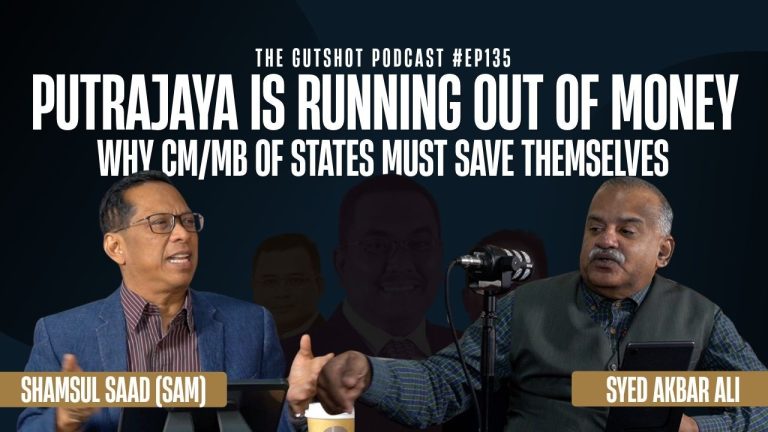
Putrajaya Is Running Out of Money: Why CM/MB of States Must Save Themselves
Show Notes & Description
State governments must become economic managers, not merely administrators. The private sector must become the engine of economic growth and job creation.
Shrinking Federal funds is inevitability especially with declining oil revenue over next 5 years and unstoppable leakages at federal GLC/GLIC levels and overspending at federal level with lower total economic growth in terms of revenue available for taxation.
State Government policies must encourage investment, not frighten investors away. Pahang's last reviewed quit rent rates was a disaster. Learn from Singapore's proactive urban redevelopment approach. Build independent revenue sources through investment, tourism, agriculture, manufacturing and services.
Develop infrastructure before investors arrive.
Make it easy to establish and expand businesses. Reduce unnecessary regulations, delays, taxes and bureaucratic obstacles. Resolve land disputes and abandoned development
Remember: Government does not create most of the sustainable employment opportunities. Do not treat the private sector as an enemy or a source of revenue to be endlessly squeezed.
BUILD INFRASTRUCTURE. ATTRACT INVESTMENT. CREATE JOBS. GROW THE STATE.
We Have a Country to Save
Jump to chapter 8 chapters
- 0:00 Introduction and Announcement
- 2:12 The End of Putrajaya's Guarantees
- 8:17 State Fiscal Deficits and Tax Disparities
- 14:36 Punitive Quit Rents and Policy Missteps
- 20:06 Cameron Highlands Agriculture and Lease Obstacles
- 25:51 SEDC Failures and Misallocated Capital
- 28:30 Revitalizing Kedah Paddy Fields
- 33:12 Developing Coastal Fisheries and Concluding Thoughts
Auto-generated from YouTube captions. Timestamps link to the video.
then how? So this is where our our chief ministers they really have to put on their thinking caps because for about 60 years in this country they didn't really have to think too hard about you know where funding is going to come from and who's going to be the next prime minister it's always going to be the same party but as I said since 2018 that that situation has changed has changed drastically lah. Friends, viewers, subscribers join me and professor Tajuddin Rasdi for a gut shot forum on how we save our country with you amongst our live audience on Saturday 5th of December 2026.
Jason Leong joins and moderate. It will be 2:00 p.m. till 5:00 p.m. Let's have an interactive conversation everything you want to know we answer there and then entry is free but limited on first come first served basis once seats are taken my apologies it's done we will host the event at Sri Hartamas in Kuala Lumpur. Send your YouTube name it should start something like uh at x x to register via email to hello at the gut shot podcast dot com we will reply to your email for your ticket confirmation and exact location to be determined. So all of you fans of gut shot we're
looking forward to meet you all send your email. Bye hope to see you. Ladies and gentlemen welcome back to the gut shot podcast I'm Shamsu Sam we're back again today with uh my fellow panel Syed Badli. Good morning. Today what we're going to do is deep dive a bit on what we expect uh of state governments the chief ministers the menteri besar uh on how we think uh the administration of the economy and especially administration of economic progress or growth in each state should actually be taken up a role by this government. Said, I think that's start with let's start with you um on where
you think we should be um we should be looking at this aspect of governance. Yeah, okay. Well, it starts with the with the problem of being one party being in power for too long. Now, I'm talking about Barisan Nasional they rule the country from Merdeka until they lost power in 2018. So well, 60 years they they not only control the federal government, but most of the state governments were also being Barisan Nasional. So they were like tenured professors, you know, unshakable. Every year this the same government in office and some states the menteri besar never change for decades.
The they will be there in the office until you know, they finally they left because of age or whatever. But because of the power structure at the time, the menteri besar was like the party that take for granted that they will rule the state. And the menteri besar also were there for a long time. Now, since 2018, all that has changed, all right? 2018 the Barisan Nasional lost political power and there were massive changes at the state level. Many state governments have changed. Um hold on a second. I mean, yeah, when the federal government Barisan Nasional and UMNO
lost power, they also lost power down at the state level. So now we find that the states cannot depend on the on Putrajaya anymore as their anchor, which is what existed in the country from Merdeka until you know the the federal government now we call it Putrajaya is the anchor that can can sustain all these menteri besar and state governments you know since 2018 all that went out the window 2018 there was a change in in government in Johor Kedah Melaka Negeri Sembilan and Perak state government PH took over and then past past in Kelantan and they captured Terengganu
so and Sabah Sabah changed from BN to Warisan 2018 2022 hung parliament Perlis changed from BN to PN Perak Perak Perak formed a PH BN coalition government strange strange animal so so what what this means is that this is going to be the future of politics in the country so right now all the governments regardless federal or state governments they cannot look beyond the next general election and the states the state election there's one coming up in Melaka of course some states certain parties are quite strong but that you cannot guarantee that they will remain in power
federal power the next general elections which is due in actually in 11 month I think by 11 months I think by 11 months the next election is due absolutely there's going to be change in in power which there has been since 2018 so there is That confident Oh yeah Okay so you see the the there's no certainty if you're a politician if you're ruling a state or ruling a Putrajaya there's no certainty so therefore now the states depends on whether the people in Putrajaya are your team or your coalition or is it a coalition of a coalition you know some kind of hybrid kind of situation
you know like now the recent the last polls was where you find the people who are in coalition at Putrajaya they are competing against each other at the state like even in Melaka now. They are in Putrajaya they on the same side but the state level they are they are contesting against each other. So all these weird things are happening in this country after 2018. This is going to be the standard kind of behavior that's going to be we are going to see I think for the next I don't know how many elections lah. So meaning that the menteri besar now they really cannot
be part of the team in Putrajaya anymore depends so many things lah. So the political uncertainty is there for the menteri besar and they have to they have to develop their state they have to keep their people moving forward if they want to win the next election. So to do that for you to depend on Putrajaya alone it's not very safe lah because you do not know who is going to be in Putrajaya whether your your favorite political partner will be in power after the next election. And then you have other things you know which we we discuss also you know the oil revenues
government revenue lah money money lah money do it from from Putrajaya which is our I mean we are kind of dependent on oil revenue. Where are the country's oil revenues going to go in the next five years or 10 years? I have a very pessimistic view for the oil revenues. I think they're going to go down. No I Oil is a sunset industry and oil prices are I think there's nothing much to crow about or shout about anymore lah. I I I I don't see as a sunset industry but I do see it as actually a glide industry in terms of in terms of the the production capacity in the global
market. Hence the the revenue that you're going to get from it is going to be severely reduced. That's the way I see it. Exact okay yeah exactly. So you see so going forward in the future at the state level for menteri besar to govern and administer and manage their states by depending on Putrajaya for political support and for funding is going to be dicey if you ask me lah. So those who are who want to sustain, who want to get reelected and who want to, you know, be remembered for doing something good for their state, they have to start thinking about moving
their states by themselves, on their own, using their own resources and depending entirely on the private sector inside the state because you're looking at taxpayers funds, government funding, Putrajaya money or it's going to be dicey. You see there there are some states uh money, you know, how much money they get. Just Yeah, there it is. 7B Correct. You see uh there were there were very few states uh which contribute more to the federal government coffers than they receive. You know, I think Selangor and Penang Selangor, this is what 20 20 25 figures. Selangor contributed over 43 billion
ringgit in federal tax to the federal government and they received 15 billion in budget allocations and all that federal expenditure. So they they give more than they take back because because Selangor is the most developed, industrialized uh state in the in our country then Penang. Penang contributed 10.7 billion. They received 7.9 Now other states not as great. For example, Kelantan they contributed 946 million tax contribution, but they receive almost 9 billion federal expenditure in Kelantan. Kedah More than 9 million, 9 and a half. Kedah Kedah contributed about 3.7
billion and they received 9.5 billion I was looking at Kedah. Yeah, correct. Kedah also they contribute 3.7, receive 9.5. So you see these states depend a lot on federal government, you know. So something bad unforeseen or meaning the oil oil revenues go down at the federal government level these states are going to be they're going to be quite in quite a difficult time, difficult difficult situation Said I find it sorry, I I I jump into it a bit Kelantan contributes 946 million not I mean wait and 8.9 billion in federal expenditure Yeah, this is times more
Yeah, this is inclusive of all federal government expenditure you know that goes to all the states whatever they but it's still it is still expenditure from the federal budget you see. So the the the point to note is that they are in quite a big deficit situation you know. Yeah. So so you remove that that 8.9 billion what's going to happen to Kelantan? So you see they are again are the saying like that the low you know If everything remains fine and the oil revenues keep you know going up and up you know and the politics is stable and your best friend is the prime minister
things like that then for the state governments you know maybe okay can survive but what if the prime minister is not from your party it's a it's some kind of a marriage of inconvenience you know and you know can can the government can change anytime or your own party can lose the elections or economically oil revenues are stunted you know funding from Putrajaya is restricted then how? So this is where our our Chief Ministers they really have to put on their thinking caps because for about 60 years in this country they didn't really have to think too hard about you know where funding is
going to come from and who's going to be the next prime minister it's it's always going to be the same party but as I said since 2018 that that situation has changed has changed drastically So the the the they have to chart their own development strategies and it has to be private sector driven that's what this is something that they can absolutely rely on you know if the at the state and the Chief Ministers they rely on the private sector they can be quite safe you know, for the future of their state revenues and development in the state. But over the years, uh, in our country,
this has not always been the case lah. Uh, in instead too often we find that states, uh, they, uh, they treat the private sector like some kind of very hostile attitude, you know, and they do not do things that are in the best interest of private economic enterprise, uh. They put up obstacles and all sorts of restrictions and all that which prevents private enterprise from realizing their maximum uh, potential lah. So what it means is loss of revenue, loss of new job job job creating businesses, job creating activities, all that is increasing in the at the state level
resulting in unemployment for the young people in the state. Mm. So the gig economy lah in Lembah Klang they will all migrate to Lembah Klang and become gig economy delivery people lah you know. I think that is also going to be a very negative situation because from what I hear, I mean people are not making as much as they used to make three or four years ago because just the glut of workers they are pouring into the gig economy. So when you look at that I mean the state need to really buckle up. I mean like that. So so the states really have to change the way they approach business and
economics lah. I want to I want to share a few examples lah where where we have discussed this before in our other podcast you know where you don't have to be a rocket scientist to sit down and think up new strategies for economic development, economic growth and all that lah. Sometimes you just remove all those obstacles that have already been put in place. That alone is enough to move your economy forward, to move your state forward, you know. So I there there are there are many examples. I I like to look at Pahang in this in this regard because Pahang
they have so much potential and they are so huge, the largest the largest state in our peninsula. They have so much resources at their at their disposal, but they do not maximize it, you know. They don't maximize or they they do things haphazardly. You see recently well not recently, in 2020 2020 is the time of the COVID, you know. The Pahang government the state government, they increased the quit rent, you know. Okay. Now they did not do it uniformly throughout the state, but at certain places at certain certain classifications So quit rents went up substantially. Some
you know this industrial areas where there are manufacturers, they they there were increases from 28 30% to over 3,000% you know depending on classification how it happened. And then some the the industrial land owners they they increment of 34 times in quit rent, you know. And then then there were protests and all that and they reduced it. They reduced it back. They cut some of the industrial quit rent raised by 80% you know. So you see it is a haphazard policy making then people complain and then they they reduced it back. And then there were there were and some issues are still continuing.
There is one issue with this you know this Kolma, you know Kolma? Kolma yeah, one of the big development Bukit Tinggi and the Berjaya Hills you know under under the Berjaya group. This is interesting you see I mean they have they have land they have many parcels of land. Their total quit rent in 2019 was 2.4 million you know. 2.4 million In 2020 it jumped to 33.7 million. Yeah just like that you know by the stroke of a pen. So this was even for somebody like the Berjaya it's a lot of taxes to pay. See you must consider that okay other states have also increased their quit
rent Penang is one of them. You can always debate the quantum of the increase but in Penang there's development all over the place and land values have gone up regardless land values keep going up. So the quit rent reflects the value of the land. So there is some logic to it the value of your land has gone up. If you sell the land you're going to make more money if you rent out your land of the building to somebody you can collect more rental blah blah blah that kind of logic. So we're going to increase the quit rent. Of course the quantum of the increase always debatable but the
increase can be can be the logic can be sustained because land values have gone up. But like you know the tropical Kolma and all that if you remove the Kolma what do you have there? Jungle jungle isn't it? Or like Genting Highlands because of them. of their construction. of their construction like Genting if you remove Genting there's jungle you see. They are the only pioneers and the only people who are doing activity there. I mean it doesn't mean that they should not pay quit rent but I think it must be you know. The thing is they raise the quit rent overnight 13 times from 2.4 million to
And then of course not all the parcels are generate as much cash flow. You know there's a rabbit farm there, some Japanese garden, something like that. So uh they had issues settling this the higher quit rent lah. So the state government confiscated some parcel of the land you know and they padlocked it. Now again this Pahang state government okay the bulk of the people who work in Kulai and all these places uh they come from the surrounding areas you know Janda Baik and all that. Melayu lah a lot of Malay boys and girls who work there. So if you go and shut down the place or sit their land
who's going to lose their job? The local boys and girls lah. What are they going to do? Join the gig economy in Klang Valley. So you see they do things like this. Then there was a there was a push back. The factory owners complained blah blah blah came out in the press. Berjaya had to go to court. Then they gave a discount for Berjaya. They gave a discount. Instead of 13 times incremental they took it down to 25.7 million 9.7 times increment. As though that helps a lot. I do not know lah. Now what I'm trying to say is that I don't think anybody will disagree that
quit rents have to over time have to go up lah. But you have to be reasonable, common sensical about it. You cannot just whack somebody 13 times, 14 times the the industrial fellas are saying 34 times. I got it from the media. Uh you you overnight you do things like that and then there's there's a hue and cry start complaining then you cut back again by 80%. In the meantime the amount of confusion you have caused people have lost their jobs you know some of the people have lost their jobs. Business disrupted. So these are the things that in the future the state government they
should avoid things like this. If they want to promote you know uh more business, tourism whatever like growth in the economy they keep doing this you know. The other case in Pahang I hope the Menteri Besar is listening. You see here there's a lot of unrealized potential in Cameron Highlands you know. Cameron Highland is a world class agricultural center. And it's not it's not exactly a tourism spot. That's that's that's that's our tea growing sector. The our tea, our vegetables and flowers, a lot of flowers are grown in in Cameron and exported. The state government is not doing enough
to promote Cameron Highland and to help them. The infrastructure development it can be can be ten fold or fifty fold better which they are not doing. There are reasons for this. There are some are some are not very nice. But there are reasons for this. You see one of the things in Cameron Highlands is you know the people who plant vegetables some of them they rent the land from the state. They are given very short term lease, you know. It's just a few years. I think it's about three years short term lease, you know. Which is insufficient. If you are a businessman, if you are a vegetable
grower, it's a business. You know you have to think about irrigation, your computerized drip irrigation system terracing the hills, buying Yeah, it's very short term. And stuff like that. But when your lease is so short like three years or whatever is a short term then is you know your payback could be longer than three years. You know if you really want to invest in and you want to have a long term sustainability you know you your payback could be more than three years, could be four years, five years. But when their lease is short they are they they are forced to
maximize their you know the planting of vegetables and so on. So they are forced to increase chemical fertilizer. They're forced to use you know these pesticides and all that to maximize their yield, you know ASAP. So as a result of which there are the problems that arise. Sometimes the vegetables get rejected by the buyers, especially Singapore, things like that. If you ask me why don't you give them like you know a ten year lease or a fifteen year lease, then the guy can plan fifteen year lease makes makes more sense at the very minimum. He's a vegetable farmer. The vegetable
will mature in a few months, but he can recover, he can invest more in his equipment, his irrigation system and all that so that he can yield a better harvest, he can grow more, he can increase his output which actually means more growth for the state economy. I wouldn't even build a warehouse if I you know. yeah. So if if and they have so much land, why don't the state government parcel those lands, clear the land, terrace it, put a bit of infrastructure, you know the water connection all that and then charge the farmers a bit don't go crazy charge 34 times, 50 times something
reasonable. If the state government parcels out the land, they have so much land, opens up the land, parcels it out, put some infrastructure and then you lease it to the to the vegetable growers you give them a 10 year lease or 15 year lease for an absolute certainty the output of Pahang state will increase, more revenue for the state, tourism will increase in Cameron Highlands and then people don't realize it a lot of flowers are being exported from Cameron Highlands but it is like on a ad hoc basis by the by the by the growers themselves. You see in other countries that produce
a lot of flowers the government helps by setting up infrastructure you know for processing of the flowers or cold storage facilities and the transport logistics facilities you know if the state government invests some money in this and works with the farmers and the growers in Cameron Highlands, I'm sure they'll come up with some very good potential a growth potential to develop the Camerons more you know and and what what does it mean now all this boils down to more jobs, more economic growth, more business activity for the state, more revenue for the state government you know. So
there's a lot of potential in the private sector in the states but the Menteri Besar must take the initiative. And this can only happen when you stop looking at your private sector as some kind of a nuisance, you know, and work with them as your potential partners who will not only create growth and jobs for the for the people in the state, but help the state government win the next election. You know, when you think about that, I I started thinking, I was looking at the number Pahang federal tax contribution 2.5 to to 4 billion and allocation is 6 to 9 billion. So they are deficit lah.
Yeah, so they are also at deficit. They are deficit. I mean the it makes you wonder then. So that's today, you know, at today's oil price they are already deficit lah, huh? What if the oil revenue goes down? Yeah. I mean they it it it always this is my my my biggest complaint about taxation because I don't think that the government, state or federal, is using tax money for the right reasons. And the misallocation of this capital is actually where they get into deficit and then they tax you some more. And and that's why they are going, you know, desperate in the same reason why we have SST,
the same reason why we had e-invoicing is actually not because oh I want to uh I I I want to tighten the tax. No, I want to get more tax because I've been losing a lot through leakages. But they don't want to admit on the leakages, they don't want to put a dam on the leakages, you know. So that goes both at the federal level. You are talking about state. We have not actually went into detail of where the state leakages are. How many SCDC do you think Pahang has? How much is it costing the uh the the state government. As I think Professor Terence Gomez uh said here one of the podcast,
we have to map and see exactly how many companies there are under all these GLCs and SEDCs. We do not know exactly how many companies they are and what they're doing and are they in deficit or surplus or what. Even that we do not know lah. But you see we are we are talking about the potential, the capacity of the state to generate growth lah. The SEDCs were failures uh their their GLCs lah because they're taxpayer funded. There's no competitive spirit. There's no uh what do you call this? Self-sustainability lah. No commitment to uh self self-sustainability
towards competitive behavior, towards creativity. Because it's state money. It's not their money, you see. Who cares? Uh the CEO still gets his salary, gets his bonus because he's paid from the bottomless pit of of shareholders state state tax taxpayers' money, state treasury, you see. But uh as I said lah all that is is coming to an end because the politics is now uncertain and Putra Jaya funding is going to become uh I think much more difficult lah. This year's budget was 80 billion deficit budget. Last year's was 80 billion deficit budget. This year they say it was decreasing.
I do not know about that lah but it's 80 billion is a lot of money. So every year deficit budget. The government does not have enough money. So this is what the have put on their thinking caps you know and think what they can do to stimulate their own economies on their own standing on their own feet which they're not thinking. Their way of generating more revenue is to tax you more. That's what that's all your information that you have provided has given me the conclusion that their brilliant idea of getting more state revenue tax to squeeze the the to squeeze the golden goose more.
as uh as well I must I must quote lah as Izzah once said, you cannot make people rich by taxing them which is a logical But you see there's a lot of potential at the state level. I want to give an example. If you go to Kedah a lot of paddy land lies fallow fallow f a l l o w I mean it's not being planted a lot of land is just left there they they they substantially increase you know this is a whole story because the farmers have grown old their children and then so there's a lot of all this empty land which affects output of paddy in the country. My suggestion is there are other people
who may not be from Kedah who are not from that area who want to who know how to plant paddy and who may want to plant paddy but they need land. Why don't kawin kan these two people so that instead of land lying there with no paddy being planted you you marry them with people who can plant the paddy. They work out some arrangement between them you know like this rental or profit sharing whatever that's up to them private sector will decide but at least the paddy will not be the paddy land will not be left empty a lot of land you can see acres of it just lying there not every acre of paddy
land is planted in Kedah not only in Kedah also in other places. So you have people who have the land but for various reasons they may not be planting on the land. You have other people who have the capacity to work the land plant paddy but they need the land. Why don't you go out proactively and and match these two sets of people so that bottom line paddy is planted and harvested it adds to our food security food output. I have a question. Yeah. Can I I I have a I have a question and I want I would like your thoughts on it because I look at Kedah I think I've said this
in one of our podcasts whether it was with you or somebody else. When I look at Kedah punya uh paddy fields, what I see is is massive tourism potential, high end tourism potential. I really don't see paddy fields. You know what I mean? You know why? Exactly because of that reason. Because when you look at agriculture, you or any industry for that matter, you always looking at per unit costs. And we don't have that much land. So what you have is actually a boutique paddy paddy uh a paddy field. That's what I see, right? It's almost like in Bali. You know, in Bali, the paddy fields are
actually useless lah. You cannot keep the if you say I want to keep the paddy fields in Bali for food security. Yeah, I mean all that can be done. You talk you You are talking about You're talking about multitasking lah. creatively? Yeah, don't just paddy also convert into also also exploit the tourism potential. You can You can rear fish during the planting season, you know, fish. Uh other countries they rear ducks in the paddy field during the planting season because the ducks can feed of all the snails and everything. And they also fertilize the paddy, organic fertilizer,
you know. So all these things can be done including the the the tourism potential. But this is where the state government does not have to spend money for everything, you know. Just with the stroke of the pen, you do some engineering, some putting people together, the private sector will know what to do. You can convert it into I mean the land instead of saying that it's purely for agriculture, you can put, you know, tourist building or whatever Or you can give some incentives non non monetary Non monetary some incentives Just by a straw over pen. People will will pick it up. People will
know what to do. Yeah. See, so these are these are the potentials lah which they have for example in Kedah and other paddy planting areas where land is lying idle. But our food import bill, and now I checked this up. Three years ago, 2023, we imported Malaysia over 70 billion in food imports, you know, from from outside the country. Two years later, last year, 2025, it went up to 93 billion ringgit, 33% incremental. I'm sure this year, 2026 next year, it's going to go up another 10 20 30%. It's going to hit 100 billion ringgit. We import so much food, you know. But here we are. We have so much
potential in the country. We're not exploiting it. You see, I want to give the other example because I my personal interest in this is just something that I that I've been observing. Fisheries fisheries. Recently, just a couple of days back, my wife and I we went to Muar, you know. There's a there's a place there called Pantai Pantai Leka or something. There's a small fishing kind of a community there mostly Chinese Uh the infrastructure is like basic there's nothing there, you know. They build their own small wooden jetty, you know, the wood all They put their own crane on some kind of a
they put a cement block and put a crane there and that's about the equipment that they have the small stream is narrow and all that. The same thing I have seen in Kuala Selangor, in Sekinchan, and in Kuala Sepetang. These are major fishery centers. A lot of fishing boats come from there. But there is no investment in the infrastructure. If the government spend some money, builds the roads, the jetty, build a proper jetty with all the not mighty cranes like the container crane, there's a small cranes unload the fishing vessels, give them a cold room or just create a
space where they can build their own cold room. I'm telling you these people will catch more fish and instead of hantar to Singapore or Thailand, they will land it in our country and we'll have more fish. But you go to Kuala Selangor, the jetty there, the wooden one, I think from time darurat, you know, it's wooden, it's so old. And there's a jetty. Why don't they spend some money and develop a proper jetty and some facilities for the fishermen? It'll improve the the the fish being landed in the in the country. I don't know what's wrong with these people. I I I'm just thinking about
the the the the chain of things. I I love that idea of of how much value, high value tourism that can come from even listening to you about people dropping fish. Okay, if you have a a good jetty you remember if you if you drive the coast of California Fisherman's wharf Right? Don't even talk about fisherman's wharf. You just go to where you look at the amount of jetties at Jetties are jetties are cheap. It's not it's not maybe maybe there's a problem is too cheap Oh my god, I think there you go. That's the problem. Really doesn't interest anybody Yeah. Jetties are cheap. Can you imagine if
you I mean you you have good connected roads to Sekinchan, right? And then in between you have attractions and then you come to like fisherman's wharf, but fisherman's wharf was a fishing jetty. So the fishing boats came there, then they had these other attractions and stuff because they widened up. So it became a thing by itself, you know, a lot of economic activity. What I'm trying to say is that there's a lot of potential in these states, the paddy, the agriculture, the fisheries they're not they're not developing it because he doesn't maybe you know it doesn't serve it does not serve their
voter base different kind of voters, so they don't care. But this is to me is quite foolish behavior. There's a lot of potential. There's there's a lot of potential in all these kind of things. So, they they're ignoring these things at at developing these their potential. They're ignoring it at considerable risk because of what we said earlier. The two things the future of this country in this country the politics is uncertain. We do not know if the government going to be there after the next election any government federal state government. And then the oil revenues and the
federal government revenues they're going to be more it's going to be more difficult to get money. The government's already deficit spending every year. So, money is going to be hard to come by. And the politics is going to be uncertain. The politics is going to be uncertain because you don't do things like this for your state. Imagine if they do things like this in Kedah for the state the land the paddy the fisheries in Kuala Sepitang, Skincan, Kuala Selangor and all that you generate activity in the state and once your state is doing well people will vote for you.
You know I I I just thought about I mean it's basic this is basic isn't it? I used to go when I was very young to in Kedah. Yeah, I know the place now. I hardly hear that. What's going on over there? You know I mean considering that this is we are in the internet age right? So, they they're not they're not exploiting their their own resources for multiple reasons and usually the reasons are Not political. political not logical logical it's illogical reasons prejudice reasons bias reasons you know that kind of stuff. So, they don't mind sacrificing potential growth in the economy job
creation in the economy they don't mind because this is not my voter base so I'm not really it's not my I'm not interested in these people that kind of stuff. So, bottom line is you lose economic opportunity and economic potential in your state. It work it work for 60 over years because one government ruled the whole country, you know, and and oil revenues were there. So, Kerala oil revenues were coming out of your ears. ears and just now you mentioned you know they get all the funding that they need from some states So, no worries but that situation has changed. But these people
don't realize it. But the fix the fix required is very easy. You just free the private sector. Do what you want to do. We will not be an obstacle. We will help you. What the environment. can what can I do to help you? The private sector without looking at the color of the feather on the plume on the bird or you know all kinds of all those things all those weird things all you know no need. As long as there's for potential for growth, for economy, for business, for activity, job creation, do it. They they they don't seem to realize this. This is the big problem in the country. So, the
they can do a lot. They can do a lot but they're not. Wow, on that note, I guess I would like to a bit wrap it up a bit. Maybe partly the problem is that we are electing people that gets to be what not that are actually not to the level required to generate economic growth itself. Say it. Yep, they there's no urgency or there was no urgency for over 60 years. But now since 2018 I don't think there's urgency still. There there's no urgency now because they have not woken up yet. Yeah. They are still in a slumber. a slumber in a stupor high No, but they are they are more concerned
about can I this next check by by by by how they're going to do a coalition coalition what election pact we will fight in Putrajaya at state level we will cooperate or the other way around we will cooperate all seems to be the the game it that's it every morning when I wake up that's the only thing they're thinking about you know who will team up with who you know who gets what seat I going to put who's going to That's it that's it they think that You you with me you don't fight I don't fight there we everything else is not relevant Yeah welfare of the people what is that Yeah
and I think this is the problem that I think partly may I close it in this way for our audience I think even our voters and our own people need to start looking at it and and and start voting for the right people into the government rather than thinking about really even even though I myself has decided to join a political party but the fact is this you vote for the right people if you don't vote for the right people you get the wrong solutions to your everyday problem it doesn't matter who goes into government okay Say last words Well there's a lot of potential in the
states our country is we are blessed there's so much wealth you know actually the proverb will streets lined with gold there's so much wealth We are a lucky country actually It's everywhere it's in the it's in the ground you there's some there's they used to have tin now they have other we have oil we have so many minerals on the ground you you stick you you put a stick in the ground after a few months because you know our soil is fertile we have sun we have rain 365 days sunshine a year we have it you want to we have a beach I was in Muar a couple of days back beautiful it's a beautiful
place I last went more than 8 years ago. The river front has been developed. It's like unbelievable. The potential is so great, you know, but we are not reaching maximum. You see, there's no such thing as reaching maximum because every year population keeps increasing. If this year you develop one part of your state, by 3 years that because the population has grown, you must create new activity. You must have more housing, everything must be more because population increasing. We we may get into that trouble soon though. So they are not a decreasing population.
and the chief ministers, well not all chief ministers I must I must give due regard to Malacca. They've done an excellent job. Penang also has done well. Other states they can do more. They can do much much more. Nobody can rest on their laurels. It's it's a constant you have to running keep running to remain in the same spot sometimes, but you have to run faster. Constant vigilance, constant effort which I think it's not happening in the country. Well, ladies and gentlemen, with that in mind, keep that in mind and we'll see you again next show. Thank you very much. Thank you.