My Sister the Japanese Teacher : What Makes a Different Kind of Malay
Show Notes & Description
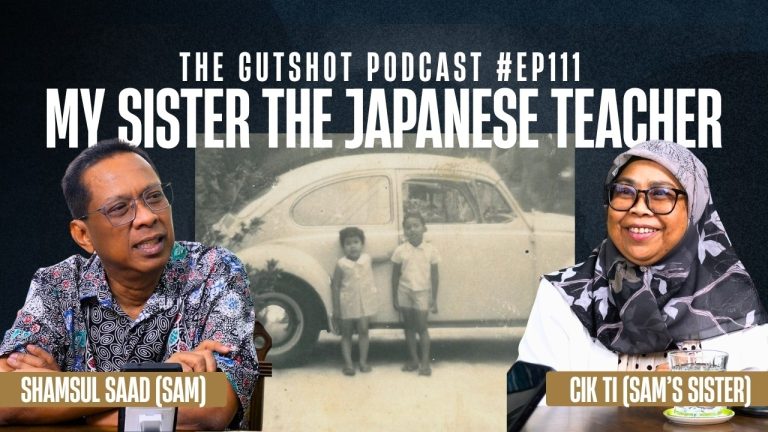
Introducing my little sister Salwati, the Japanese teacher.
This is a fascinating first-person story worth listening, some of which even I am hearing for the first time. Its raw, authentic, joyful and sometimes heart-breaking.
I want to share with you her journey of life in Japan and living with the Japanese and how that shaped her outlook. Her experinece of almost 40 years teaching from primary, secondary and tertiary levels. Its evolution and her frustrations of what she sees the de-evolution of merit and the rise of entitlements.
A very special and nostalgic journey of her life (and in that regard mine together with her) growing up in Penang and Sg Petani. The way our childhood were, its unique multi-racial make up of our interactions in the 60s and 70s that one hardly seen since and why.
The looming shadow of our father, Cikgu Saad, a primary school English teacher, in our lives and the lessons he thought us that we learnt by just observing and doing. What a blessed man. May he rests in peace. Us, his 3 children, that has lived on his legacy of acceptance of all people as mere creatures of God irrespective of race, religion and background. And our embrace of challenges without victimhood and being the protector of those who are powerless.
This is why WE HAVE A COUNTRY TO SAVE
Jump to chapter 8 chapters
- 0:00 Father's Legacy and Family Upbringing
- 4:32 Living and Assimilating in Himeji
- 20:08 Growing Up Multi-Racial in Kedah
- 40:21 Four Decades in Language Teaching
- 48:30 The Devolution of Merit and Entitlement
- 1:03:11 Grade Inflation and Bureaucratic KPIs
- 1:15:32 Remembering Cikgu Saad's Philosophy
- 1:27:00 Stepping Up for a Broken Country
Auto-generated from YouTube captions. Timestamps link to the video.
I'm very calm when when I'm in crisis somehow or another I'm calmer the worse the crisis is the calmer I get and honestly this came from our dad
I have never seen him panic you know and my concern is always and this come from our dad too you know my instinct is always this I can take care of things I'm the night in shining armor I'm the leader.
That's my dad, he was always protecting his friends, right? True. Our dad was always the one protecting his friends. And throughout my life, that has been what I am. I told Brian's parents, "Don't worry. Brian will always be by my side. I will not allow anything to happen to him, you know. And that's what people don't get it. People really don't get this. My dad left is for me. It's not about me.
It's really not about me. If it's about me, I would have left this country a long time ago. I can't afford it. I just don't want to see what is happening to our country. And our people, you know, the Malays are being bullied to be stupid. The non-Mala are being taught to be cowards. So they don't speak up. So they become hopeless and helpless. That they give up on the country that belongs to them as well. I'm going to make this pledge. Welcome back to the Gutshot podcast. We have a very special episode today. Uh
I'm going to open the window to how Malays like us like myself grew up in the 60s and 70s and our development that made us the way we are. I'm Shamsul Sam your host and I'm here currently at my sisters and my mother's house um in the suburb of Clang Valley. Uh please welcome my dearest sister, little sister Salwatiad. We affectionately call her Chetti. Please say a few words to our viewers. Hi there. We hope all of you will enjoy listening to our conversation today.
Thank you. Thank you. Thank you. Thank you. As you can see, my my little sister is uh is extremely fluent in Japanese. She used to teach. She's retired now. She used to teach at one of the universities uh in Japanese language preparing students to go to Japan. Yeah. Um now u before we uh what what what I want to address is uh also this this episode is taped after my recent detention and at the police station. Uh and uh I called my sister. Um she was pretty calm. This girl is cool, man. Okay. So anyway, um let's start our conversation. I think what we'll do
what we will do here is we do a bit of Christopher Nolan. Okay. Okay. So we will we will go um and flashback and then we go back and flashback and whatnot. Okay.
All right. Um All right. Now, uh, JT, let's do a Nolan style movie today. Okay. We go back and forth, you know, from uh from flashbacks and whatnot. And I think we should we we start off with your time of your formative years in uh Himeji at the if I'm not mistaken, the Hyogo Prefecture.
Yes. Right. Um in one of the islands in Japan. Yes. Okay. It's an old town if I'm not mistaken. uh one of the most famous castles there or probably the oldest castles, the Himaji castle, the most beautiful I went to visit.
Yeah. Yeah. So, could you tell us a bit, you know, how was your experience um when you first got there? Uh and how did you assimilate with the situation in Japan? Um uh and uh when I visited you, you are practically living alone uh in uh like a kong.
Yes, it is a kong. It is a kong, right? The place where I live. Okay. At that moment, it was a kong back then, right? Okay. Okay. And um uh and and how how how does that impact you? I mean you why did you choose the place?
Okay. Let's put it this way. Um, I want to learn something different, right? Okay. So, I have I I I realize that if you want to do something different, you have to put yourself away from you are you uh you are normally surrounded with your friends,
right? Okay. Uh your Malaysian friends, okay? Where if you are always together with them, you will be speaking, talking and doing things as you are doing
normally. Normally. Yes. So I decided to go away. Okay. away from Tokyo or any uh or other places where uh there are a lot of Malaysian students. So I went to Himei when I went there in 199 let me see 1996 I guess.
Mhm. Okay. So uh I they okay there were how many how many of us okay including me at that time there are only four Malaysian student in that university
right so we need to mix around with other students you see so that uh that is the way you get along with the Japanese people, not only with the student but also with the people
surrounding surrounding where you are living. Nice. Okay. It sort of remind me when I went to University of Florida, I really wanted to go there where there's no as little interaction with Malaysians as I could cuz exactly what I thought. Gee, that's that's very funny how similar we think,
you know. Um and and and then so you mixed around. You were staying on your own. You were what? How old were you then? Were you there? I'm quite old at that time.
Yeah. Because you did you teach before that? Yes. Okay. I first went to teachers training college. Okay. And then I taught for about five four to five years. Then only I further my study. uh doing Japanese language
you four to five years which uh what what what what grades or what what what kind of students do you have? Uh at what level? Okay. At first I was teaching uh primary school through children.
Okay. Okay. Primary uh you know uh primary school there there there are this uh tahabsu and tahab dua. So will be standard 1, 2 and three. And then dual is four, five and six.
So most of the time during those those years how I was teaching satu which is from standard one, two and three, right? And then you make uh you you applied for the uh Luke east policy scholarship I think.
Yes. Yeah. Because our dad said, "You are not going to stuck there." Oh yeah, I know. You got to do something about yourself to upgrade yourself, right?
So that is when okay let's do this. Let's do something about it. So I applied for uh the program. Okay. Which is okay. That's interesting. Um, and when you landed there, I mean the ex just just tell our people how how was the environment? How was that reception by the Japanese to somebody who is completely different especially in the '9s? You know,
how shall I put it? They were very welcoming. Nice. Nice. Yeah. Okay. They were very welcoming. Okay. Uh, how fluent were you then?
Not that fluent because before that, before I went to Himi, I first went to Tokyo for a year. Okay. Okay. To study uh in a Japanese what do you call it?
No. Nihongo, which is uh Japanese language school for a year in Tokyo. Okay. Okay. Then only uh I went to Himei uh into a university in Himi
to do my undergraduate. So how long were you there in Himi? In Himimei for 4 years. For 4 years. So as you were mentioning that I mean you got very nice reception. Can you describe some of the how you interact? What are the uh what what what are the interesting thing that actually stick out in your mind in terms of uh your uh early time that makes you feel uh comfortable or welcome or or whatever did you Yeah.
You you have to understand this. If you want someone to welcome you, you have to behave. Okay? Right. You have to behave so that people can welcome you.
Nice. True. Yeah. You cannot just you know walk into somebody else's place and just be what you you were before like you know you are in Malaysia or what you know but you have to uh what do you call it to assimilate yourself to get along with the people. Okay. To to be friend with all these people then only they will understand you and you will understand them.
Right. Okay. Uh and uh like for example uh yeah be nice to your neighbors, be nice to you know whoever around the place where you living. Okay? just get to know them and they will forever welcoming you.
I I remember actually when you were there I mean one of the most uh I think humbling experience that I remember because I remember our dad went to uh
uh our parents you know my father our father and mother went to visit you for like what how long was that? A month. Right. And you had uh you you had your so-called godmother
actually took them all the way around Japan. Yes. Yeah. She was uh so lovely. Yeah. Not only her, I got a few more friends. Uhhuh. Who took them. Uh-huh. Uh you know took them around.
Not just uh my godmother but my friends as well. Right. Yeah. And I remember the godmother also visited you back and we and and you brought her to Balipula Pinang to our
to where we we we uh we were born. Yes. Yes. Yeah. Bless her heart. Yes. Okay. Yeah. She was a very nice a very nice lady.
Okay. She would call me just to tell me it's time for you to come come back to Kong. Yeah. Kong means it's her house, right? Okay. It's been so long you haven't come to the uh to come back to Kong. Okay. I'm waiting for you. Because she she was living alone.
I see. Uh she was living. So you went back? Yeah, I went back. When was that? Uh uh where I mean to her house. To househ. Oh, you did? Yes. Oh, okay. Okay. I went, you know, sometimes she feels she she felt lonely, she would call me up,
right? Okay. And I would I would you know I would go to her house, cook some Malaysian dishes and we will eat together. Right. And I also find that actually we got to know one of your best friend in uh
uh what what's what's the name again? Pane Yukari. Yukari. Yeah. She would come here uh uh uh you know quite often I must say. Yes. Yeah.
Almost every two years. Yeah. Right. It's just like uh just like my situation. I get American friends of mine that come here and visit you. You know I you know and um yeah that's how you should live our life right?
Yes. So when I when I look at this you know I mean this sense of adventure that we have that we don't stick among our own kind when we travel because we want to explore
the world open our mind having this is a very liberal mindset which is to explore you know which is to see things differently than what we uh we see every day in Malaysia so that we understand uh how the rest of the 8 billion people live on earth,
you know. Um it opens up your mind. Yes. Yeah. I I I I remember as well you were telling me that you were working in Japan. Yeah. Yeah. Tell us a bit about that experience cuz there are some funny stories there.
Oh, okay. Uh in my third year, you have lots of you know, you don't have any more classes. So, uh I went to uh work part-time job. Yeah, they call it arobito. Arobito means a part-time job.
So, uh at this uh handphone factory, right? Okay. And and that that was also the time you mix around. You mix around with the people. Okay. The people who who it's it's a small factory. is a what do you call it?
Uh factory that is uh situated in the area where people are living. Okay. Okay. Okay. So this factory the workers are mainly uh housewife
right? Housewife. Okay. So they will come and work in the morning and then during lunch hour they will go back because the husband will come back so they have to cook for them right? Uh it's like that. So and some other people will come. It's just like they're taking taking you know taking place you you you will come in the morning and some of them will come in the evening. It's a very small factory. Okay. So uh we mix around
and they you know when you mix around they they showed that you are one of them. When you mix around you get to know them you know their culture and they feel that you are one of them.
Right. Right. You know this is very this is I I want to share with the audience. I always say this actually. I mean I I I I had my formative years in the state of Florida and that's exactly what I did which is actually mix around
uh and uh and I don't think I I I I'll be very truthful in the 5 years I was there I don't know what people are talking about I didn't experience any racism whatsoever.
Oh no. Yeah. Did you? No. None at all. Yeah. Do you know that when I want like for example I want to go and eat eat something
right my my friend would tell me no no no no come over to my house I will cook for you it's safer my friend my Japanese friend right okay and she said that uh I bought a new pen
okay so you don't have to worry you see I don't ask her to uh to to buy a new pen to cook for me And because we know each other culture, we talk to each other.
So she understand me and I understand her. So So we don't have to force people. Yes. We don't have to force people. Yeah. Okay. Yeah. She will she will say to me, "Don't go out. Come to my house. I'll cook for you."
Right. You know the same thing when I was in America actually I would go out with my friends right and they will be drinking and um you know and they never force me or you know to drink cuz they know my background
right but we enjoy and sometimes the the joke was actually oh this guy you know he doesn't need a drink to actually enjoy himself he's going to be the loudest in the pl in the whole ball you We don't care.
We just enjoy ourel with our friends, right? Yes. You know, I mean, it's uh I mean, there's no sense of dread or sense of uh we need to be ultra uh careful of everything.
Yes. Yeah. You know, I mean, now we do the Nolan part. Okay. Okay. uh you know I I mean I I I think about how the similarity of us you know and the biggest influence in our life I must say I know you for for one fact guys one thing about my sister she's so attached to my late father uh our dad you know bless his heart he's passed away how many years already
12 12 years time flies yes okay he was uh He was your role model. I think he is and still uh I would say people people say that because we are living okay we are brought up in a same house. So we have the same same everything is the same for all of us but actually it is not okay because in a house everybody was being treated differently
right according to who you are. You are the eldest, the middle child or the youngest. Okay. And also gender which is are you a boy or are you a girl?
Yeah. Yeah. And finally at that time when you were you know when you are growing up or when you were born when you were been born the economy of the family
right? Okay. The economy of the family. So you might be treated differently from your youngest uh sibling. Why? because at that time uh the economy is much better,
right? Okay. So, he might be showered with a lot of things different from from when we were when we were growing up. Yes. Okay. But one thing for sure is we have a model. That is what make us uh what do you call it? um similar which is one model which is for us that is our father. Okay. We look at him we see how he react or we see how he act we see how he behave and that's what we learn.
Yeah. I don't remember him ever lecturing me. No, actually he doesn't even he doesn't lecture. He doesn't tell you things. Is basically how he does things that you emulate.
Yes. Right. We emulate what you see. Yeah. He he does things very differently than other people. That's what I see. Number one. Number two, he was always our house was like where people congregate.
Yes. All the neighbors, all his friends would come to our house, right? Yes. And I remember actually the other things that even when we were very we were relatively poor, we was remember when we live in the in the in the in the wooden house underneath the the the Chinese cemetery.
Yes. Yes. Right. We were renting house. Chinese cemetery is on Yes. On the other side of the road. Oh yeah. But we are living uh above below Indian cemetery.
Correct. Right. Uh, and our our our neighbors were um there was uh one old Chinese uh uh lady actually papa rented her house,
right? That was her house that we were living in. Okay. And uh her own house is beside our house. Blue painted house. We we used to call her to. Yes, we call her toe and and and and every time when we went back to Pinang, she will follow us because papa will just send her to her relative house in Aayita.
Well, I don't remember that. Yes. Okay. Send her there and then we will go back to our campo and then we when we want to return back to Sunapatani, Papa will go and fetch her and go back to Sunapatani. Uh
I remember those days of Ku Baku which our mom used to go. Yes. Yeah. You know that that that time I I think that was around uh I think I was around five to six years old I guess.
Yeah. Okay. Because when we moved to the to our own house Yeah. I was in Tamatu. Yes. In Tamasatu. I was already in my kindergarten. Okay. Because I know I I we moved when I was in standard one
and um uh I I remember actually um uh one of our neighbors were also two school teachers. Uh they were young uh uh young ladies. One a Chinese teacher, one an Indian teacher. They were teaching kindergarten at the Anglican uh Anglican church. So papa sent me to that kindergarten
in the Anglican church. You were sent to the Chinese kindergarten in Tam Musatu. All right. And and our brother our our little brother. Okay. Uh there are three of us. Okay. and our little brother was been sent to sura.
So we had a very eclectic way of how you know we were uh we were raised and uh and the funny thing even if you ask our brother you will find that he
has the same mentality as us. It's the same. Yeah. In spite of all these differences, you know, uh, in terms of where we went, but our father showed us a model. In fact, he was, uh, he was a very, uh, uh, staunch amno uh, partygo. Yes.
He was the secretary of AMO inani. Yes. Right. But I've never heard him ever say anything about other races. And uh I remember you mentioning me and it was like saying he always refers to somebody by their name and he will tell us go to Mr. Nadan's house and and and and and talk to him about this or get from him this or what not. He's always very respectful of other people. There is no such thing
uh as uh being raised to identify people by their race. Yes. Yeah. Which is strange. That was what we are seeing today, isn't it? Yes. Because uh it's either Mr. something or uncle or auntie.
Yeah. Yeah. Yeah. Yeah. I never ever once heard him saying Chinese Indian that that word. Yeah. Yeah. Yeah. Yeah. and and and you know, here's the funny thing. I know people talk to us being very secular or very uh liberal and all that. Our father basically practically, you know, built that big masjid in Tamatu.
Yes. With his efforts of getting donations in the millions. Yes. You know, I mean, it's not like how people talk today. They talk a big game. Yes. Our dad never talk a big game. He just do.
How do I put this? Yeah. Okay. Papa was uh you know among the the the place that we were living uh was full of uh teachers. Okay. The early settlement Okay. So full of teachers and papa was one of the two I guess
the elderly. Okay. And the rest are young. They they were young at that time. So uh he he how do you put it? Uh whereas the other teachers they are graduate. Okay.
They are graduated. Okay. Graduated teachers. But papa was not. Yeah. Okay. But still he was uh he he he went to teachers training college in Kotabaru. In Kotabaru. That's it. Okay. But not graduated from university or you know.
Yeah. Yeah. Yeah. Okay. But still everybody will listen to him. Yeah. Okay. Because uh he know what to do. Yeah. No. Yeah. He knew what to do. He he
and he's always doing something very different than other people. That's what I learned from him to actually do things that people don't expect and actually to to that's how you succeed which is actually doing things that nobody has ever thought before.
You know he built the kindergarten in front of our house. House. Yes. You know, I was like, "What the hell?" We have a kindergarten and he was the headmaster. Yes. In front of our house and then he was the one initiated the the masquerade.
Yeah. Yeah. Yeah. He called everybody raali who came to phatana. I see. I see. I I don't even remember. Yes. And then uh
maybe because I was most of the time by that time I was already in boarding school. Yeah. Yeah. So uh and then he those days were the you know uh computer you know you starting people starting learning computer. So what he did was um get some teachers to teach youngsters around there how to use the computer you know there's a lot of things you know and papa also um he he he get himself into NGO a lot of NGO as well
yeah to the point that actually he was appointed as a judiciary commissioner for the juvenile court. Juvenile. Yes. Yeah. So I I think it was called that or an adviser to the magistrate for the juvenile court if I'm not mistaken.
Yes. Yeah. So he was very proud of that and because he said that he that is something how he helps the young people, you know, that get into trouble. Um let's let's do another um let's do let's let's do another Nolan and flashback a bit further.
Okay. All right. Um I was away uh a lot uh 11 I was in college. I started out at uh at Ibrahim school intani uh primary. Then I went to college uh for 3 years. Then I went to Sutab Drahaleim Janan uh for another two years before I left for um for uh a pony for Florida for university. I mean um I know you always say I I abandon you.
I have Shia. Okay, that's fine. I I I have something to show the viewers. Um look at this. Look at this. Look at this. Look at this. This is uh this is this is us when uh when we were very young. Okay. Uh this is before our youngest uh brother was born. Okay. Uh those days you take photo of the cat photo studio, right?
Yes. Uh so anyhow um uh so if if we were to go back I mean considering all all those years uh and and growing up without me being around and then I went to uh to Sra further after I come back you know I stayed for two years in KL. I remember you were still studying a bit in college in KL for a while. I did drop by. Yes.
And then I left for eight years in in Miri, you know. Um I mean that going that um how did you find how how how was your formative years in in that being your your your daddy's girl? because I know you know I he's very protective of you.
Yeah. Yes. Yeah. But uh shall I put it uh protective? Yes. But still he gave he gave me what do you call it? You know uh it's like this. You mess up you fix it yourself. Right.
You have to be responsible. You have to take accountability. Nice. Okay. That is our dad. Okay. So, and and it's it's it's difficult for me as the only girl in the family and my father was well known around the town. So, I could not just do whatever I want to to do. Okay. I have to be careful because uh if
Yeah. You are not you just you are somebody. Yes. Yeah. I am you cannot you you you cannot bring his name down. No cannot. Yeah. So I know now I remember that was a burden man.
It was a burden. I remember when I first got my car you know it took me one month to drive the car because I was so scared to drive. Okay. To drive to school. uh I was teaching that that was uh first few years. Yeah. A second second year. Okay. I was teaching uh in a rural area in Kala. So I have to drive about 24 kilometer away from Sunani to uh Kala Katil. So the first time after the a month papa say drive. Okay. Already get the car you drive. Okay. Okay, you have got the car, you drive. So I was okay 6:30 I was driving to work gay uh to quality and what happened was
there was big queue behind me because I was so afraid to drive. Okay. And there in the morning early in the morning uh usually there are teachers who are going you know going inside to the rural area to go to school. So papa will get a phone call asking is that your daughter's car okay making a queue so long you know and then after a month he will get another call. Okay. The call was asking him your daughter just take over my call. So you see it's kind of difficult you know
to be daughter. Okay. So I think let's uh let's do another nan right you know and and go further back actually when we were very very young in uh I I don't think you were I'm not sure you were born yet
uh but I remember when our father's father which is our paternal grandfather you know uh Tomat was uh uh we we were living in Bal Pulao
um and uh Pinang uh and I used to play in his rice meal. You know, I keep telling people this uh you know um I have this story of having Tomat uh telling me or who or my dad telling that you know he used to come he he came to Pinang on a on a sine with his father
and uh worked hard and built a business and he owned a rice meal. M right uh I used to go up the the rice and you know me and my dark skin I would come down you know full of white my my feet is all white
you know and then when the when the pane didn't work well in Pinang we moved to Ayatam and he had a sunry shop he opened a sunry shop uh I used to go there for holidays and I have to work get up in the morning uh open up the shop take out all the uh you know the perishables to the front and then close out I mean wake 5 in the morning and then close out about 11 p.m. So I was the designated cashier to a certain extent.
It's going to be funny guys, okay? Because she's going to tell you, okay, what she she and our cousins were doing. All right. So while I was being the boss, okay? You know, uh taking the cash and counting the money and making sure everything was fine.
Okay. Uh okay. But I did have to get up very early. Yeah. I like these guys. Okay. And uh and carry all the heavy stuff. Um what were you guys doing? Yeah, we have to take uh you you know we have to peel the onions. Okay. Yu. Okay. The the skin of the onions to make it look nice, you know, me and my cousin. And he he was there cashier and he got 10 ringit every single time. 10 ringit. And what did we get? Biscuits. Okay. From the shop. We get biscuits from the shop. Eat this. Okay. Our grandfather will just give us this. But he he was just like, you know, ah the apple of my grandfather eye.
Well, you see, here's the thing. I have an excuse because I used to go to uh uh Simpan Nam um in Melster Road and buy books. So, you know, for him, you know, I'm I'm I'm I'm going to buy books. And anyway, I was the smartest of them all. What can I do my friend?
Because because you are the eldest. Okay. You are the eldest because you are the first grandson. Uh-huh. Okay. Expectation very high. Very high expectation
for paternal and maternal side. Yeah. He was the first. Okay. Because our dad and our mom, they were also the first the elders. The elders. Yeah. Okay. But you guys don't understand the pressure
of being uh the first grandson. Uh and you have to actually um I I don't know I I can't describe it but everything is about you got to succeed.
So uh there was you've got to be the best at whatever you are doing. And the pressure was immense. People just don't realize it. Even when I was 11, 8, 9, 11, 12, you know, I had to be somebody.
So that's that's the other part that people don't see, you know. Um I mean you let's let's let's jump back to your teaching of uh Japanese. You're a teacher. Uh you're a lecturer. Um how do you see the generation has changed in terms of your retired now?
Yeah. Yeah. It's been 3 years already. Yeah. So fast. It's been 3 years. Um and um how was your experience uh teaching uh in the in university uh dealing with the youth um at 16 17 that are being coming from different faculties and uh preparing to go to uh Japan and having to prep. You also have international students, right?
Yeah, I do. Okay, let me uh let's let's be very frank. Okay, let's be very frank. Okay, let me tell you that I uh I I taught standard uh I taught uh primary school. I taught secondary school. I taught uh this uh prepar prepar preparatory student okay is a a college person for the JPA scholar. All right. And then after that I taught diploma student. I also taught undergraduate student and I also taught this uh what do you call it this program which is uh uh teaching working adults. Okay. Uh what do you call it? Uh program. Okay. For working adults. Okay.
So actually I've been teaching from small kids up to working. Okay. Working people. So let me say something that the best was primary school.
Really? Yes. Okay. The best was primary school because I taught primary school about five years. Okay. Kids are pure. Okay. You teach them well, they are just like a photocopy machine. Okay. You give them love, you teach them well, you get back the same. Okay? If you don't teach them well, they're not going to give you back what you wanted. Okay? They're just like a photo copy machine. Okay? And they learn fast, very fast. They learn very fast. And um I can say that when my student went to Tahab Da the teachers in Tahab da can tell me what ah this students were yours
last time. How do they know that? The way they're writing is exactly like you. You see, it's not what I said. It's my colleague. My from my colleague, they said they know that these children were once your student. Okay. Because the way their writing is exactly like mine.
Oh, our our dad has beautiful writing. Yes. His writing is like a stenographing uh art. Yeah. So he's very meticulous. So you see so
so you got that from him too and you transfer that to the students. Yeah. I mean primary school student, you know, but when you go to uh secondary, I just I just, you know, I I I thought for a while only cuz I was taking over. I was being called after my form six, I was being called to my previous my previous uh school to teach my junior. Okay. For a while only. And then I went to teachers training college and after that uh I went to Japan to study Japanese language. I came back. When I came back I taught uh college okay college and technical college for uh student of JPA
right JPA scholars. Okay. They have to be there for two years and then they have to take a Japanese exam. If they pass they are going to be sent to Japan to colleges okay in Japan. Then after that if they want to further their study they want to do their undergraduate master or PhD they they can do that. Okay. So uh they have to be in the tra uh in the what do you call it preparatory college for two years. Okay. So at first, okay, the first few years when I was teaching, wow, amazing.
Wowing. What do you mean by that? Okay. Because they were the cream of the crop, right? Okay. So this student is just like, okay, okay, fine. Everything fine, nothing, no problem with uh
what kind of mix of uh races were they? Okay. For uh the place I was teaching uh we have Chinese, Indian, Malays and others.
Okay. Uh actually uh there are two you know at at at those time there are two. One is in M and one is in where I was teaching. Okay. Okay. I'm not going to name names. Okay.
Okay. All right. So uh in M it's AJ. Yeah. A a for this student will go straight uh doing undergraduate but my the student where I thought they will be going uh into colleges first.
Okay. The difference is uh after college they can apply to do their undergraduate in Japan. Okay. M so first few years was amazing student was the student were really
what year approximately was that 96 uh uh 2000 2000 okay sure all right 2000 all right amazing amazing student no problem okay okay they know what to do
okay okay and then year by year uh it's not going going that good why do you think that why what do you mean? First of all, what do you mean that it was not going that good? The quality of the entrance or uh the attitude of the entrance or or or both?
Both. Right. You say both. Okay. Okay. Both. Okay. In what way? How? I think this is very important. You know why? Uh-huh.
Because you are coming from the from a teaching standpoint. You've had this long career and you can identify by identifying the entrance. It's already a problem so to speak
and what are the problem then it tells us that actually prior to them coming out to towards tertiary education the problem was already being built up at the secondary level or even at the primary level. So tell tell us
actually where where what what what do you see the evolution was or the devolution devolution was? Okay. Uh I is the attitude
right? Attitude. Attitude. Okay. Okay. So the attitude made the student uh what how to put it? Entitled. Entitled. Yes. Yes. Entitled. Yes. And they cannot focus. You understand?
Okay. They cannot focus on what they should do. Why? Wh what what do you mean by that? Where where are their focus then? Might probably they're having problems on their of of themsel.
Okay. You know okay for example I give you one example. Okay. The student was okay. Okay. Nothing to do with attitude but he cannot cope. He cannot cope with the subject matter.
No, he cannot cope coming to school, right? Okay. So, this is not an a single situation. This is a rather typical situation.
Okay. You know what happened? So, let me explain you in ma. Okay. Go ahead. He Okay. This boy, I feel sorry for the boy. Okay. The boy was so nice. Okay. He's so nice, but yet
he got a problem. Uhhuh. We do not know what what we we didn't know what problem. Okay. With this boy. So, we have to call the father over to the school and then we explain that your son is this, this, this, and this. Guess what?
We get back from the father, right? The father asked me, "What time do you go back home every day?" Ask me right, "What time do you go back home?"
Okay. I said, "When the school is over, when when classes are uh over, I go home." Right? He said, "You are not taking care of my son." Right?
You see, the problem is from home. M they think that we are responsible for their children. Yes. And the father said when the son uh go to Japan, he will make sure that the lecturer over there will take care of his son.
There you go. That's entitlement. Entitlement. That's entitlement. Okay. That is an entitlement coming from the parents that are transferred to the child. And the child actually whether the child becomes entitled or not the child basically are not prepared for the real world.
It's it's all about the attitude you see. And when when we after that later on we asked the the the son the son said actually what is actually happening why are you you know turn into this and then he said uh how's your you know at home. Okay. And he said my father wasn't around.
Oh, where another family? Well, here's the question I have is that uh so the child, you know, uh cannot do anything to help.
No, let's let's move a bit. I I want to come back to that part actually because if you were to ask me for me personally, maybe my our dad was more there for you. M
okay. But as a son, uh I think my father probably, you know, if I come home crying, he's like, "Get pull yourself together."
Yeah. You know, um you know, and and he's not going to come and pujo me or whatever, that's never going to happen. Yeah. Right. And uh we were supposed to take care of ourself.
Yes. Yes. Right. You think you think he he is I mean he was there for me like whatever happened he will come running to me what happened will happen. No you mess up.
Fix it yourself. Yeah. But if he saw that we are you know he feels like we are in trouble or what he will just give his ears what happened.
Yeah. You want to say something? You want to tell me? Okay. something like that. So after talking to him, what he what he actually did was to make this paw out. That's all.
And then later on he would say I go take this Caillou go and knock his car. What? No, he won't say anything. So you know what to do. L see I I I even remember I mean sorry we are digressing here. I even remember in terms of how he handled things
whenever I had problem same thing uh you go to him you start telling him your problem he will listen and then after that he'll shut up
yes that's it he'll shut up because he's I and I never figured it out because I was like does he care you know I mean there was a time when I felt that he doesn't care
but he listened but finally I figured out it's actually for me to figure out how to solve the problem he let you he let you yeah it's not his job to actually tell you
what to do you know you are to solve your own problem right he will listen and after he's listening okay you do because Actually when he listened we are pouring out okay we feel a bit relieved and then our head will be clear okay so we now know what to do
what I mean the other problems that you face when you say attitude and character the the difference between the first two years you are teaching and and subsequently you know um are they I mean when you talk about attitude the first thing that come to my mind is character.
Character. Yes. Right. Uh were the students get uh weak in character in your opinion? Yes. Yes. Okay. Give some specificity so that our audience can understand when what uh give one or two example in terms of what uh what the what kind of weakness and character that we uh students that we were producing from our secondary schools. Okay. For example, there was one time a student didn't turn up to class. So this is a preparatory college which means it's just like a school. So I asked I went into the class and there was one boy absent did not turn up to class. I
asked the other students, okay, what happened to your friend? Okay, because uh the class is from 8 to 5. So I asked uh where's your friend? And then uh they don't know and who is the roommate? Okay, they were living in a hostel.
Okay, who who who is his roommate? And a boy put up his hand and I say what happened to your friend? Do you know what happened to your friend? You together in the same room, right? So his reply was I don't know.
Mhm. I don't know. You see? I don't know. So I say, "Why are you being so cold?" You know, "Why are you being so cold towards your friend?" All right. He just said, "I don't know. He doesn't want to answer. He doesn't want anything to do with him, you know. I don't know." Just like that. Fine. After a few days, after a few days, I got a call. Okay. Uh got a call. I pick up the phone. It was okay. In a common room, okay? There was a time in a common room. So I was the one who picked up the phone and I answered and it was his mother. His mother called and and and said uh I want
to make a complaint. Okay. Uh a teacher. Okay. Uh at that time I was the uh year one coordinator. So the mother said a teacher coordinator year one coordinator. He said this and this to my son. Okay. Uh he so please don't tell my son that I called but the teacher said this and this to my son and I said to her ma'am it was me. Okay. Uh the one that you just uh tell me that was me. I say if you do not want me to you know at you know I am the you know in in in in that class I am I'm not saying that I am the teacher I'm not a teacher but I am so if I see something
is not right okay I will just give an advice I just said that don't be so ding towards your friend but if you don't want me to say anything anymore to your son that's fine I won't say okay but if anything were to happen to your son when he go to Japan and no one none of his friend give her hand to help him if he's in trouble don't blame others don't blame the friends okay is it okay I say I told the mother okay because I thing they should you know friends they should help each other but if you do not want that to happen to your son then fine if anything were to happen to
your son later on don't blame others and then the mother suddenly said to me oh I don't mean that way then what do you mean I said what do you mean you see it's from home
I I if you were to ask me actually the entitlement is bread at the home. Okay. The entitlement is not just bred at the home. It was reinforced in school as well.
So that happened I think over the generation uh our generation were not treated that way. Um I think this the the the the the subsequent generation that we are facing u the society the family the education system are failing our children if you were to ask me
you know um I mean thinking about it when I hear all these stories from you even before talking like this guy I'll say this when I was in university in in Florida
first year, first semester, go to class, nobody is taking any attendance. Nobody cares. Okay? Your lecturer don't give a whether you come to class or not
because why? Once you enter university, you're an adult. Yes. Okay. It should be that way, right? And you are expected to understand your responsibility, behave like one, and if you fail, that's your problem.
Yes. Okay. But not here. Yeah. And not just that, if you think that you are weak at your subjects, okay, there is tutoring. There are tutors and and professor hours that actually you can go to to get extra uh help, you know, but it's your responsibility. It is not the responsibility of the university. It is not the responsibility of the professor. Okay. So you know uh you are on your own just like when you were in he it is you who has to actually then uh find a community there.
Yes. That is going to be your support system. Yes. You know I I think we have we have completely failed in the way uh our generations has been brought up and the way the education system actually has uh uh uh developed the character of our student. They're not ready for they're not ready for work. H absolutely they're not well
you know yeah tell me more okay you have 80% attendance right okay you have to have 80% attendance to sit for exam and it's all on the teacher on the lecturer if the student have less than 80% send the lecturer is going to be asked why the student did not turn up to class.
That's not your problem. It's not how do I know? Yeah. No, it's they are adults. But that is what we're going to be question. Yeah. Here here comes to the other point in
not just that. How many times you call the student over and give advice? I want to see dates. Okay. How many times? Three times. I want to see the dates. Every single thing.
So I mean what is happening now is we are mic coddling these children. Yes. Okay. Because they are not going to be asked. It's not just that I I I hear I mean we've been talking about this which is the which is the grading system
where where actually lecturers are forced to either pass or give them even a grades when they are not competent enough to actually qualify and then you get pressure from the faculty
uh of where they are from in order for them to part because yours is considered sometimes part of it preparatorym week is elective. No. Okay. Uh I taught preparatory for 9 years and then after that I taught diploma student and then I have undergraduate. Now we come to undergraduate.
This is the real problem. Okay. Undergraduate student. Okay. I one has the I one had this student came over to me. He already got a a a okay a fair enough. A good enough. But he came over to me asking me to upgrade A+. They call me Sensei. Sensei I want A+. I said A is good enough. Try again next semester because my people they have to uh they have to take three level. Level one, level two and level three and level three. And if they pass the three level only then they were given two credits. Okay. So if level one they fail they have to retake until they pass then only
they have to go to level two it's the same thing and then to level three only then you consider yourself pass my subject. All right. So this boy he got a but he came over to me and asking me for a plus. I said I can't do that. Okay you are a A is good enough. So next semester why don't you try harder? Okay try harder to get A+. But for now you are A. Okay. A. And if I were to if I were to give you a plus, I have to upgrade the others as well. It's not fair. You understand? It's not fair for me to just upgrade you. Whereas the rest I just forget about it. No, cannot.
Right. Okay. So fine, he understood me. Okay. Okay. Next semester you try harder. Do better. Okay. And then the next day he called me again. Sense sayi can I see you again? So I said okay come over. And this time around he came and he said no sensei I got to get I got to get A+. Okay son his excuse was my reply you got nothing to do with me. I have already gone up. You got nothing to do with me.
You try harder. Got nothing to do with me. Yeah. You see? And then I asked him, this is the best question. And he told me the office. There you go.
Mhm. The office people, the faculty Mhm. ask him to go and see me asking me to upgrade his grades because their KPI is not met. Yeah. I don't know what. Okay.
This is the problem. The problem is we are creating a system whereby the the administrative function, the teaching faculty function
is all dependent on how good the how good a grade they they get for the output rather than actually in terms of the grading etc. in terms of the reality of the situation. whether they are really capable or not
you know so the same goes I've been banging this door to say that we have too many universities that cater for faculty administration You know that is why we've got engineers doing grab driving. We got uh uh uh engineers doing uh upper sales uh at the at uh uh what do you call um uh uh uh fast food shops, you know, it's nuts.
We are not having the system that fits the need of society. I'm not even going to say the needs of economy. It's the needs of society. And then we fail this our society by by by actually creating an entitled generation that expected that that is expecting everything to be given to them on a on a civil platter.
Huh. One time a boy fail. Uhhuh. Okay. I know who who who fail and who pass, you know, cuz it's my my student. So failures are not going to level two. Failures will still uh have to repeat, you know,
right? I know who failed because I was teaching level one and then suddenly the boy's name is in level two. So I went to the office and I you know I asked them can you please check okay this boy fail or pass and they told me the boy passed. I said how come?
Okay. How come? You know cuz I was the teacher. Uhhuh. Okay. So, but they told me Gouty told me he passed. Oh my god. So, they they they they basically manipulated your your your grades to make him pass.
Yes. There you go. You must be really hinted in the university. I I don't know. Might be. I might be. I don't know. You know, but I Yeah. S what do you call it s make a complain I complain I complain to my faculty because my faculty uh is just a faculty who give services right okay we don't have student we don't have student we just give services to other faculty okay that was when I was teaching uh the undergraduates
so I cannot go and make complain to that boy's faculty So I make complain to my faculty. So my but in the end we say no at first we think we think oh how come this cannot be done like this you know they cannot just change the the the marks you know as they like.
Okay. So at first and then suddenly it's just fade away like that. Okay, enough. I don't want to say anything. It's just like that. So, what to do?
That's how it is what it is. So, and then and then we pull out a pizza. Yeah. I don't know. I think uh Yeah. It's it's it's very sad, you know.
Yeah. It's sad for the student who really work hard. Yeah. Not you cannot be sad or you be you feel uh you know uh for these student who who fail. What about those who work hard?
Yeah. I think the whole idea is no longer about uh I I mean this is the problem when you have a system where uh skin color and um and where you come from uh takes precedence over merit
you know um people don't realize um that it actually destroys society. I mean that reminds me let's go back to a bit more a bit more stressful time to a certain extent. Um I I mean I think my father was already in his uh after the stroke he was already bedridden. You were looking after this this this lady is a saint ladies and gentlemen. She looked after my parents. Uh my dad had a a very bad stroke and was paid readed and then just before he uh he was um taken out from the hospital, my mom had ovarian cancer, you know. So um uh while she was teaching, she was looking after uh these uh two
parents, the uh both parents at the same time. Um and uh you know this is uh if uh if you want to call if you want to find a super boss that that this is the one. I mean I I don't know. The only thing I can remember in in in whatever um I could do for uh for for our parents is actually to give them a nice house out of Sugapatani, you know, to come over here um and and and and have it as a gift to you, you know, for all the for all that you have sacrificed. Um, and um, you know, I got to see my dad um, drive around in a Mercedes, you know, with his friends for a while and
be happy. Um, I think, you know, those are good memories. Yeah. Um, and he was such an adventurous person as well and that, you know, he would travel all over. Sometimes he will go and disappear and then all I know is he's in Sri Aman and then go through I don't know where part of uh long house is ra and then right in the middle of a midnight you know a car come in I don't know who he made friends with you know uh a group of uh Ibans will come in the house and uh send my father who I thought was lost
But uh you know I mean that's that's the legacy that he left for us. Um you know he here's the thing. Um is there any other thing that actually uh you remember uh uh taking back uh that you want to share?
Want to share? Yeah, before we uh before before we wrap it up for a while, I think we've gone quite an hour or so, I think. Yeah. So, let's let's let's uh I I I want to say this though. I think partly what I I I'm doing is um we talk a lot about our father cuz he has been a great influence to us,
you know. Um, and I think I I I lament to see the society that we have today, especially among the Malays. Um, I think uh uh uh I'll probably stir him up uh to do something different if he was really healthy,
you know. um uh what has happened to uh our society. Uh in any case, you know, let's let's let's wrap up this session for a while. Um and uh you know, give your last thoughts. I think we are not going to be who we are today if it's if it is not for our dad. Okay. He laid the foundation.
Yeah. We learn we learn a lot from him. Okay. He he did not uh sit us down and lecture us but we just emulate what are the things that he was doing at that time. So, I don't think we ever, you know, uh I don't know about you, but I don't think I was ever got scolded. Okay. I think if I if I were to say that scolded, I think throughout my life, three or three or four times.
Yeah. Yeah. Three or four times. I was the rebellious one. Okay. Three or four times. Okay. Only and I really miss him. You miss him, right? Yeah, I know. We all miss him. In fact, I was just talking to one of our cousin the other day and he was telling me stories about how uh he spared uh time with our father and uh what actually just watching the certain things that he did impacted him, you know. I'm talking about Z.
Yeah. And uh I was like really? Yeah. I said, you know, uh I I I I remember really um I was the rebellious one. I' I've always been rebellious. Um uh he didn't like it when I uh when when I paid for sex. Uh he went he went a bit tsy. But you know, here's the funny part actually. I I went I I I I gave him cold shoulder for 3 months. I didn't even talk to him until the result came out uh and he had to call one of my best friend to ask me what did I get and then I realized that okay so I I I patch up because I wasn't going to spend time because I know I was going to do well
what the hell am I going to go for form 64 if they and and you know what if I didn't get to to I did not even apply to any of the university in Malaysia ever. My strategy was very simple. If I'm not going to if if my capability doesn't get me a scholarship to to the US, okay, I'm going to go and uh study in ITM for a diploma. I don't care for a university degree. You see how he make me think? He doesn't realize it.
He doesn't realize what he has created. Okay? He created somebody who really are independent. You know, I was not going to follow the same path everybody is, right?
Um I remember when I wanted to start my business, I sat down with him. I told him, I said, "P I am going to start this business uh with a 100,000 ringit. All right? And if I fail that means that the country is not ready for me and I'm going to pack up everything and I'm going to migrate to US tomorrow if I fail this. I'm going to give it a shot for one a short of one year. He just look at me blank because in his brain he was saying this boy is going to do whatever he wants to do. you know that's that's what he created you know so I I mean in a in essence
guys to a certain extent this episode is uh is dedicated to our late father Chusai yeah u and uh we miss him a lot yeah I I remember the first time when I was about to work for the first time after after uh teachers training college. Yeah.
Yeah. After I graduated from teachers training college, he sat me down and he told me, "Okay, these are the thing you should and shouldn't do." Okay, as a teacher, don't ever touch a student. Don't ever touch a student. Okay? Don't touch a student. Okay. And that's a a lot more. And another thing is be nice to all the staff in the office because they were the one who was who are going to be helping you around.
Right. Okay. He he he he told me one by one and I did that until I retired. Okay. until I retired and I got you know I I I feel blessed because my father told me that and it helped me a lot throughout my career.
Okay. Uh my little kids I I I don't go and touch them but they are happy. Okay. They they are happy with their teacher. They come and hug me. That's fine.
But don't go and touch the student you see. Okay. and and and you know um how do I put this? Okay, that is also one of the things I did with my student. Okay, I let my students see me. Tell tell
I don't have to tell them to do this or this. They know. Tell this story. Tell the story you told me about what my dad saw. I did uh about something similar to that. uh when you were when you were at a hotel or something like that and I was like how I I was talking to uh and and he smiled about it or something he said to you.
Oh yeah. I I'm proud of that. Okay. Uh cuz I'm the one that is I mean because I didn't know that at all. I was I did not know that story at all until you told me. I think I think uh among all because I was very close to my dad and I was always with my dad throughout okay the years.
Yeah. All right. I've I've been living with my parents when I was working when I was uh studying. Okay. Only uh how many years I was uh in Japan and and was in teachers training college. Not that long. All my life I was with them. So one day, okay, we went to Miri. Okay. During the
when I was working in Shell. Yes. When you were working in Shell. So uh I guess I can't remember. I honestly cannot remember. Drop you drop you off. Oh yeah. Because you need you needed a car to go around.
Yes. We drop you off and then when you enter your place, your workplace, you go and uh jump this person, the the whoever is around, you go and you know, you go and sap, you go and just to go here and this is and papa was smiling and papa said look at your brother okay that is very good that is what you should do okay you just don't walk as if you are the, you know,
you're the boss. You are the boss. But you go around when you see people, you go and say something. And that was what he said to me. Okay. I was the one who always get all this. Okay. If he if he if he saw you do something bad, I also was the one who will listen to him. Okay. Okay. Go and tell your brother don't do this. Go. Okay. Oh, our youngest brother is the same same thing. Okay.
I I I remember actually I think my uh but he was very proud you know very proud of uh of us. Why? How do I know this? From his friends
really from his friends. You know when he passed away, one of his friends came over and he he said to me the only thing that he in in his thought was me cuz I was very close to my father.
Yeah. He said I cannot how do you take it you know? So most of the time I would listen to other people's talking about our dad. So we know okay it's a validation my dad is okay when I said when when when I look at my dad when I see my dad and I thought my dad oh you know I was very proud of my dad and I got validation from his friend.
Yeah. You know, you know, I want to close it this way actually, especially with uh with the incident that happened to me. Uh when the police uh detained myself and Brian,
right? I was at home here, you were you were with you and uh I thought everything was fine. Uh I made an appointment for Wednesday and then uh Brian called me up and say that the police was at his house. I've already called city at that particular time. city who's a good friend of mine. Uh and we already were going to go on the 12th uh which is today
supposedly supposedly today was supposed to be the appointment at IBD Kang Utara. Uh and when but but when Brian called me up and say the police at his house, I actually immediately left. In fact, I left my car. I sorry, I left my glasses at the house, you know, because um the the the the first uh instinct to me was actually to protect Brian. And I called City. I said, "City, we cannot leave Brian alone. Um you know, and uh we must go and make sure he's all right." So, I went we went to So, I went to pick her up and then we went to Brian's house and uh and we managed to
calm things down and the police allowed Brian to get to get into my car. Um, and we went and we were detained. Uh, I I don't know whether I called you straight away and say don't worry about things, you know, things will be fine. Uh because you know as you would well know me I'm very calm when when I'm in crisis somehow or other I'm calmer the worse the crisis is the calmer I get and honestly this came from our dad
I have never seen him panic you know and my concern is always and this come from our dad too you know my instinct is always this I can take care of things. I'm the night in shining armor. I'm the leader.
That's my dad. He was always protecting his friends. Right. True. Our dad was always the one protecting his friends. And throughout my life, that has been what I am. I told Brian's parents, "Don't worry. Brian will always be by my side. I will not allow anything to happen to him, you know. And that's what people don't get it. People really don't get this. My dad left is for me. It's not about me.
It's really not about me. If it's about me, I would have left this country a long time ago. I can't afford it. I just don't want to see what is happening to our country and our people. You know, the Malays are being bullied to be stupid. The non-Mala are being taught to be cowards, so they don't speak up, so they become hopeless and helpless. that they give up on the country that belongs to them as well. I'm going to make this pledge. Whatever happens,
I'm going to lead. I'm going to find a way to lead and I'm going to make this country change. All I want is remember this when I if you don't step up to support don't blame other people.
Don't blame other people for your predicament. Do not blame other people for making for for for making your life miserable and being bullied. You are at fault. All right, I'm going to step up because why? I do know that the minorities in this country, the Malays who are poor, the Chinese, the Indians, the Ibans, the Kadazans. Unfortunately, the Malay are the majority. Therefore, you need a Malay leader to step up and say, "I'm going to do it for you." So, it is incumbent upon you to say, "Okay, you found a Malay leader that is going to take up and sacrifice for you.
That was what my dad teach me. See, that's what papa did. Yeah. He never thought about himself, you know. Yes. When I left Padano Petroleum after we sold the company in 2015, okay, every single one they threw me a huge party. Okay. And it was almost like a bazar ra they said don't come down until everything is until we tell you to come down. So I was stuck in my office. I was like what the hell is going on? So I came down, it was like a bazar, you know, and I made my speech and I said to everybody, I said to all, especially to all the young people, look around you. I said
it doesn't matter what religion you are, what skin color you are, where you come from, what you eat or you don't eat. Every single one of you are equal. You know, that's the legacy that I want to leave. And they know every single one of them gave me a huge hug. Even the even the girls in Tudong were hugging me. Because why? Because we bring value to their life, you know. And I hope that my dad was proud of me before he passed away. H. Hey. Anyway, enough of uh that. I I got a bit emotional. Sorry guys, you know. Uh you want to say anything else before we wrap up? Katy,
all I can say is actually the youngsters, they have potential. We need to take care of the youngsters. We really need to take care of them.
So, thank you so much. Uh, how do you say it in Japanese? Hi. We see you again. Can I Can I give a shout out? Give a shout out.
Okay. to all of my ex- studentents. Oh, over there. Yeah. Okay. To all of my ex- studentents, wherever you are out there. Okay. Uh I wish you all the best in life. May Allah the Almighty guide and bless us all. Remember, if you stumble and fall, get back up again. Close that chapter and move forward. Okay? Much love and take care.
Thank you.