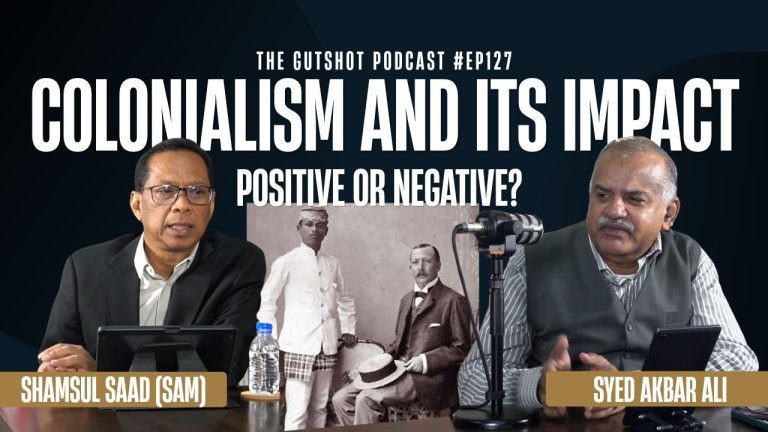
Colonialism and Its Impact – Net Positive or Net Negative
Show Notes & Description
This is not a philosophical tangent. Its our review of the impact of colonialism on human civilization and particularly whether British rule was a net positive or negative for Malaysia by evaluating its tangible institutional, economic, and administrative legacies rather than relying on ideological rhetoric.
Spanning 171 years in Penang and over eight decades in the Malay states, the British period introduced foundational structures—including the Torrens land-registration system, an English common-law legal framework, and structured public administration—that independent Malaysia subsequently adapted. Is extracting indigenous resources really the sole resultant impact?
We dive into colonial inheritance to post-independence stewardship, comparing Malaysia’s economic trajectory with former British territories like Singapore and Hong Kong. While all three inherited similar administrative frameworks, common-law systems, and international trade routes, their long-term outcomes diverged based on policy choices made after independence. We explore how post-1957 policies—most notably the New Economic Policy (NEP) introduced in 1971—reshaped competition, corporate ownership, and resource allocation in ways that contrast sharply with the open-market models of Singapore and Hong Kong. Ultimately, we frame the historical inquiry around three central questions: what the British left behind, who benefited at the time, and whether Malaysia's current economic and institutional challenges stem from colonial design or the domestic policy decisions of the past six decades.We want our people to think out side the box.
We Have a Country to Save
Jump to chapter 7 chapters
- 0:00 Colonial Legacy: Institutional Assets vs Elite Exploitation
- 5:25 Historical Precedents: Roman Empire to British Capitalism
- 15:09 How Rubber and Palm Oil Built Modern Malaya
- 29:09 Land Surveying, Title Registration, and Capital Monetization
- 37:56 The Economic Distortion of Malay Reserve Land
- 47:46 Diverging Paths: Malaysia vs Singapore and Hong Kong
- 53:09 The Soul of Malaya and Final Takeaways
Auto-generated from YouTube captions. Timestamps link to the video.
Yeah. And now we are independent. There's no more puna here. But the things that we described which we didn't like about colonialism, it still exists today in our country. It hasn't gone away. In fact, it is now gaining momentum. We have our own super elites and you know our own version of these uh people who exploit others. That's our new colonialist. It's uh it's it's it's here. So we have not if you want to say that have we got rid of this colonial type behavior? No. Only the faces have changed. But the British did other things which have lasted us which has uh done a lot
of good for us other than the legal system, the administration system. They build the roads. Huh? The education. The education system. The education system was something good that they left behind that we that we actually unheds it up. We messed it up. We messed it up. And then you ladies and gentlemen, welcome back to the gut shop podcast and I'm here with my partner say Akbali. How are you my friend? Good morning. Okay. Today I don't think um I this topic I think is interesting. Um uh it's we're going to talk about colonialism. It's really not a philosophical topic. I
think it's uh uh it's it's it's a technical evaluation or analysis of how colonialism has impacted civilization. Am I am I about right? Yeah, sure. Okay. Cool. All right. So before we come to our domestic show, I I think one of the things that I've always been fascinated is how uh how England actually became what it was as an empire because that be because before that they were really the backwater, you know, of Europe, you know, right? And um their start of civilization if you go back you know it is it can be traced back to the Roman Empire you can still find the Hrien wall you know right
inside England. Yeah it's still there but it's just a low wall. Yeah because that's what left you can step away. Okay. Right. So I mean that is I mean the core era of the Roman Empire is between 27 BC to 476 BC at least the western Roman Empire and then the bisonantine empire was until 1453. Okay so this is and what did they bring in to Europe? Uh so oh sorry to uh to to England they brought in construction not just to England throughout their whole uh empire uh construction of almost 50,000 miles of pave stone roads to uh so basically they revolutionalized
uh the society that they conquered right uh aqueducts freshwater public bath urban grid system across tribal Europe and North Africa and the Labad and then they were the ones who codified Roman law. They codified the law. Yeah. They codified law that became the basis of what is English law later. And uh we use Roman alphabet, isn't it? Exactly. Right. You know, so I mean this is the thing that I find it very fascinating when people talk about colonialism. uh and also the result of colonialism to society. Now, nobody likes to be colonized at the at that moment in time,
right? We don't like to be conquered. Nobody likes that. That's I'm the first to admit that. I think we are the first to admit nobody likes to be conquered, colonized, slaved or or or or get in turned into servitude. But and but if you look at human civilization that is exactly what happened. In fact, one of the biggest colonial uh empire, the first actually biggest global colonial empire is the Islamic caliphate from the Rashidon, Umayyad and the Abbasid and that become the Ottoman Empire. And here we are, you know, every time we talk about colonialism, we talk about the white colonialist.
Na The first global empire was the Islamic Empire. Anyway, let's get to why we started this conversation. Say, yeah, because we were talking together and we were talking about our civil service. That was how the conversation started and we were talking about g, you know, your your your dad was in the civil service, right? Yeah. My dad was a school teacher. So we are very familiar with the term general orders. Okay. And that is a legacy of the British colonial empire. Say I uh roll the ball to you. Yeah. Okay. Yeah. I think um it's interesting. It's a historical subject but it needs to be
said in his proper perspective. I frankly Yeah. I'm a bit of a revisionist. I don't believe in this term uh colonialism. Okay. Uh it it happened it did take place but as you mentioned from the Roman times uh well the Romans were also colonizers in sense that they invaded various lands and they lived and they the empire lasted more than a thousand years. Then the Mongols came the Mongols invaded from from Mongolia. They went out into China and then westwards they went into into Europe. They went into the Ottoman areas. They were the ones who defeated the Ottomans at at some places. I think
they attacked Hungary and things like that. But they did not they did not last. The moment the the great KS died, that was the end of the Mongolian Empire and they didn't leave anything behind. Whereas the Romans, as you said, they left behind their not only their roads and their aqueducts and all that. I went to Jordan once in Aman. We stayed in a local hotel and just across the road there was this very sizable theater, you know, like a like like a stadium, a steady eye or whatever. Okay. Built by the Romans, right? It's tiptop condition after 2,000 years and they still use it. Yeah.
In a made of stone and everything is right anglesh. So they have they may have certain I don't know whatever. Sorry to say that. Aman in Jordan. Oh, really? Yeah. So the because the Romans were there up to the Middle East and all that. So they left behind all these things which they built. So the Romans were buildersh and they also left behind systems. The Roman law is is a known known system of laws in uh in Europe among the European peoples. The Roman alphabet all those things. So uh so were they colonials? Were they invaders? Were they civilizers in the sense that they
spread their civilization? Today all the Europeans who are invaded by the Romans are happy that they're part of the Roman Empire. Yeah. So the Germans started calling themselves the Holy Roman emperors and you know Holy Roman Empire. They call themselves Holy Roman Emperor you know Germans. So people were proud that they had this German thing uh I mean Roman thing about them but they were colonialist. So so what is colonialism? You know is it good or bad? Is it positive negative? And then are we really out of colonialism? Okay the the the white colonialist the English have gone back.
But do you seriously think we don't have we have we don't have new colonialist now in our country because colonialism does not mean across border across different skin color. Colonialism is those who well those who organize a bit better they have certain skills maybe they have technology and they have certain advantages. So when they run into people who are less organized you know who are less capable technologically less superior in many many ways socially economically whatever in cultural habits and things like that so the one that is more efficient I don't want to use the word
superior the fellow who's more efficient at that place in time of course he will be the boss over those who are not as efficient that's basically that's it right we we for example okay the colonials claim came they exploited us and all that this is a normal normal wording but don't forget the communist manifesto which is all about exploiting people about the capitalist class and the working class and all that it was was written in London you know communist manifesto okay written by uh KL Marx and Friedick Engles in London those guys were hanging out in England and their their
laboratories for study was the British industrial revolution because they could see the working classes in England 19th century and all and how the capitalist the people with money started building factories and people work like slaves because at that time we didn't have OSHA occupational safety hazard no labor unions labor law so very basic no no hygienic way of living it was the beginning of civilization again the the modern civilization we were learning the ropes so of course the guys who wanted to make the money who had to run the pay the bills pay the
rent pay the salary they had to squeeze their workers this this basic you the same thing happened in our country. So here we call it colonialism because the guys doing it were the white people and the receiving end were ka the brown people. But the same thing happened in their country. That's how KL Mars and angles wrote the communist manifesto and gave birth to a completely new thing called communism and a whole bunch of that's basically a philosophical and economic. So it's a constant thing that's happening. Yeah. So I I you want to use the word we were colonized, we were
colonials, things like that. Yeah, you can use these words. These are easy. They put things in a box nice to in in a drawer. That's an interesting point of view. Yes, but actually it happens anywhere and everywhere. So I want to ask again today are we fear of free of colonialism? Do not don't we have people who exploit those who are less clever than them or true, you know, who are less capable than them? It's going on every day. No, I always thought that actually. So we have the new colonials replacing the old colonial but now we are same color. The only difference I think
quick time out my dear friends our metric shows overwhelming number of our viewers are not yet subscribers. Appreciate very much those who haven't to subscribe and like our episodes. It does not cost a thing but two seconds to hit the subscribe and like button. It helps to spread our content further and build this movement to save the country. Thank you so much. Now back to our episode. I I I mean may I go a bit just digress you know for two minutes is that I always thought about um I don't know the orangasi puna situation uh between the intraorangasi situation.
Okay but I we do know that the malays colonize manong and basically orangli are under subitute of the malays. Okay. In fact, uh there were a time when they were partly also used as slaves, you know, but uh when I look at American history, for example, I've I do read a lot about American history. Um you know, and they think, you know, there is this romantic idea that the uh American Indians were were peaceful tribes, you know, before the white men came. You know it is it is so much further from the truth because when you got the Sue or the I think it was the Sue or the
Apaches I mean who who are able to uh technologically okay technologically conquer the horses you know they become the best raiders of the next tribe you know and you just have to watch Apocalyptto by Mel Gibson you understand this although it's a it's a movie but they capture the reality the essence of it quite well yeah I don't think human being the fact is that any civilization or any society that uh uh uh technologically advance even a little bit you are going to for lack of better word conquer or colonize the less advanced society For example, even today, mark my word,
we are being colonized by China. Okay? All right. Because why? Because we have a helpless government that does not know how to make Malaysia comparative. Anyway, I digress. Say, go back. Well, okay. So uh it's interesting to to look at the the I mean we have a colonial history that goes back to the 16th century 1511 Portuguese invaded Mala right they were there they were in Mala for I I remember I I I know the date at 1511 1511 to 16441 that's 130 years that's a long time you know and while the Portuguese were here uh they said I've heard this people say before about you know about a thousand
words in the Malay language. Oh yeah. Come from Portuguese. I'm not surprised. I know some of them. One of them is keta. Is it? Keta is a Portuguese. Keta means a car, a vehicle. I know we import kip from uh from Portuguese. Oh, seriously? Yes. Because because that is it's karip. It's karip, right? But the the the the dish itself Oh, okay. It's Portuguese. It's Portuguese, right? Okay. you know, and and um there's another one. Uh never mind. Go on, go on. I'll remember. So then the the Portuguese were the the Dutch defeated the Portuguese, right? And then the Dutch were here a bit
longer. 1641 to 1824. Uh that's almost over 100 years, almost uh 200 years. Then 1824 there was this war between British and the Dutch which was settled by the Anglo Dutch treaty of 1824 after which Britain got Malaya. The Dutch moved out of Malaca. So the Dutch went to Jakarta to Batavia. Yeah. And the British moved into I mean permanently they moved into uh Mala and they they were seriously got involved here. Um then uh the British well the British were already around. They were they were in Pinang. Mhm. Uh they first you know they were in Pinang in 1786. Mhm. The Francis light guy. Yeah.
Uh you know so after Singapore and all that. So then things moved on and finally by 1874 the real British official presence in the country through the Pango treaty where they had they appointed their you know advisers and this and that and the Malay ruler sultan agreed to accept their the presence of the British right uh before that Pinang had already been sort of given up by the Sultan of Kada to the British and then uh Singapore had been given out to given to the British by the Sultan of Joh. Oh, we should not forget I mean we were sending uh we were sending uh uh uh what do you call um
thief and and all sorts of thing to the siist before that we somehow we have forgotten yeah we somehow we have forgotten because the sist didn't come down here they didn't they were not like the British so anyway so so since then uh pinang 1786 and then pango treaty 18 uh 1874 that's when the British really got fully involved in the country and then uh I mean colonials colonials okay the thing is that the the the general understanding of colonials is that they come to your country they take over the place they exploit your resources and this and that but there's something interesting about
the British which is very closely intertwined to our modern Malaysia and our progress as a country rubber and oil pal you know. Yeah. So if you if you study the the the history of rubber and oil palm these two agricultural commodities which are absolutely critical were and still are to a large to an extent now not so much now plantation agriculture is less than 2% of our GDP but at one time they were like you know tens of percentage points that started the development of they started it. So it's interesting if you see how the rubber came to Malaya. Rubber is was founded in in Brazil. The
British found it in Brazil. A fellow called Henry Wikam. And I read about this history of the rubber. It's it's quite interesting because I remember the dates because I read about it 80 I think 1876 this fellow got a load of rubber seeds you know from Brazil about 70,000 seeds I think a few container loads or maybe one container and then he sent it sent it off to London to the Q gardens you know where those guys there they germinated the seeds and then from there they were able to germinate like 3,000 seedlings that they and from there they sent like 2,000 plus of these rubber ceilings to
salon the next year you know by 1877 just within a year they did the germination everything so they move things quickly you know and there's no rubber plantations at that time but they just they were driven this village then they they sent about about 2,000 plus seedlings to Sri Lanka son at the time from son 22 rubber seedlings came to Singapore botanical gardens right of which they the British kept 13 and 11 was sent to Kualakansa the Kualanga story sort of end I don't know what happened after that so from these 22 seedlings 1877 they planted the trees in
Singapore the streets the trees grew it was growing and pretty soon there were trees and they cultivated all that then nothing happened really for until 1888 there was a fellow called HN Reley came to Singapore British guy they appointed him the chief of the botanical gardens they call him Mad Ridley For some reason, this guy was obsessed with rubber. He was crazy about rubber, you know, and he said, "We have to develop it." And he started calling up people, planters, people who had vegetable farms and tapioca farms and any kind of, you know, they say, "Okay,
try this. Try this." You know, and so there was a guy in Malaa by the name Chinese guy by the name of Tyan or something. Quite a handsome guy. He looks like one of those movie stars, you know, dressed up. This part I didn't. Ah so this fellow he got nine rubber seedlings from Henry Lee okay in from the Singapore botanial garden and he planted in Bukit Lintang somewhere in Mala he had like 43 acres of land so he started planting it okay then he also got other rubber seedings by this time 1888 Ridley came here 1895 Dhan planted his rubber seeds by that time Singapore they already had like a
couple of thousand rubber trees matured because rubber takes six years to mature. So they arrived in Singapore 1876. Reley came 1888 11 years. So by the time the and they had multiple trees. So so ultimately Tahan was able to plant his 43 acres with rubber and uh it was new but they had already developed you know planting the trees in a straight line and the spacing and all that and how to tap it all that because rubber was not successful in Brazil. The natives they they they whack the rubber tree with the parang the macheti and they destroy the bark. Okay. Not the proper way of tapping it.
The British found a way to tap the rubber, you know, and do it properly and things like that. That's technology. To make a long story short, it worked. All right. And then there was a requirement for rubber because moto cars were being made. This is the end of the 19th century. So, Tyan planted his plantation 1895, 1896. his first harvest 1901 1901 okay rubber because it takes six years to mature right so from there he took off that's how the rubber industry developed I wonder whether his name is he whether there's any name or streets name after this guy I don't even know the name
so you see this is a case where we say that the British are exploited but here they brought the rubber seedlings from Brazil and if you see the effort that they in the the carefulness that they were because you know it is it is plant seedlings you travel it by ship you you transport it by ship from London Q gardens to Sri Lanka to Singapore you know you have to take care of it and you have to you have to you have to care for it they did all that and then this guy Reley Matt Ridley who really pushed the planting of rubber and and cultivation of rubber plantation he did all this so
so these were the things that they did they invested right they brought the rubber from outside our countries it's not native to Malaysia but the thing is here we have the land the weather the rain whatever same as the equatorial as Brazil so the thing prospered here so they were able to develop rubber and lo and behold the automobile our Henry Ford made his uh model about somewhere around that time in the early 1900s so rubber industry took off because everybody wanted a car and the car needs four tires so the timing was perfect so this was like you all the stars aligned in a row
and then our country benefited. So the same story goes with uh oil palm. Yeah. Palm oil or oil palm. Uh it was it's from Africa. It is not native to Malaysia. It comes from Africa from West Africa somewhere. It was it arrived in Malaysia quite early. Malaya before rubber by the 1870s. They had oil palm here but as ornamental plant in the botanical gardens and things like that. or the British, they they brought it in. In 1917, there was a French guy by the name of Fukon or whatever. He uh he set up the first oil pal plantation in Batamjunai. The plantation is famous. It was called
the Tanamaram estate. Okay, that one I know. Which in Tamil, Tanamaram means coconut tree, right? So that was the first oil palm plantation in 1917 set up by this guy called Fukonia. Before that he had tried other crops and coffee and all kinds of stuff. Maybe he's not so successful but the palm oil was successful and he set up the first mill palm oil mill. So from there the oil pal industry developed you see and this guy is well recognized by the the pal oil pal people. They they know about this name Fukun. So again this is a story of how this um the western interest you can say that they
were commercial interest definitely they were commercial interest don't make money I I I I absolutely believe I mean what drive human civilization for lack of better word is greed well yeah you know human being I mean progress because they need to have u they I mean it's great whether however you look at it I mean Yeah, but I'm ready to have this coffee. Yeah, but don't forget there's there's a couple other things involved. Uh there's time invested. I I I see more of these people. I read their history, their tenacity, you know, their their commitment. This is a huge risk because like this
fuk he almost lost his pants trying to grow coffee. Maybe the soil or whatever he did quite poorly just like he thought he found his his palm oil. Okay, I'm going to give it a shot and it was successful. So they take risk and they took the effort. Palm oil 4 years, 5 years to mature. Rubber is 6 years, 7 years. So they plant it and then they wait for it to mature things like that. And then and then later the British when they started the plantation company started work in Malaysia, started large acreage of rubber plantation. They were the first to organize this you know this SPB special
purpose vehicle listing in the London stock market. M so they will launch a company and say okay we've got x,000 acres in a in a far away land called Malaya and we are going to clear the jungle and plant this these things called rubber trees and then we will after 6 years 7 years we will start harvesting the rubber and we believe we can sell it to make these tires that so people the capital was raised in London six seven years ahead of time so imagine if you're an investor or ordinary member of the public in London and this company says okay we're going to list this
company you know SMB or rebel and we're going to raise shares uh uh capital in London to go to a far away land Malaya and grow this rubber plantation and you must wait six seven years to find out whether we've been bullshitting you or not people trusted them so they they they invested so you see the amount of effort and organization and the integrity required to make all these things happen I mean London is what how many thousand kilometers away from us you know so they they no they raised the funds they brought it here and They they did it properly. They developed the land. They planted alien
tree, rubber tree. They planted alien trees, oil pump. And they developed the whole place. They organized it. And then we we well we we have enjoyed the the Well, here's the here's the thing. The economic success. thing that come to my mind as you were talking is that you then we have all these revisionist history uh by Malay professors so-called you know talking about um uh Malay civilization being so old we teach the Chinese how to or we teach the Roman how to build ships you know and this is either I get this on YouTube, right? And we have these Malay boys on the podcast,
you know, listening long, you know, and this are getting tens of thousands of views, you know, and I wonder is actually taught in our school whether this reality are taught in our schools. Fortunately, that's not part of our colonialism. I know but you see this is what happened. So they what I'm trying to say is that they uh Yes, correct. They came to our country and they uh exploited the land, the resources and that but they invested a lot of time, energy, money and organization and they were they were persistent. They were committed to make things happen.
So uh were they exploiters? The way I look at it because a lot of them lost their pants you know there not not every single British venture not every single no a lot of them lost their money like this Fukonia fellow he was a touch and go you know he was like uh I think it was by chance like he said okay let's try this uh oil palm I mean there were some other people around him who encouraged him that's why he did it but they they took chances and then the the thing is it caught on the rubber was the timing was perfect because of Henry Ford's model T and the growth of the
motor car manufacturing in America and Europe and everybody wanted a car. The cars need rubber tires. So that helped the rubber industry which helped our country develop because rubber at one time was a huge part of our GDP in those days you know. Uh so they helped to develop the country. Now of course so to get the rubber out then they also started exploiting the tin and the uh also the the oil pump plantations of course they had to build the roads and they had to build the railroads and things like that you know commercial interests came in so wherever there was
rubber and uh and tin and oil pump you find that that's where the development followed that corridor which at that time was largely along the west coast of the peninsula Also because of the terrain the west coast we have the streets of Malaka the water is protected so they are safe harbors like Pinang port clang and Singapore these were all uh you know harbors that can take in uh ships and all that. So the west coast developed uh much faster than the east coast. Of course there was also a lot of politics involved between the federated states and unfederated Malay states and all
that. But uh that's how the the country developed. Peninsula Malaysia developed in the beginning and it developed very fast. Uh so uh of course then to manage all this the British you know they were here and they had to organize various other things. They they had to organize local government. They had to organize administration. they had to organize uh what do you call this legislative councils they had to make laws uh they had to pass uh the land laws and this and that. So for example one of the side effects of all this British investment in plantation agriculture in Malaysia
well even before plantation agriculture the British brought their their administrative tools and systems one of which is the land survey method. Yeah, you know, I mean, most most most western countries, European countries already had, you know, how to survey the land. Even even the Japanese and Chinese had the land survey, but we were we didn't have to organize modern land survey system. So, they brought in the the theatala, right, the land office. Uh this is this is very very significant. uh until today a lot of third world countries that are facing development
issues because some of them have not sorted out this land land matters in their countries right there is no scientific or modern method of uh accepted method of surveying land or or it has not it has not been done yet things like that land exists but titles have not been issued so because when you have title for a land you know you can transact right on the title but I think more importantly you and you can charge the title to a bank and raise a loan and then you can use the funds to you know start your plantation or start a business or whatever. In other words,
you can monetize your your land title. So uh so the the the flow the flow the flow is uh uh land survey system pjabatana land office issue titles then title owners can charge the t sell the titles or transact or charge it to the banks and monetize it things like that. So this is extremely important when the whole thing the framework need to have a general administrative uh yeah system of administration a system of administration if you don't have an underlying system of administration very difficult you can't even set up a land code it's very difficult uh so in Malaysia
now today for example if you go to Sarawa Sabah they have this constant issue about the native land they call it what tradition native traditional native land traditional native land your shell people will know this very well because frequently you run into this issues where is traditional native land long time ago but nowadays I mean because we are doing offshore because they they didn't have titles right they didn't have titles so native land is where this tribe lived there for 100 years so they claim it is their land and there this constant issue of overlap until today with the with the
so because they didn't have proper land surveys and they didn't have proper titles issued. I'm talking about Sarawa and Sabah until today they have this issue. But in Sanganjong because the British brought in the survey methods and theatana the land office quite early on we overcame a lot of these issues except in certain places like Lantan and and uh places like that where the orangi issues are still there. The orangasi don't have titles but they've been there since before. Yeah. So just this issue of setting up a land survey system. How do you survey land?
Land office issuance of titles, freehold titles, whatever. Parceling the land. And then when you parcel the land, you make allocations for roads. You must have, they must follow certain land code. Uh so and then this helps a development of townships, housing, villages where you can put a drain, a monsoon drain, where you going to put the road, how to you know the the approaches all these things because you have a proper land survey system. So this alone by itself even without the rubber without the tin without the oil pump it would have assisted us. Can you
imagine the days when actually now that you bring it up, can you imagine the days when the land owner were basically the so-called Malay nobility that became you know uh the uh uh the feudal system where you are basically squatting on uh the land own the the the the nobility's land that's what happened in Europe as well you know until today until this until this land code happens until today. I have a friend who uh who is an architect and who uh also runs a construction business. Uh he once went to North Africa not too many years ago to do a project there project he was I think a
consultant. So he said over there they're not like here here everything is so properly land surveyed land titles everything is in a straight line or you follow the contour there is a geometry to it so that you you you know some some lots may be curved straight whatever but you follow the geometry it's all properly done over there uh it's kanka wood you know so it's not in a straight line so if you want to build a row of houses it's it's not possible because the titles of the people have been since before the Ottoman times they've been there a few hundred years you know you
tell them excuse me all these benco you know it's difficult for us to to plot a road or to lay the sewage lines because the the all the titles are bigo or the locations of course they there's resistance and then often there is no survey title people just say oh this house has been here for the last 100 200 years you know and this is my land so so redevelopment and parceling of land is an issue. It creates a lot of problem today today in these countries in Africa, North Africa because they did not have a proper uh land survey system and issuing of titles and things like
that. Uh which we have overcome. Yeah. Or rather we are fortunate that the British brought the system here quite some time. Today we don't think twice about it. You want to buy a house for granted. We take it for granted. You just go to the land office. You you bought a piece of land. If it's a freehole title or whatever title, you go there and then you you can register it. You your once your the original title is kept with the land office. So even if your title at home is destroyed, burn in a fire, whatever, you can go back to the land office, you identify yourself with the
IC, BC, whatever, and they can trace your land title. So you see your wealth is safeguarded. So this alone is worth economic value, you know. Yeah. This is tremendous economic value multiplier effect and we don't seem to understand. So I once when I was in the bank I lend money to this Indonesian billionaire fellow. He's a steel miller know right? So he came here to invest. So we asked him you're based in Java Indonesia why do you want to come here? He said things are not easy. First of all you have water electricity which we which he doesn't have. Then there's these issues.
these issues of delinating and this and that all it's not so easily set up you know so it's complicated takes time whereas here it's like easy because he went to east coast tanganu there was an industrial estate right where the state government developed it and you know everything is nice and square and you just you just buy one lot and you put your factory and you start producing it's as simple as that so that alone attracted him to come here to Malaysia invest invest in a steel mill uh which which we which is not available in many other countries you know don't so we take it for granted yeah
we don't stop and think so a lot of people who don't know what to say oh puna you know they came here they exploit us no I have to felt you have to reook it you have to reook it no no no I I I mean imagine that the how we try to erase the history you know we change the road names um you know we even want to wipe out uh uh what do you call our uh Hindu history in Kadak we doesn't seem to be able to appreciate history that we don't manufacture uh ourselves because we somehow or other has to be the uh the the the the dwan tunn you know I mean which brings me back to uh you know let Let me
maybe let me say something about Malay reserve land since you mentioned Tuant. Okay. Malay reserve land is a very interesting uh thing. Now in my view, you know, I'm outside the box. I I think I have a bit sneaky crooky thinking. Yeah. This one I think that the British had some things up their sleeve. Okay. Okay. The Malay reserve land was created by the British. Right. Right. uh the Malay reser reservations enactment was done in 1913, you know, more than 100 years ago, right? Uh enacted in the federated Malay states uh came into for came into into force 1st January 1914 in Perlango Milan and
Pahang. All right. Then about 16 years later 1930, Clantan enacted their own Malay reserve act, Malay reservation enactment. 1931 Kada enacted their own legislation. 1933 the original uh enactment was repealed and replaced by the Malay reservations enactment. 1933 the British did it. The Malay reserve land was a creation of the British. Why? Okay. They said at that time, why did the British why did they introduce it? They said to prevent government land in designated Malay reservation areas from being alienated to non-Malays. All right? because they saw that the Malays were being uh
outnumbered or they they fear that's what they say they fear that the Malays may lose their land. So they created Malay reservation land to restrict private dealings involving involving Malay reserve land between Malays and non-Malays. That means they wanted to they don't want the non-Malays to to buy too much of this Malay land to protect Malay land holding and preserve Malay rural economy. This is what the British said to preserve the Malay rural economy particularly rice cultivation to reduce the risk of Malay lands passing out of Malay ownership through sale of
mortgage. Sounds like people but this is what the British did. Uh so the British created the Malay reserve land. It was a creation of the British starting from 1913. But there's another side to it. You see the moment they created a Malay reserve land the as we know until today Malay reserve land the value is much less than the the freehole titles the title that is not a Malay reserve land in the old days we used to call it grand put is the freehole title freehole titles are always much higher in value than the Malay reserve land until today because Malay reserve land is restricted
you can only sell it buy and sell among the Malays whereas freehole titles can be bought and sold by anybody and it's a freehole title. So wherever there were Malay reserve lands especially in Kada later in Clantan all that um areas of Pahang is you find that the value there has dropped. So although Malays were land owners they were poor because their value of their land is always below way below the the freehole title. I remember in those days 1980s 1990s you know the afterlaw a lot of the OKB orangabaru in KL will go there and buy this acres of uh plantation land in Uruanga at that time
it was like 20,000 30,000 an acre you know now an acre now is worth worth much more than that but transactions are very rare you it's very difficult to develop up you know so this is where the British when they created the Malay reserve land you know you have they had they built a road because Kiri Khan left right of the road the rubber plantations so you have to transport the rubber they build a road right through so that the rubber estates were closest facing the main road if you go inside they call it lot der loter you know way inside the jungle that's where the malays man will
start so of course the the the value is much lower and Until today this is a story even if you go to Ulanga today those Malay reserve lands they are baluk behind the hills you know there's no access so the value of the land the economic value of the land is always way below the the freehole titles until today now there's another there's another to me there's another a bit nefarious thing behind thish when the British created a Malay reserve land you squeeze the freehole titles into a smaller area mostly along the west coast along the urban areas. So the value of the freehole titles went up.
So when the value goes up, you create you collect more quit rent. The quit rent is higher because the value of the land is higher. So the British land office made money. This is real rental rent seeking economy. Just by a stroke or a pen, they isolated some lands or substantial areas of the Mia reserve. So the remainder became higher in value because it's restrict limited freehole title. So the quit rent of course was higher and then when you buy and sell these titles you must pay stamp duty quarter% or whatever based on value. So that again they collect higher revenue. So the British were
clever. One side they told the Malays don't worry I'm safeguarding your land for you. Although the value drops a lot you still remain poor. on this side they told the non Malays you pay more for for the quid rent and the land titles transactions things like that so they made more money so that's that's that's basically a clever way of uh in uh of of manufacturing scarcity they were manufacturing scarcity exactly so but unfortunately although the British have left uh this part of the story we still hold on to it the Kanan people are very appeal and say, "Oh, this is Malay
reservation land. We should never change it." Uh, I think this is very wrong. This is to me, no, not only that, if you buy uh a a non-Malay land, a freehole non Malay land, but non uh Malay land, do you know what the uh some of the uh I I I know for example is Lango, uh I don't know about others. I'm not sure whether Joho does that too. Basically, it get reverted to a Malay land. So I I've heard about this but but to me like economically it doesn't make sense and it keeps the Malays down. And then I want to say something about Clantan. Clantan is extreme case right
the whole of Clantan basically the the is restricted right only Clantanes can buy land in Clantan. My god I mean regardless I didn't know that regardless you're Chinese or Malay or Indian Tasa but you must be a Clantan. If you're a non-Clantan and you want to buy land in Clantan, it has to be approved by the the the X school. So it's a process. It's not just automatic. You you don't just go and you know look at the millennial hey there's a you know one land I'm going to buy and then get the lawyer to do SNP and then you know change the title which is automatic here elsewhere
there is difficult. So that's why you see in Clantan uh the development to me in my view it's now I understand it a bit it's impacted that is that that that pro put puts a bit a big hurdle so that's why I think uh Malay reserve land and also clan they're going to face uh it's going to be slow to develop the land because of these restrictions uh but I just want to say that is a British who did it in 1913 so this is Punja you know yeah and and we inherit this paja uh system um but we don't want to uh unlock the value um of the capital or of the asset that actually that that the Malays have
what a waste so I mean the point I'm trying to make for today's discussion it's not uh clearcut straightforward uh colon colonialism was bad colon colonialism was good. uh we have to look at it you know because uh colonial behavior I I find this a bit I what I see is that it's just people who are organized people who have skills who have technology people have modern methods when they run into other societies which who are not as advanced as them and but they have to interact one way or another you lose out one that you lose out this is it and now we are independent there's no more
punaja here but the things that we described which we didn't like about colonial ism it still exists today in our country. It hasn't gone away. In fact, it is now gaining momentum. We have our own super elites and you know our own version of these uh people who exploit others. Oh, that's our new colonialist. It's uh it's it's it's here. So, we have not if you want to say that have we got rid of this colonial type behavior? No, only the faces have changed. But the British did other things which have lasted us which has uh done a lot of good for us other than the legal system.
The administration system, they build the roads. Huh. The education, the education system, the education system was something good that they left behind that we that we actually unhed it. We messed it up. We messed it up. And then you see the thing is uh a country that is colonized, you have to see a couple of things. Who are the colonizers? The British were more successful. That's why the British Empire was so huge. Then they say the French, the French in my view, they screwed up. Wherever they went, they messed up. The Dutch were not too great. The British were super
efficient. Uh, yes, of course, they look for their own look out for their own interest, but they did things in a very scientific man. That's the word we're looking for. Very scientific and logical manner. So, they were able to to uh what do you call this? Uh, progress and prosper wherever they went. Like they grew the rubber and the oil palm in this country. It was for their interest. It is for their benefit. But along the process, you did it, they did it properly. So there is spin-off. You see you know my take of this and I think what I want to uh say out as far as the
theme of today is that when we look at uh at colonial heritage okay we should look at it as a human heritage and actually build upon what is successful rather than tear it down because we hate the colonialist. No I think this is just a politicians. Yeah. I I just want to close my my my uh argument my discussion today. Uh the other thing is you see we can compare uh different parts of of our world which were also colonized by the British. Right? So let's look at Singapore and Hong Kong. All right. What happened in Singapore and Hong Kong? They were also colonized
by the British. But when the British left, the Singaporeans basically maintained the entire structure of what the British left them. everything like even the the language they kept the education system everything and Singapore has prospered tremendously. Yeah. One of the big things which Singapore maintain is that the free market system although it is not entirely free market in Singapore but nevertheless they are they are open they an open economy they are fully open to world trade import export and there's no restrictions they are they almost totally there's no restrictions for
capital inflows outflows in Singapore anybody can bring funds in and take it out the same thing in Hong Kong. So say I I I want to add one thing that that to me um that uh Lieuanu maintained um which is education. Yeah. He didn't in English. She didn't change it at all. He didn't change. He could have easily done and say education in Mandarin. Now the the the bigger example is Hong Kong. Hong Kong was rented was leased to the British for 100 years from 1897 to 1997. Right. 97 undercher I think the lease ran out but in the 100 years that Hong Kong was under the British they brought it up
they they managed it just like Singapore all the same British English education system whatever and everything you know uh free market uh easy capital flows in and out very few restrictions uh recently Hong Kong Hong Kong was ranked the the most the freest economy in the world that's that's one index where anyone can invest there and capital inflows and outflows are you know without any restrictions and all that. So Hong Kong is rated number one. Singapore was number two but I think was it but this year Switzerland has overtaken Singapore. Singapore Switzerland now is number two. Singapore
number three but this is what the the Hong Kong people and Singapore did. They maintained what the Punja brought in and they prospered on that. And Hong Kong is unique because 97 the British were kicked out. The lease expired but the Chinese the communists they maintained it. And today Hong Kong is actually more prosperous than before. They are number one ranked number one in terms of open market economy less less a fair system. The Hong Kong has maintained it. I mean surrounded by communist China but China is now more or less the same. So they have maintained. So here's an example
you can see of living example of two countries Singapore and Hong Kong. The Punja left but they kept their system and they prospered. Now Singapore is our top five GDPs in the world. Per capita GDP per capita GDP probably yeah top three already higher than America. So so you see the the things that the colonialists left in their countries they developed on it. Whereas here we brought in the new economic policy for example 1977 which overturned a lot of things that we already had before and today not everybody's happy with the way things are in the economy. I think the economy
is a bit of a mess. uh because what what we did in the last 50 years now we change we try to experiment and we can do it better than the British engineering uh we we are cleverer than the British we can do better than them you know so we are now floundering whereas like Singapore and Hong Kong the place you look at is not Singapore it's Hong Kong because is owned by China communist and all that but they said no let's let's go with it let's leave it don't touch and it has after 97 Hong Kong has become so much more wealthier see So again the question is was is
colonialism good or bad? You must ask the Singapore and Hong Kong people. That's a good question. I mean there are pluses minus but you cannot say blanket it's all good or blanket it's all bad. No you have to look at it. Yeah. Okay that's I think I think yeah I think on that note um I think we we we you covered a lot and uh I don't have much to say because we are almost the same thought in this kind in this in this way because we tend to be outside the box. uh both of us tend to be outside the box and um you know I wish that we can go back to uh to uh English education because uh
what what what has happened is we have made our children to uh to have u less access to uh to knowledge because they they are not fluent in the um in the language of knowledge. So that's one of the biggest mistakes we've done with respect to dismantling whatever that the British colonialism has uh given us. Can I just some trivia? Can you sum sum it up with your trivia? Yeah, you sum it up and then we the some trivia. This guy Fukun, he his name was Henry. Henry Fogon, the guy who Andre Fun, the guy who set up the first oil pump plantation. He call it Tamara estate estate.
Uh he made his money in Malaya and then he retired. He went to Tunisia. Tunisia was under the French and he settled down in Tunisia 1925 or something and then he wrote a book about his experiences as a planter in Malayala. He wrote a fictionalized book. Okay. And uh it was called Malaysi. you know French for Malay Malays Malay 1930 this book won the French literary award the highest award in France the year it came out you know suddenly he became a he became a literary giant you know I think he wrote a couple of books after that and in France this fukunia
guy was known as a writer nobody nobody knew him about the guy who created the the oil palm industry in Malaysia they knew him as a planter you know and that book was translated into English which some people here might know the the English version is called the soul of Malaya really this a famous book so it is Fonia's book of his experiences in Malaya it was a fictionalized story basically of his own life and some other people so uh it's interesting that the guy who helped develop the oil pump industry uh retired in Tunisia and wrote a book about our country and he became a literary giant
in in in France for his works, you know. So, um I mean Punja character but but can I part of the historical cycle? Yeah, I know this trivia is interesting because why now I got another trivia because you use the word malise. Okay. I mean that that word um has become to def is defined as I'm reading it out. Okay. A general hard to describe feeling of being ill, uncomfortable or out of sorts without specific eyes easily identifiable cause. Well, in French it is malay is it? So that's something deep for us to think about how does that term come to be that is identified with that kind
of character. All right, on that note say thanks a lot. Okay, thank you. Thank you very much. See you guys again. Bye.