w Fui K Soong. There is Something about China – US/China & Global Changing Order
Show Notes & Description
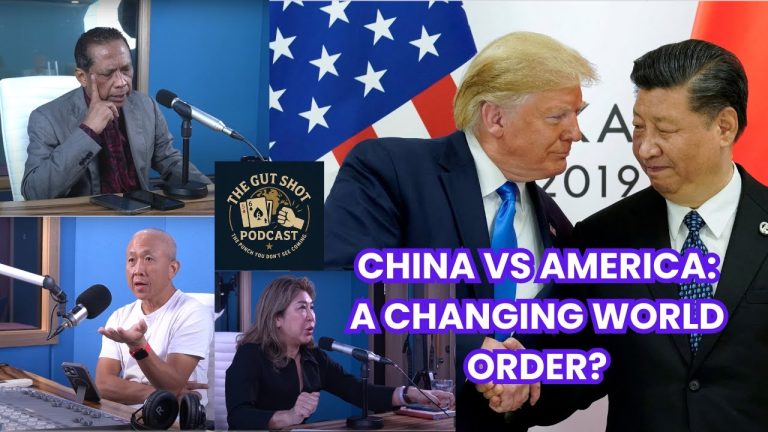
The Gut Shot Podcast: There is Something about China – US/China & Global Changing Order with guest Fui K Soong (CEO, Center for Strategic Engagement – CENSE). Episode 9
This discussion from The Gut Shot Podcast explores the evolving global order, particularly the US-China relationship. The hosts and guest analyse trade imbalances, tariffs, and China's domestic economic challenges, such as overcapacity and shifting from manufacturing to consumption.
They also examine geopolitical tensions, including the Taiwan issue and the broader clash between American hegemonic ambitions and China's vision of a multipolar world and global civilisation.
The conversation further considers Russia's role as an energy partner for China, the future of global finance and technology dominance (especially AI and energy), and the implications of these macro trends for Southeast Asia and individual financial strategies in a period of significant global uncertainty.
Many thanks to CITYPlus for their collaboration with The Gutshot Podcast, in whose studio this conversation was recorded. CITYPlus is Malaysia's first Chinese business radio station, dedicated to delivering in-depth analysis on local and international current affairs, markets, and businesses.
Jump to chapter 9 chapters
- 0:00 US Tariffs and Trade Stand-Off
- 6:16 China's Diversification and Industrial Overcapacity
- 12:56 Hegemonic Power Versus Global Civilization
- 25:07 Mandate of Heaven, Inflation, and Domestic Consumption
- 47:53 The Financial and Tech Front: Dollar Hegemony and Chips
- 51:35 The Taiwan Question and Military Realities
- 1:01:20 Beijing's Backyard: Managing Southeast Asia and ASEAN
- 1:14:27 Russia's Trajectory Versus China's Economic Governance
- 1:31:56 AI Dominance, Energy Systems, and Future Positioning
Auto-generated from YouTube captions. Timestamps link to the video.
Okay, welcome back to the Gutshot podcast. Um, the podcast is evolving very, very fast, fast and furious. Wednesdays, Sam and I will talk about mostly anything under the sun. Fridays is when we talk to guests and guest with a very specific and uh deep expertise in the subject or or region we're discussing. Today, of course, uh we welcome Fu Kung. Uh Fu is an academic scholar who looks very deeply at China and Russia. Today obviously the focus is on Russia uh
China and uh we're going to do a deep dive but before we begin with Fuy um Sam today is August the first and we've seen the tariffs the reciprocal tariffs being announced uh with finality by the US governments uh Malaysia's 19 same as Indonesia but overall I mean I think we're more right than wrong in terms of where we are prognosticating on the tariffs
I would I would say this though um it's not that we are more right than wrong actually I would say we've been spot on and I'm going to do a victory lap on all our prognostication. So here it goes ladies and gentlemen the July numbers are in. So let's take that victory lap shall we on our I think our episode 6 uh where we talk about Trump's tariffs and we say he will win mostly right number one the GDP has exceeded expectation at 3% growth which in quarter one was a shrunk GDP so we've got 3% in quarter two uh with expectation from so-called expert that it would have been 2%
Then we've got inflation down at uh at a clip of 1.5%. Uh and that amounts to 2.1%. So that is another win for Trump. Thirdly, we also saw personal income growth at 3%. This is in spite of the massive government downsizing uh by Doge of almost 70,000 uh personnel out of a federal job. Okay. So we are looking at as well a federal revenue of about 127 billion in tariffs uh with no inflation uh and it's expected to actually grow to 300 million at the end of the year. That is a conservative estimate. So as you can see deregulation of energy investment production, eliminating green
subsidies and environmental regulation on greenhouse gases uh probably cost hundreds of billions to the US economy uh that are wasted and what we've seen now is the result of just six months of Trump policies. Therefore, I want to close out just this uh update in saying that ladies and gentlemen, the gutshot podcast was absolutely right. Stay on with us. Let's go to the
Well, the one glaring omission from these trade uh results is the fact that China and the US have yet to um reach some kind of finality. And I think that's where you come in free. Uh where are we right now in terms of this impass? this well at this point in time this temporary impass where we going to go from here
okay um I think uh the US China trade negotiations I think they've had already uh uh at least you know three four rounds kind of thing with uh you know Scott Basson in you know in involved and there were always is usually very um uh you know done in you know closed door sessions and things like this because uh I I think in some in some sense the US understands you know how how uh China works. They don't they don't like to go out and and you know and speak in the in the public and make everything known. Uh however I don't see a I see this impass to uh continue to be extended
unfortunately which actually going to cause a lot more uncertainty within the region for us. Uh I I understand that I I think China understands that uh Trump's uh way of uh approaching uh trade negotiations or any kind of negotiations for that matter is is more a uh so-called and uh um very much a deal making kind of a approach. So you uh aim high, shoot low or you know that kind of things. But I think it has come to a point where China I I can feel that the negotiators from you know people like Wangi uh their foreign minister and the tone of the Chinese officials does give me a
sense that there is a um a level of fatigue that's setting in and that they rather pivot outside of US's um play. So they're looking for other actors with of or or spheres of influence is is what I I think that's how I would actually you know they're they're trying to calibrate a different uh trading s uh trading order not trading system but a different order so that the rules are not so one-sided and determined by a single party and where they have to be the uh receiving end that's how I see Yeah, that's I think fascinating because I'm not well, first of all, I think the
numbers that emanate from China are not always as accurate as we hope they would be, right? But I think generally speaking, China has a diversified uh output um um distribution to the rest of the world. I think obviously uh South um Africa is a big component, Southeast Asia is a big component, Australia is a big component. I think America could be somewhere in the region of 15% of output give or take. Right? Correct me if I'm wrong. I think something like that.
Uh I think in terms of trade uh I think uh since Trump 1.0 Yeah. they were already I think China was already preparing for uh Trump 2.0. Yeah.
Right. And uh I think since then they have been trying to diversify their uh markets away from or at least diversify away from from the US pivoting to maybe South America uh Australia, Azan. So so much so that trade their trade balance I think uh the US actually makes up about 12 to 13%.
Yeah. Which is about the equivalent uh of Azan. So logically speaking again this is also playing with statistics you know if you double the consumption in AAN to buy from from from China you virtually can replace everything of course not one to one because what the US consumer consumes and the AAN you know and AAN consumer two totally different things I mean at the top level it looks at it's very simple but it's not uh uh it is not quite one to one but I think I think in terms of d-risk asking they have done a lot. Uh Africa I think is not so much a consumption play at the moment but more
a resource play which they have invested for I think for the last 20 odd years. You know what they are trying to do then is to raise the living standards of African nations to become the new generation of consumers. But how does it help you? I mean that is a long-term play but then how does it help you in the short term? Uh certainly China's over capacity is is real. When you go to China I think a lot of the factories are maybe operating at 60% some of them may be as low as 30%. Uh I I I know a lot of people say oh you know factories are shutting down and there are protests and
things like this. Um you you see scenes like this on the social media you know hundreds and people say hundreds of factories are closing down but you got to understand China's scale right hundreds of factories you have I think the number of registered companies in China is something like 1.2 2 million registered companies. So a few hundred is not a uh is not a big sum but on the other hand it it is true that a lot of them are actually suffering from over capacity especially on the low-end side. So now China is I think the government is their approach is always been about
competition. So at the local level, if you are o if you are suffering from over capacity, the government is not going to come in and bail you out. That's not what they do. They don't believe in bailouts. So you got to figure out at the grassroot level, at the county level, at your village level, at your province level, the governor, the governor is almost like a like a CEO, you know. They have KPIs. They have uh KPIs that they have targets that they have to meet. So, you got to figure out what works for you as a county, as a village, as a province to be able to
uh ensure that the GDP of your province stays at a certain level. Do you do you um so from your understanding the metric with respect to the uh KPI so to speak right uh the the top one the top most one from what I understand is the GDP mainly basically whether you look at regional GDP or uh territorial GDP and then it becomes the overall uh Chinese GDP Right. M
is there another metric that uh that you understand as being secondary or a close second to GDP? Oh, very much so. I think purchasing power is one of them. Consumption is one of them. Uh China you see you got to understand.
So purchasing power and consumption is yeah very much so because uh China is going through a phase. It is a manufacturing base now, right? But it it has its limits. Yes.
As economic history will tell you, you know, every country will go through the same phase. Once you get to a limit, a certain capacity in manufacturing, the next thing is consumption. Now, this is the transition that where they're actually having some problems with. And this is where Trump uh and his team understand that you need to
then capitalize on this so-called structural uh transition because it becomes a weakness for them. So why what China is doing right now is they're trying to encourage the local consumption of their goods that has caused this over capacity by way of this tariff because you say there's an over capacity which is true. Do you think that the over capacity is due to the tariff or already was there? Because I mean don't forget uh the tariffs only came into effect actually as far as Trump tariffs are concerned. You know the ones that goes up to 145%. It's basically the first quarter of this year.
Yeah. I think that you what you're talking about is the tariffs is now being articulated in actual numbers. But the tariff I mean the the the tariffs um were already there in Trump 1.0.
The trade barriers went on. Yeah. Then later on the Biden administration had continued with it. So the overcapacity uh already uh the signs of overcapacity were already there even before the pandemic
right and of course the pandemic was were an absolute you know it really tanked the the the Chinese economy because you know the shipments and this you know logistics routes and all kind were were virtually paralyzed you know so the blowback then was was huge on China but then they had decades of what you call decades of uh savings, right? So now it's you're you're talking what Trump is trying to do is I I I understand what the strategy is to try and squeeze the last bit of your savings and from there you really have to then uh almost a level playing field trying to level the
playing field with the Americans. Interesting. Okay. Yeah. What I think what we are seeing is essentially a clash of cultures and civilizations. You've got the Americans thinking in zero sum terms. They want to be leader of the pack, top of the mountain.
Whereas we see China uh trying to pursue a multi-polar world. And we've got two big bullies in the playground, but they're diverging in direction. Um for us at AAN, I think we've got to ask ourselves what does this mean for us?
How do we interplay between these these two uh forces and how do we um coalesce with these divergence with these two divergent forces? I think that's the question we got to ask ourselves, right? Because we uh even Azan as a as a block 13 countries, we're not nowhere we're nowhere near as powerful as we want to be. Not yet anyway. Not for a long long time. Yeah.
And we've talked about this before on the podcast, uh Sam. So, I think that that's the question, right? How do we think about these these two divergent forces because it's happening? It's unfolding in real time. Yeah. I I think we definitely going through a very interesting time. I mean, no one no one can can deny it. Uh I think it depends on you know which school of thought you're from of on one hand of course you you have the traditionalist uh that believe in um uh a hegemonic power that can once you have one single power is like you said you know uh earlier I think we had this
conversation where the the Roman Empire always had the the the ethos that if you have a single power then there will be peace and there cannot be peace without uh a a single hedgemonic power and I think that tradition went on to the Europeans and the British and then now the Americans. So I I feel that that ethos hasn't largely hasn't changed you know despite your liberalism and you know your your your school you know the leftists and all all that. Um I I probably come from a or or at least in the last maybe two two three years uh looking at what's happening I can see
the cracks in the system and there is an opposing or a rising school of thought of a uh multipolar world although this word multipolar is not new actually it was it surfaced the first time I think this idea of multipolarity came from uh one of the meetings in Davos about 20 years ago. So it's not it's not new new but um I think it's becoming more apparent and what China is adopting is what they call a um global civilization. Their ethos is a little bit different in that globaliz glo global civilization the the philosophy behind it is we embrace every civilization
whether it's Islamic civilization Buddhist civilization western civilization Chinese civilization Egyptian civilization Persian is civilization it doesn't really matter there has to be an equal uh respect for each of these civilizations to be included in the global order and that is how they see it and western civilization is not uh is not a bad thing. It is just part of this global civilization and that is how I think at the very very very top level how they see geopolitics is that then you come to the of course trade and so on so forth those are strategies plans and all that and it it is no
uh looking at okay coming back to Trump and the US the way the leadership or at least Yeah. Yeah. I mean the leadership of of CCP even uh they know they also know they're not going to be around forever and they give themselves probably only another hundred years. Of course, Chinese think in you know in in not in decades you know they they think in centuries. Seriously they they do even when you talk to them it says look what we have no I when I was in China I know I said you know what we have today is not sin pping sin pping is just a face he's he's transient
what we have today is actually from Maong I said what do you mean he says what we have today it's already been uh planned as part of our plan for the for the for for that 100 years that he's laid for China and he said I mean I I don't read Chinese but so I have to take back a little right China will be a first world country by the 15th China plan according to Mount Zudong and they're already on the 14th so what you see today okay you're talking about AI computer technology that is of was not in the plan but what their their trajectory and their planning is in that kind of quantum
which again like you said is a complete different mismatch. One you have that one that believes in hegemonic power that can keep the peace and China then believes in global civilization that is the one that it that ensures longlasting peace. So you have two different ethos that is that is actually
um I have a different point of view in that sense. I don't think the ethos of um um what do you call um uh multilateralism or what what do you put um uh
multipolarity multipolarity uh of of not having a single power um not just is an aspiration I I don't think it is an aspiration by anyone. So I'm a bit cynical
uh from that standpoint and I don't think uh even in the Chinese case or its own domestic history it actually plays out um because from what I see uh from their own domestic history of China it's very much um a hedgeimony of dynasties and the hedgeimonyy of dynasties is a single power. Um, the system within the Chinese culture that actually makes it last for a long time is confusionism. Uh, which is very deeply embedded u from ancient history. M
um and that system if you are really understand and this is what I understand out of Confucianism is actually uh the uh propagation uh for society to actually put the emperor um as the single power and that actually translates as well for every dynastic that came upon it Right. The difference between and I think this may come to the other part of your expertise which is Russia. Right. What I what I see the difference between Russia and China is that in China they are more autonomous within the regions. They have they they provide for regional um subsidiary empowerment
with KPI metric as you said. Okay. in terms of for example when the CCP come about the GDP as their as their metric whereas for Russia um the uh the central government controls everything and expect everybody to actually follow the addict of the central power u but at the end of the day in China what I see running through uh the dynastic history going through ma Dong going through even after the CCP came to be is actually um uh an an authoritarian uh hedgeimmony of the single power of the CCP um uh at the top of the food chain. So and then when I look at the economics of
it, I see the over capacity that comes from the economic power is basically a domination of um uh manufacturing, production and market share. So I'm practically being a cynical capitalist looking at things. Uh and I see that it's only a matter of time when you hold the hedgeimony that you will dictate that power.
Um and I think uh Russia is a very convenient partner for China because they provide uh the energy uh the uh the the the energy input into the China economy. Um, so it's it's it's a it's a marriage of convenience. Uh, but really if you even if you look at it from an ideological standpoint, they're actually not that much the same. So I I don't know whether you that's my my my my view of of how I look at this. I was uh when I was in China uh last last year uh I actually visited the Renman University and that was for me also an eye opener because um how much emphasis they have if you're
talking about you know economic planning right how much the Marxist Lenist uh uh school of thought is front and center for them correct when it comes to economic planning Even more so than uh Russia today,
right? Russia today, believe it or not, is still uh is still it is actually democracy in theory. Yeah. Yeah. I mean, they more democratic in that sense. They they have a they have elections, you know.
Uh for China. Okay. Let's talk about economic planning and how they approach. And you were talking about GDP. That's one matrix. That's an important matrix because that's pe that's what people uh you know at the top line look oh okay you know you have GDP this much and and so on so forth it's a value of how much production actually is generated within the economy but a very very important matrix for China is inflation one number two income disparity they're always always at the at the actually not even the back of their mind it's actually front of their mind even more important than GDP
actually I I would say in some sense if you take the Marxist Lennis approach so the lower the number the better no no not the lower what I'm trying uh inflation inflation sorry income disparity disparity
they're very very very acutely in fact they're obsessed with it they're obsessed with inflation they're obsessed with income disparity the measurement of disparity Sorry for let me just get you to clarify. So there's they're obsessed with inflation in terms of the the the inflation of prices, assets or whatever they call and they're going to keep it down.
You keep it down because because whenever you see it goes back to that ethos of empires, dynasties and what you call the mandate of heaven.
Yep. Right. Mandate of heaven. Where does that where although it's the mandate of heaven, it's actually the mandate of the people. Whenever you have inflation running at I don't know 20%, 100% 200% like in the end of the Roman days, you're definitely going to have an empire collapsing. And every Chinese empire, every dynasty, not empire, every dynasty, at the end of the dynasty, inflation is always the one that actually devalues the the assets of the people, the wealth of the people, the economy collapses and so and that is when you're going to see a new revolution coming and and the CCP is
obsessed with that. So that is what it means by mandate of heaven as far as today we're talking in economic terms. Right. Right. But that is what mandate of heaven to them. That is what it means. So they're very very uh they're very very they they they they look at it very closely. So that is one of the matrix that that they look at. Now coming back to over capacity, China is having problems right now trying to shift domestic consumption to take up the slack in international consumption.
That makes sense. So they're encouraging people to buy. But Chinese culture is so uh ingrained in savings. We're not used to spending. We're not used to borrowing to go for holidays. That that is just so for a Chinese uh mind it is so bizarre. I mean I I think they have never even to to actually borrow to go on a holiday to borrow. I mean you borrow for to get a car because it's you you need it to you know to generate more income that's fine but you don't buy something a luxury item on borrowings. I mean credit card is different. Credit card is because it's
convenience you know. So um so that is where that's where that's where Cinping is is is struggling. Uh I mean I think the CCP right now the the the economic teams that they're struggling with that. Now coming back to Cinping uh actually China is not about Cinping at all. Not at all. He may be the face of China at the moment. Aggressive probably a lot more um I mean he gives the impression that he's very you know uh uh a lot more aggressive than his predecessors. But it it is it is it is transient you know.
Well I I I don't know um I mean let's talk about before we go to Cin before I have my thoughts on what has happened to China since Cinang right because every
12 years been around 12 years even even dynasties if you study them each dynasty has their own uh characteristics. Yeah. uh and they have really uh consequential um impact on the Chinese uh population and economy that last at least a few decades, right? It can be transient as you say but transience um can be measured in 30 years 40 years or 100 years right
no you you're talking about transient for sieging ping or transient for the for CCP uh uh uh even within the even within the population or or the history of of the civilization right so even when you look at CCP you're absolutely right I agree with view that the transients the transient nature of the leadership is there. The difference with Cinang is he had he abolished the two two
two term limit two-term limit correct right he basically hold uh the secretary general the presidency uh until only recently the military
um the the military faction the basically the power power base of the military he abolished uh the uh advisory committee on top of him. So they were no longer so that particular in my opinion I was telling Jang that particular mechanism
um was very crucial in terms of maintaining stability and actually uh what do you call um um not just stability but also um a smooth transition of power relatively speaking. Right. So the the rule of Sigin Ping has gone back to almost the cult like personality status of Mao Zidong. And we know what happened with Maoidong. The cultural the the great leap forward probably killed at least 16 million people by Chinese own estimates. the uh the cultural revolution probably go between 140,000 people by their official estimate to approximately maybe by by by other uh other people's
uh looking at it to almost one and a half million people. So in in in that sense uh it's not so much the transiency in the historical context that I'm that that that that we are looking at it's basically looking at the current situation and maybe within the next two to three decade right what's going to happen whether it is with Jim or post Jang right uh the o the over capacity actually has been coming for a long time and I'm not sure and I think this is what Trump knows and his team knows very well and you rightly put they are putting the squeeze knowing the
current economic situation in China which is uh I think they have a problem with uh possibly inflation um the closing I don't know how big is the u is the is the impact of the tariff on the uh production capacity. But definitely we all know that consumption is a problem, right? And I also actually um this I've said it in one or two of our podcast. My biggest problem with economic data coming out of uh China is the population number. I don't believe the population number.
Okay. I I I think first of all I really must uh No, go ahead. I mean please push me back. I really must correct a lot of this uh preconception about uh the western narrative about China,
right? Uh we Okay, you and I read ch sorry you and I read mainly in in English cuz I don't I don't read Chinese myself. We all bananas. All bananas here.
The problem is that we are you know you get two extremes. I find it's either a western narrative that is so skewed pro-China that it's
basically you know it's like wow okay rose yeah the rose rose rose tinted glasses or or what you have just told me which is a western narrative of what China is and it's not what China says about themselves two different things
right what the what the western uh narrative is on China is not what China says about themselves or how they see themselves themselves and how and how they look at the world as well.
This whole demographic collapse thing, right? I I'm always very very uh amazed by that. You go to China today, no one. No one. I don't think one single person will tell you China, we don't have enough people. I I tell you
I I'll I'll No one not one single person say oh in China we don't have enough Russia yes Russia is has a land mass that is so huge and there only like I don't know I think something like 200 uh they just don't have enough people but in China nobody will tell you oh I don't have enough people
yes yes may I may I just say this a bit on on that right may I say this a that I came on that not from so-called western media to be honest with you. All right. I was looking at it because I was I I I look at it uh what what initiated my thought on that
was actually the uh the mismatch between consumption and production. Yeah. I mean the mismatch I don't I don't uh I nobody nobody would dispute that. Not even the Chinese uh policy makers and the and the and the economic team they totally that's why they have had numerous numerous stimulus packages over the last three four years since the pandemic. May I ask this question yet before you go further why do they put in that stimulus package? What is their objective? Sorry I divert a bit but I
is to switch as you said is to actually switch manufacturing consump sorry is to actually increase the cons domestic consumption to by what by increasing the
GDP because GDP is not only about production is also local consumption is also part of the GDP your your GDP calculation. So the stimulus is provided to who? it provided to local uh Chinese so that they can buy more stuff to be able to take up the over capacity and that is not working that is not working
not work I don't I don't see it is not working it is not working it you provide stimulus normally when you provide stimulus what you're doing is actually increasing production you're not increasing consumption the only stimulus that works is actually if you put more money into the pocket of your people that they have additional money to spend.
This is what they're trying to do. But the stimulus is people are still saving. Even if you give me $1,000, I will still save 90% of what I have. That is the problem. It is not the the stimulus is not working in China is because people are just not spending.
I can't trust the Americans during the pandemic. Right. Ah, the Australians for that every day go and buy lobster mak in America. Yeah, they went on Robin Hood and they traded penny stocks like GameStop and they bought what is it? Bitcoin or whatever, right? So, the thing is, right, here's my thing, right? Um, what we believe to be right or true about America is by and large, you know, accurate to some degree, right?
What the rest of the world thinks about China is by and large to some to some degree inaccurate about China. So, China has a very very bad uh skill set where it comes to for I think for the west for
they they've got they've got no CMOS, right? There is no what do you mean by CMO? Chief marketing officer, right? America has got chief marketing officers coming out of their yinyang, right? Um China does a very poor job talking about itself.
They do. They do. Does do they know this omission? Do they realize they do they do they do they do? What are they doing about it? Because I mean I mean the fact that they have you know an alternative to say Al Jazzer you know I remember but CGTN is is rubbish right I mean to the rest of so the thing is right no it is come on right it's rubbish so the thing is to be less fearful of something one must understand more about that something we don't understand China I'm Chinese I don't understand China
well I I I may I may I may I I I don't want to come across as anti-China no we're not quite right. I think the understand the mis mis uh misconception is real. That's what I'm trying to say is that I think it is a skewed uh uh uh view of China which I think is not accurate. It could be something in between. I'm I'm trying to understand China the way I understand America, right? Because I live there. Uh and I have business that I deal with there. M
uh I've went to China on business. Uh I visited them. I'm trying to study. I I I look at it because it's I mean whether it becomes uh a sole superpower but or not is irrelevant because it is already a superpower as far as I'm concerned.
You're talking about China or US? I'm talking about China. Right. So it's an it's already an economic superpower. uh that anything that happens uh within China if their economy collapses for one reason or another it's going to impact us it's going to impact the whole global economy right so it's very important for us to truly understand what is going on in China and how to anticipate what happens in China
in by itself and also in relation to other economies including and especially the bigger economies in America in EU especially, right? So when I looked at it and what I studied when I I went to China and I saw I I think I mentioned it before, it was very clear to me that uh their production cost is so low because they are they overproducing uh that per unit cost it makes no sense and they are no more buyers for the excess uh excess uh production, right? they are basically dumping.
Hence, it does not surprise me that the EU has put on an anti-dumping tariff on their goods, right? So then I go back and I say, how are they going to solve this problem?
Because one of their metric is GDP and that's a huge metric in spite of what you say. Let's say their metric another metric is actually uh uh income income disparity. Yes.
But but that is a different mechanism you have to handle altogether. Oh yeah. Your your but GDP u is a metric easily done uh by regional officials in order for them to get promoted, in order for them to get recognized right within the CCP, within the 96 million CCP strong uh you know uh uh bureaucracy. If you think about it as a state by itself, the CCP is a is its own state, you know. So if you look at that, I asked myself that question. Can they consume? You know, going back to that question, right? Can they consume? My problem when I look at that consumption is this. from 1979
to about 20,000 2015 you're talking about 35 years of one child policy there there is no way when I look at the numbers from pure statistical and mathematical standpoint that they would have a 1.4 billion population mathematically it doesn't make sense
yeah you see when you look at 1.4 4 million people billion people consumption. Are you also taking into account their um the their wealth?
No, I'm just looking at I'm not looking at the wealth. Yeah, I'm not looking. You have to first first we know because if you if your if your income per person PPP if it's going to be doubled
then virtually you can actually cut your your the your population by half right to be able to maintain the same level of consumption consumption. I agree with you. Right. I agree with you. But here's the the the issue. I try to separate, right? I try to separate
the consumption first because you are absolutely right. You can have per capita GDP higher. Yeah. Which is what America is. America is 360 million people, but they have a per capita GDP of 82 million uh sorry 82,000, right? 82 or 84,000. Um but uh uh but then I mean the GDP for for per capita of uh of China uh is around I think probably what right now 14,000
12 12 to 14,000 yeah correct something like that okay but irrespective of that right irrespective of that when I try just because when I tried to study uh uh how are they going to boost consumption right so you got to boost boost that consumption fourfold or fivefold from that 12,000. Right.
For for sure. Which is why Yeah. Which is why they're actually pursuing what you call uh rural uh rural development because there are still a lot of people in the rural areas that have very very low income still. So that has that has not been that has not been tapped. And this is also a structural issue uh within the Chinese economy is not so I to me if you look at over capacity is in the manufacturing in the manufacturing area but what about the service sector what about the agriculture sector that hasn't actually been tapped properly the mining sector construction of course is oversaturated
right but when people say that there is a housing crisis in China they think that people are going to see going to be sleeping in the streets It's no 95% of the people in China have a home. The problem is that over capacity it's over capacity in the sense that
people were spec is actually speculators. Yeah. And over right so a family could actually own maybe two three uh flats and condominiums and so on so forth which as far as CCP is concerned that is your your problem because
houses are for living not for speculation. So let me ask you a question then. Uh how long do you think this this this this this o over capacity and actually rebalancing between consumption and capacity how long do you think it will take?
Don't know because the way the way the the way China plans and if they want to do something it can be quite swift. So what they're doing already graduates got graduates youth unemployment is a problem all over the world including China. China is a is a big problem. So what they have done is that they have actually gotten graduates uh who have that knowledge because they can read they can you know stud look at data and things like this. then sending them back to the rural areas because a lot of them like you say one's health policy a lot of them have actually have
land from their grandparents from parents and all that one is to look after their parents secondly is to bring technology and AI back to the rural areas and boost uh food production and food security another thing another matrix for China is food security for them that is the number one thing that actually is in the in their minds.
Do you believe that there's they they don't have food security right now? I sort of think that they already have food security. I tell you the food security is like I want to make sure that I have enough food for the next 20 years even if I don't if I go to war for 20 years. That situation ah the that situation you're talking about the mouth situation has was a very very bitter experience for them. They will never never never allow that to happen ever again. So if they already have food security today, right,
they don't think that they do. Okay. Yeah. But that's always the problem that I see. I mean culturally also that's the weakness that I see because they are always thinking that they don't have enough and they will overproduce again. That's the thing that
that is that is the problem that is but uh like I said the over capacity is in manufacturing but not the other areas. So we are seeing a China in flux now. I I think I mean that's the sense we have in the rest of the world right uh those go days 9% GDP those days are gone right we're now in in China stage or version one or whatever point whatever right where are they now in terms of their transition plan what so you talk about centuryl long um economic plans right where are we now in that plan what what's the next stage for China
okay the next stage for China is definitely technology and space okay space okay they're very much into that okay uh That's why they have spent so much money on the BYU system, the whole the satellites. They have to make sure that they have enough uh they they're autonomous. Uh they have autonomy in in autonomy in terms of their information. What I think I I actually uh read in another uh uh an article what China and US actually to me is not the manufacturing anymore. I think that that tariff war uh global trade tariff war it's it's over.
It's over. It's over. It's over in a it's over. I mean, yes, of course, you're going to still have to negotiate and so on. So, for me, there's no it is not um it it it is not Trump's play.
What do you mean by that? I'm sorry. It's not Trump's play for no this global trade tariffs. To me, it's a smoke screen. It's a smoke screen, right? It's a smoke screen of of something that is a lot a lot.
Well, it's going to be finite. It's it's going to be it will be finite and it's transient. Okay. Whether whether it's done for me, it's done. Whether it's 5%, 10%, 500%, 100% all this that that's it. Okay. You know, I think the next big play is the financial markets.
Okay. the the the status of the dollar as a reserve currency uh as a trading as a trading um settlement uh defect global reserve currency. Yeah. Mhm. Mhm. And AI.
Mhm. And military, right? Okay. That's that's that's what it is, you know. So this whole thing on trade for me the consumption the the the over capacity is in manufacturing. Okay. So let's talk about that.
It's it's actually I believe they they will get over it. simply because you just need to switch to more the high-end stuff. So that's why they're all into all these uh AI chips and all. So it's
highend stuff one of the biggest all the cheap all the it's all uh it's it is about the chip war. Yeah. Yeah. Go ahead. I think I think that that's one thing that we've been talking about right which is the high-end stuff which is the AI the chip manufacturing all the the the the the technology uh with respect to um say data centers etc. Well let's put
that uses less people as well. Yeah. Yeah. Exactly. The robots and automation that's a global problem. So let's put this in a rapper. Okay. The the wrapper is this. You've got China that used to be the world's biggest holder of tea bills. I think they've h haveved that in recent years to something like 700 bits, right?
Maybe about 30%. They have about 700 billion billion. Yeah. From 1.2 1.3 down back down to Yeah. about 7. Okay. About half. Yeah. So they've been pairing their their dollar uh reserves. Um you've also got this move into um automation of AI. They understand that depopulation is a global thing, including in China, despite what you might dis suggest about how the people think there's not enough people in China, right? Birth rates are down, right?
Yeah. Yeah. Birth rates are down. And I think what they're looking at is is actually is is the supplunding of the human of human capital with with automation and and robots, right? Okay. Again, you we are actually using a capitalist model and applying it to a China what I call hybrid model. less people uh
less consumption less wealth as I said they want less people but high income that is what they're trying to do actually trying to move to a high discuss they want less people
but higher income that is the better qualities of life and better quality of life so you also mentioned a pivot towards the military right um how is that manifesting and again we talk about Taiwan we talk about the Ukraine and all that right where is the Chinese thinking where Taiwan and and the military is concerned the interplay with the dollar the interplay with the T bills they interplay with AI and automation I think
they interplay with space where does it all fit together no imagine you're talking to an 8-year-old right and the 8-year-old is trying to understand what do we do right no no no what what aspect of it you're talking about AI you're talking about Taiwan they all The truth is it's all connected.
Yes, it is. But you know because AI can be from the economic standpoint from military standpoint, whatever, you know. So you you got to Okay. Let's let's let me start in this way to to help out, right? Because I I find one item very interesting. Okay. Okay. What is your opinion with respect to Taiwan? What where do you think that gambit is?
No, I think for China it is a war that is unfinished. You don't forget Taiwan was an outpost of China for I don't know a thousand years or whatever. Okay. It was Yes, it's true. It's just kind of like outside, not really inside. But, you know, once in a while you have some Chinese warlords that will go there and then, you know, live there and then rule from there. But, okay, never mind about history. Okay. So, we're not talking about Palestine, Israel kind of kind of argument. As far as China is concerned, Taiwan belongs to China because when the uh when there was a civil war
against Japan. So they won the civil war against Japan. No, sorry. They won the war against uh Japan. Sorry, I beg your pardon. Then there was at the end of World War World War II and Taiwan was given to China because Taiwan was under the Japanese.
Oh okay. So when they lost it was given back to what? Given to China. So you say are given to ch. Okay. And this is what year was that? 1948 about 1948. This is under under. Yeah. Yeah. End of World War II. Roosevelt.
Okay. Gave Taiwan to China. All right. Okay. But the center of power in Beijing at that time was Guang, right? After that they went into a civil war, right,
with the Communist Party, right? Communist party then won the civil war. Quing Tang then ran off. Changai then ran off to Taiwan. Until today, there has not been a ceasefire. There has not been a treaty. There has not been any uh so-called demilitarized zone. They just simply stop decided to just stop fighting. So, there is no agreement whatsoever in technically speaking, they're still at war. There is no piece of paper to say that oh we're going to stop we're going to you know cease.
So how do you think how how do you think um China is going to take uh Taiwan back? I Okay, let let's let's let's look at the thinking first. Okay. As far as every single Chinese that I know,
right, Taiwan belongs to China except for Taiwanese themselves. Except for Taiwanese themselves, of course. That's interesting. So Taiwan, so I spent a month. That's exactly what they said. No way. You know, we're going to fight to our death and all that kind of things.
That sounds like Ukraine and Russia. It is. It is. So Putin wants Ukraine and then they're the same people. So if it wasn't for Cinping, okay, now we we now we're talking about personality, right?
The problem is that Siginping went ahead and drew a red line. Mhm. Okay, you know Taiwan uh uh if if uh if US declares independence for Taiwan, we will invade. So he drew the a military red line. That was his problem. I I feel
Why do you think that's his problem? Because as far as that was never done before he was never done before. Okay. And as far as Chinese, China, Chinese people concerned, it's like uh Hong Kong, Taiwan is ours. Now, how you going to claim it back? I think initially and some people still hold on to this uh so-called strategy is as long as China is prosperous Taiwan Taiwan trade Taiwan actually economy especially now that if it's TSMC is going to move their fabrication plant to Phoenix.
Mhm. I which I think they will. Mhm. Taiwan is going to hollow out. It's going to hollow out. they're going to hollow out. Okay. And already there are so many Taiwanese
uh migrating and marrying intermarriage between Taiwanese and Chinese. It's going to depopulate itself and become one of China with in within a generation. There's not even going to be enough men in Taiwan to even join the army, the Taiwanese army. That's That's pretty good for the That's That's pretty good for the men though because uh the equation for women is better. I That sounds like a great place to live.
Anyway, I mean the the whole Taiwanese culture and I I understand that they do want to actually develop uh and they are actually trying to, you know, have their own Taiwanese literature culture and things like this, you know, so so to in a way distinguish themselves from in Chinese. But I think at the end of the day, if you want to talk about low population numbers, I think Taiwan is having a a worseer situation.
I mean, certainly when I was there, I spent a whole month there, travel the whole country, run anticlockwise. And yes, it does seem as if it is very much an aging society. Very very much so. And the young graduates that I talked to them, right,
find it very hard to get a job. Yep. And salaries are not great. Yep. So, so what you're saying is the reclamation of Taiwan will happen organically for me intervention if there's no intervention. If there's going to be intervention, it has a nefarious Okay. Uh triggered by Right. Because I don't think that Americans I'm sure 90% Americans don't even know where Taiwan is. Okay.
I absolutely think that. Yeah. Maybe even higher. Maybe even higher. Okay. So, it is not about Taiwan. It's about China. So China knows that you see. So the thing is if if G had just left it alone and not make a big deal out of it uh it would have organically come as time goes by it may just happen.
So why does he do that? I think at that time uh again you know Cinping has a very has a different approach. Uh not everyone agrees but his stance is a lot more aggressive than his predecessors. Uh I mean he has he has as you said you know uh but mind you although you say that he's he's behaving like an emperor right now because of this US so-called attack on attack on China you what you have is a siege mentality in China you you do a poll his his leadership is probably one of the highest ever of any leader in in China right now
where is the Chinese military where strength is concerned is it better is it as as strong as we think it is or is it not? I think there has okay I think two years ago I remember I think there was some some scandals happening there
but uh that I think has been cleaned up a lot of things uh may not be what it is which is true because a lot of things we don't we don't know so there has been leaks and so on so forth
so has anyone done an honest assessment of where China is in terms of their militaryren military strength well most of the most of the G7 seven or most of the G20 they report they report annual spending on defense as a percentage of GDP right and we know where we stand I mean America's the biggest spenders and reportedly China is a fraction of what America spends on its defense right but is there nobody knows the truth right
nobody knows the truth nobody knows the truth but I can tell you that the they they are going around the world buying enough resources a lot of the gunpowder that actually is goes into Russia in the Ukraine war it comes from Yeah,
that's right. Right. I feel okay. This is this is just talking to different people. In so far as technology cons is concerned, I think the west is still ahead in military uh technology or even technology in in general. But what China has is scalability.
Yeah. They have bigger ship they have more shipyards than anybody else in the world. They have scalability. They can produce bullets. They can produce ammunition. Yeah. So, what if you have a F-35? So, what if you have the best uh uh uh uh uh equipment, but you need artillery, you know? It's it's like having a
Okay, me having a Killio, you having a Lamborghini. I have petrol, you don't have petrol. I'm still ahead of you. Yeah. I think what a lot of people don't realize is the easy conversion of industrial ability, industrial capacity to military capacity, right? Highways can be turned into uh air strips, right? factories can be turned from producing furniture to producing whatever right car from turning turning from producing cars to producing tanks. uh we talk about how AI and robots can be used for domestic purposes, serving food, whatever, right? Driving trucks, but you
can also militarize uh robots, can't you? If they can dance around and jump from A to B. I mean, I think they can also handle that is the the whole, you know, social media, you see all the Boston dynamics and all these things, right? You know, fireworks, display of you know, 10,000 drones and all that. That's not for
Yes, it is also for entertainment, but it's actually a message and says, look, this is my capacity. So if if if if China is going to be a power of that magnitude, right? How do we uh in Southeast Asia manage that considering uh issues like uh the nine dash line that has been unilaterally uh put to us by China and even the Spritley Islands where they basically just put up their installation
and you know anybody else around that they just chase you out. Okay. Okay. So that's not very that's not very friendly, don't you think? Okay. Again, I think you need nuances. Uh you you you need to look at China's foreign policy in a very nuanced uh manner. Let's go back to what you were saying whether China believes in hegemony uh you know whether they their approach is hegemonic or not. I think as far as the western is concerned we we're all agreeable that it is hegemonic power from the Romans time you know packs Americana that kind of thing that holds peace as far as they're concerned I
think there's no dispute okay we don't dispute that yeah as far as China is concerned they I still go back to their uh I still believe that it is a global civilizational a civilization that they hang on to and they believe in it China has ever been a uh an what do you call it a conquering empire? They're very clear about who they are. Their identity is very very strong. They know who they are. They know they as far as the current Chinese government is concerned as with CCP. Not one inch right will be given away. that line, that border is the theQing dynasty
border and they go by that and they will never ever ever ever give that up as far as this regime is concerned. You look at China, okay, then that is established. You look at China when they go into say um Africa, the way they treat the African countries, they help them build bridges, they they help them build ports, they go to South America, same thing. The kind of friendship that they have extended to all these people. You look at them, it looks very bene benevolent. They're building friends outside. But when it comes to Southeast Asia, this is where I agree with you.
That is as far as China is concerned, it's my backyard. So the way they treat us is different. The stand is a lot more I feel a lot more aggressive and a lot more
hegemonious. Hgemonic Senate corresponds with our perception in Azan in Asia especially on this side looking at China appears to be hegemonic
but it does doesn't it if you put if you put your border line right across next to how am I going to think differently well you remember how two hours ago Sam we talking about how when when Chinese factories come to a to Malaysia they import their people their machinery their industrial automation same same thing in country garden right down Jour
every single resource they had was imported from China there was no interplay with the local population I think it's something that China will have to learn that this is something that they that people don't like it
I think they have the same so they have to learn that do they care do they care yeah there's such I think they willower which is why you see people like India, you see people like uh Pakistan. That's why we need to know how to play both sides.
Well, I mean I'm just trying to understand. I think it's I think it's a matter of I think it comes down to skills. I think if you ask me then if you ask me I'm I'm probably a very cynical person,
right? Um, as I said, I believe in America believing um that they will always be number one and they will hold on to that ethos and they will ensure that they are number one. All right. I accept that fact because they are not going about pretending otherwise. Okay. On the other hand, with China, what I find is actually a lot of people are taken up with this um uh with this uh shall we say uh marketing of China being um uh a benign power. All right. And I I'm to put it mildly, I'm cynical. uh to put it more harshly, I think it's delusional because uh power corrupts and absolute
power corrupt absolutely and nobody is immune to that. Uh to me their stance on Taiwan is exactly Putin stand on Ukraine. There's no different there. uh to me their stand on Southeast Asia and putting the nine dash line because they can do it so they do it. Uh but uh and then the so-cal um uh money diplomacy of soft power that goes to uh even in Southeast Asia or in Africa
actually tells a whole uh to me also tells the same story because basically it is no different than how I view IMF giving you loans and then owning you. All right. So, I honestly look at it as neoc colonialism of what happened with the IMF. And actually, I'm not a big fan of Davos. And I think Davos is basically the European uh uh the European trying to cling on to their uh losing colonial power uh on the rest of the world. So I am looking at it from the point of view of understanding the superpower overplay the superpower play and not trusting um their intentions because I don't
believe that human being are good people you know I don't believe human beings are good people and I think human beings are inherently selfish And if you give them power, more than likely they will overrun you.
Yeah. I I I think we come to the crux of what we've we we started the the podcast with is where are we going with this? Yeah. Where are we going with this? Yes. Where are we going with this? Because I think as uh I I I always like to quote Glenn Diesson when he says we are actually in a period of what you call interregnum.
Oh, I like that. I think without without a doubt without a doubt we the entire global system is going through an massive overhaul including the west themselves. Yeah. what we used to hang on to so-cal western values systems it is actually in many ways very broken broken in a sense of uh like you said absolute power corrupts absolutely
look at the way the EU has been behaving look at the um you know all these human rights violations and so-cal especially in the Middle East. I think that one is an absolute
uh it is really an absolute mess there and I don't know how that is going to play out anywhere that's another is a different subject but it does it does reflect on the hypocrisy of the west. Wow.
I I just add one more thing I think the Middle East themselves to a certain extent is is a contributor to their own mess. I'm I'm sure I'm sure you see so no one has the answer. Russia also has its own hypocrisy and so is China. But as far as the global south is concerned and as far as I I get the feeling and at least when talking to uh at at people at international they are fed up while the western uh uh uh uh so-called value system held for a while for about good I don't know if you want to if you want to say maybe 400 years or 300 years it is coming to a point where people are
fed up systems being used whether it's divorce whether it's IMF now what is the alternative is China the best solution I'm not sure let's put it this way I don't think the global south is in a hurry to abandon the western system what but at the same time the urgency see to derisk and to leverage on other powers is on the rise and that is how I would explain what we're going through in this period of interactum where you know in in past when you see that the old king is dying but not dead yet you know still so the crown is still with him but the next king hasn't been born yet.
So, we are in this impass and I I dare say that this is not going to be something that is going to be resolved by Ci Jinping or Trump.
Russia has a different problem. Russia Russia's Russia's problem is continuity. For me, it's continuity. Without Putin, I my assessment is that I I don't know where the country is going to head towards.
They have a real vacuum, mate. they have a leadership vacuum for for me that is that is a a a an issue because uh the whole Putin's persona is is I think empowers I mean is really so it's so big right that uh in the absence of that they will have some issues there China I'm not so worried about China they it is going to continue with or without sin whether you tomorrow there's going to be a regime change unless you tell me there's going to be a regime change in the CCP then different okay but if you're talking about regime change in in in inpanning it's all there and it's done by more
than one person yeah that I agree with yeah that I agree with because the CCP system is such that um I mean the only thing that that that that I see today is Jinping has actually uh consolidated power within himself. But uh then the system of the CCP itself allows for a transition. It allows for um it's somewhat
pretty a pretty peaceful transition. You may have some sort of but the cons again even if you have a different uh uh leader it's not going to it's not going to make over capacity go away.
Exactly. Absolutely. Yeah. Absolutely. And that that is where you still have to read that ping problem. I know that that is where I think when I heard Scott Besson talking on TV, right?
Uh and he was saying uh China need to rebalance uh between uh uh production and consumption. And I'm thinking to myself, this is a smart guy, right? Cuz I do I do think that between me and Chang, we talked about it. We think that Trump has got quite a good cabinet. I think they're pretty smart people. Uh but I think either Basset is uh um uh uh being unrealistic or he is just playing for the camera, you know, cuz I don't think there's going to be a rebalancing.
Let's let I I Okay, I heard another story. Okay, we're talking about Cinping again, right? his approach to so-called you know economic management which is very different from Putin when if you look at Putin when he came into power I think he was the he was the head of KGB right at the fall of the Soviet Union.
Yeah. And he learned and he saw what happened to the Soviet Union breaking up. And I think what the west and we ourselves tend to dismiss is how much that the breakup of Soviet Union have on the psyche of the Russians. They virtually lost their identity. They they didn't even know what Russ what does it mean to be Russian anymore.
I think that pain hasn't gone away. In any case, when he came when the after the Soviet Union, the 20 years after the Soviet Union, the life expectancy of a male of a Russian male, I think fell dramatically from 70 odd to something like 50 plus because of alcoholism, high unemployment, everything was breaking down. He came in today. The Russian ruble I think is probably one of the best performing currencies in the entire world. Okay. In the last two years, he has he has
given back the identity and dignity back to the Russian. That for me is so so clear. So when I was there talking to people and it's like oh thank god we have a a a leader like him you know
and how did he do it? First thing he came in was Russian was actually broken up to amongst especially the oligarchs because they were either you know with black rock with whoever you know Russia was basically that's why Kaya Kalas always says let's go Russia and break it up into pieces this is what she meant that means go back to the '90s which is what the Russians will not accept and especially put in so what he did was he went to the oligarchs and he says okay what you need to do now is I I can nationalize
your all your assets. Yeah. But I won't. In return, you continue to do your business, but you cannot be involved in politics. So that's why when before Russia went to what you call the SMO or war against Ukraine, all these things were already in place. And I was quite amazed when I was actually in Moscow, St. Petersburg. I went, you go to the supermarkets, you go to restaurants, everybody is spending like it doesn't even look like a a a country at war at all. The quality of food.
When were you there? April. Okay. The quality of food I tell you is European quality but Malaysian price. It is so amazing. Okay. Why I say that is because the planning that went into it in so far as they make sure that the finances are there. They make sure that everything their food security was there before they went into this this this this project. Zinping on the other hand and I think this is some I think this is a mistake on his part and this is a major criticism within China itself of his leadership is the way he actually managed the economy not just in terms of
over capacity but the way he went in there and the first thing he did was he removed the oligarchs the billionaire class
Jack went missing for a while That is a you know that's the most famous example famous famous example. Yeah there more than that. So now today you want the billionaire class to come in and say okay can you mobilize this? Can you do this? Can you do this? It's a lot harder. That is why that is where the gap that's where he's finding difficulty in mobilizing the resources within the economy in order to achieve what needs to be done. Maybe I think maybe I pivot a bit because you brought the whole uh point of uh of uh the the the the fall um the break up of USSR
as being seinal and then the rise of Putin bringing back the uh the strong man so to speak that can put together and and give an identity. If I go to China, when I look at it, I think um after Ma uh and Deng's uh Ding is pretty conservative to be frank. Uh but he started the reform movement so to speak. Um and actually with that as well, I think the term limit came with uh during Deng's era if I'm not mistaken. Um and but uh what happened with the reforms uh is uh I think you got to um Jaoier and uh and Tanamin Square came about and I think Tanamin as an event
um actually ushered in a situation where the reformists were basically kicked out because they need they because the ma the mindset in my opinion is um is to keep stability right and anytime you liberalize you don't have stability I mean democracy in its own form is chaotic that's just the basis of democracy uh people protest people want a change in leadership people get more money and they are more vocal Right.
Yeah. No, no country and no no economy has actually uh come up because of democracy. It's always been an authoritarian economy. Then you go into democracy.
Well, it's debatable in my opinion actually. It's pretty debatable. It is because if you look at all the monarchs in Europe, they all they all today what they have is because of the monarchies. Well, it depends on how one looks at it. For example,
they didn't develop because of democracy. Well, let's let's I I can go back to that. I have a different uh take on that. But going back to just China, I think that ushered in Zigin Ping, right? And and that actually is where it comes to where you are and you say where the mistakes are because he has weakened all the other factions within the CCP and made it how he wants to do it without a counter voice to the rule.
So I think that is the form of democracy within CCP that became missing. Right. U so to your point Yeah. And to your point, when I look at when you look at actually the industrial revolution or renaissance, you're basically looking at Italy uh or the ro uh uh uh or the Renaissance period uh being a bunch of uh oligarchs from today's standpoint, right? Rather than a monarch,
right? So the civilization arose from um from an autocratic democrac democracy of oligarchs, right? So and if you look at the rise of uh America which is actually very interesting and unique by itself because their fight is um is against the monarch. uh they had no states per se most of the time
and actually the constitution was written by a bunch of uh probably I would call business people you know uh and states were born and basically capitalism take took hold in that form at that particular time. So that's a very uh interesting civilization if one were to study it and how they rise uh from from a monarchy a colonial uh outpost uh into a constitutional republic
right and and and move on from there. So I think there are different ways to look at things from from point of view. My sense is that I if you look at the American society, I think they they all feel that there has to be a somewhat of a revolution. Okay? I mean by how you however you want to take it. Uh whether is in the banking system, whether it's in the financial system, whether it's in the trading system, whether it's in the political system. Uh if you go to America, I think everyone says we need a change. Okay? You know, whether you believe that Trump will be the guy or
not, that's a different thing. But I think basically I feel that they is a the sense the the the the the mood of the people is very much we need a change and we need uh we need a revolution
and they're willing to do it. They're willing to do it. Where's China? I find that this generation of Chinese and I and when I speak to them, I get the sense that they're a lot more confident and rightly or wrongly they think they know where they're heading to. That is the mood. I'm I'm if you want to talk about mood of people and I I feel that's that's what it is. And same thing with Russia as well. And I also get the sense that they know what they want and they know where they need to what they need to do to head in the right direction. And as far as they're concerned, they
are not going to be they they feel that the Europeans are going to be hostile towards them for many decades to come. Which is why they will pivot to Asia. Well, I think I I have a personal opinion on Europe right now. I think I think Europe is on the downward spiral. I don't think Europe uh
Europe is being vaselized by US not about vasilizing actually to be honest if you ask me right I mean I looked at Europe they've actually shot theirself on uh in the foot they uh for the last three decades um because what they've done is the EU was supposed to be um uh a single market instead what they have done is they have made the uh the whole EU you into a bureaucratic bloat
and it's not efficient. It strangles innovation. It taxes its people to a high to a point where you really don't want to invest in the EU and then with their climate uh and and and and renewable strategy um they are just killing their own economy. So it's not a question of them being a vessel state. I think they their sense of uh superiority in what their grandfathers has built and giving them so much money. They have already wasted it and they're not going to come out of it. That's my sense of Europe. I think immigration is the the the immigration coming from uh a
society that has no assimulative properties into that culture is just a catalyst that is going to bring them down further. So that's my my take on Europe. My take on America to look at the way you said about China, right? I think the election of uh Trump uh and how the Republican party is moving is giving a sense of purpose to the young people. I think it's very interesting the last uh election in a sense that more young people are voting Republican, more um uh minorities are voting Republican and the Democrats are going to be assigned to probably uh the presidential wilderness for the next
three cycles at the very least. So it's actually I'm glad to hear though that respect irrespective of Zin Ping right that they that China can actually write itself because a a wealthy China a peaceful China uh together with America because Trump doesn't want war really he doesn't he's a businessman right it's good for global economy you know and that's that's that's what we want to see.
Well, I love the fact that we all three of us sit here sitting in Koala Lumpur. Yeah. Um ruminating about about other people's countries. No, but aspirations speaking with such conviction about the Trump of the mind of Donald Trump, the mind of bloody may put in the mind of the truth is we don't really know. And they I mean
it could be anything in between. Right. Correct. Yeah. But you don't they could be the most peaceful or they could be the most. So I'm here to ask the question so what? Yeah. So what? I'll tell you the so what. May I start on the so what? Sure. Right.
I'm still in business. Right. I have businesses that actually uh cross our border. In fact, I'm more keen on the businesses that are beyond the borders of Malaysia because I find that the policies that we are making in Malaysia are retrogrades. Um, and to me the global market uh is more exciting and being able to anticipate where the market is going globally uh is where we as Malaysians especially those who are engaged in business uh should look at number one.
So aren't you contradicting yourself? You don't believe in multilateralism and yet you want global trade. I want global. No, no, no. Are we not contradicting ourselves here?
No, no. Okay, explain. Here, here it goes. Um, I look at each individ individual market as being individual markets. I don't look at it as a multilateral markets, right? In a sense that I don't look at it from a globally standpoint. I don't look at it from a globally standpoint. I look at China as a source of capital. I look at America as a source of consumption. Uh I looked at uh uh u uh Southeast Asia in uh Vietnam. Uh hopefully Thailand and knock on wood on Indonesia. To be honest, I'm not pretty sure where they're going. Right. So, and I was telling telling Chuang in a
way why I understand the mindset of Donald Trump because basically this is a I'm not a Wall Street guy. I'm not a stock exchange guy. I am a pure builder of brick and mortar business.
Therefore, I look at market individually and I don't dare to go into the Chinese market cuz they'll eat me alive. Son, I would I I would even go. Sorry. Can I So I would even go.
So I look at growth, right? So I look at markets that are going to pro that are growing. You are a business builder. Yeah. Okay. You're an old school business builder. I mean, we are we all of the same rough vintage, right? The way I see the world in the next 20 30 years though is business builders have no space in this new world. Why? Because the robots in automation and artificial intelligence
has basically rendered the barriers to entry to new businesses or old extinct because now intelligence is infinite. Productivity is infinite. We don't we don't need to rely on human capital anymore. We've got robots that don't need to eat, sleep, take leave or even take emergency leave because their parents have whatever uncle is diet, cat did eat the homework, right?
They don't answer back. So if you are an entrepreneur trying to build a business, why? Because the AI from China or Israel or America is just going to come in and eat you up.
I think at I think at this point in time, I'm going to jump in. I think the using the old paradigm to explain what's going on is not going to work anymore. It it isn't. It isn't. whether it's brick and mortar or whether it's a a population size it it is very very hard to to actually use the old paradigm to to to describe what is happening or will happen in fact the next topic that I am going to be jumping upon I mean not in this podcast but I'm exploring is this very very interesting way of looking at AI you want to talk about empires You want to talk about all empires,
whether it's going to be the land empire, whether you're going to be a sea power, whether you're going to be a land power. To me, it may be irrelevant. Right now, they're talking about AI colonization.
Yeah. Whoever has, and this is where the real race is, and I don't think, as I said, this is not about Trump, this is not about over capacity, it's not about manufacturing per se, okay? It's about AI dominance.
Yeah. Whoever gets their system adopted, whether it's Huawei, ZTE, GPS, BU system, that is the one that is going to be able to control the world.
And very closely linked to that is the means of energy production because if you don't have energy, you cannot build your AI. Correct. And the country that is building its energy systems to the hills more than any other country is China. I mean America moves so slow on nuclear. How many does how many nuclear plants does China have? I mean they have got energy production. I can't even remember.
They're not even looking at nuclear. They're looking at thorium. They're looking at you know others other kinds of uh so the race for AI is linked to the energy race and that energy race will will create the the the dominant leader I think the future. So for us as business people right
I think for us trying to build a business like we did in the past that's going to work forget it right don't even bother. So for me now as the so what as a father as a even a small business or whatever whatever person right how do we position for the next 30 years to me it's it's as a macro investor if you try and spot and and connect the dots in the next 5 to 10 years you position some level of capital you can survive an uncertain future I think that's how I see it right
for me to put my kids through university and study law medicine forget it forget it I I don't even know what the proposition is in the future but if you have some kind of economic security at an individual level. I think that kind of guarantees food on the table. So that's my so what
even even that also is not guaranteed because now you're looking at a major def fragmentation of uh assets. What is a very what what do you mean by asset right? Is it the US dollar? Is it going to be that piece of it bloody bitcoin?
Is it going to be bitcoin? Is it going to be ethereum? Is it going to be CBDC? Is it going to be gold? Right? Are we actually going to go around go back to the point where we carry you know a gold belt and things are we going to go back to that kind of thing
nobody knows that it we are we it is it is very difficult to use old paradigms to describe what's going on here and it's actually moving so so fast I have this uh sense that uh um trying to predict technological change and how it impacts like civilization. It's a bit of a um it's it's too much science fiction to me. Um I mean one of my favorite movies, Bladeunner.
Oh, that's my favorite, too. Yeah, my absolute favorite. And um and and I think 2020 go went and and gone and there's still no flying cars running around and
Oh, soon soon. It's called No, but for the year that it was supposed to be, right? Okay. The dystopian future with Japanese uh uh what do you call uh neon signs in in San Francisco does not happen right now. I mean, I'm not saying that there's not going to be a gamecher in technology. I do believe so. But I think extra politing what we see today to the future is also uh uh full of uh uh full of uh actually uh problems. you think about it, I think there are certain industry and certain requirements that that's going to be very hard to to to to so-cal uh AI or or digitalize. Now, I will say
one thing actually as a as a just just as a note, right? I was thinking I was thinking about the uh uh I mean the taking over of robots, right? I will just say one thing what I find is with robotics as well is there's something missing that they will never have that human has which is emotion. Creativity comes from emotion.
Oh good. So what is the definition of emotion right? I I'll I'll give you the definition. You can actually engineer that. No no you can I'll tell you why. I'll tell you why. Because your feelings come from chemistry. Okay. How you feel does not come from your brain. Actually your brain induce hormones and chemicals that actually makes you emote and that does not happen with ones and zeros. All right. So I'll leave it at that. That is a whole whole exactly.
Um okay. So let's let's let's wrap this right. um and one by one uh talk about I mean we've talked about a lot of things right we've gone we've gone all over the world we've been in a hot air balloon right that's the whole point of this
so but let's answer the so what question right one so what for everybody right what does it mean for you what what are you doing about the future in one line maybe if we then Sam then I'll uh close the door
for me uh you you China is your neighbor. You cannot move out. That's what you have to live with. And I think for me it is you we have to accept the fact that there is there is going to be a um it's going to be a very very different world. And how do we the so what is how do you prepare your future generation for that that kind of scenario right when the scenario is still uh work in progress when I graduated in the what late 80s coming out to work in '90s for us I I I felt at that time the world was so clear
so certain so assured so uh guaranteed, so entitled. Why? Because you have a degree. You know that kind of thing. And it's like, okay. And then and then the previous generation would tell you, hey, the world is at your feet. This is your opportunity. You can do whatever you want. The world is your oyster. You have everything in your hands. Go out and fight. Do this and it seemed like that. And today when I look at my kids who are now graduating, I h I have no answer for them because I simply do not know what lies ahead for them and that is my so what okay so we are
still discovering and it's work in progress. I'm so sad. Well, my so what is actually very uh very more very down to earth about it. I love chaos. I believe that actually the so what of our discussion is to be able to be in the middle of a chaotic situation uh where you you then have a better understanding than everybody else who competes with you and it allows you that leverage because of your understanding of the chaos that is happening. that you can then be ahead of everybody else in whatever that you do be it in your life, career or business. So, embrace chaos, understand what is
happening within that chaos and profit on it. That's my message. Yeah, I'm very similarly optimistic. I think we're living in a golden age.
This is an age where cars are driving by themselves. We able to send money to anybody in the world without the intervention of central banks. Right? We are able to call food and half an hour. I don't have to leave the house anymore. I think in this era
of change there are so many opportunities. We no longer have to be the lawyer, the accountant, the doc. You know our era, right? Forget about it, right? We can you can make money on anything and everything and you can start at 10 years old. I think that's fantastic. Fantastic. I love that. the the the way the era
it's exciting. It is exciting all this uncertain is exciting. I think we're going to have many more discussions. I think so. I enjoyed this very much. Thank you so much for
Thank you. No, thanks. Thanks very much. That was good. That was good. Thank you. Cheers. All right. Thank you. I see no clue.
What viewers are saying
2 comments on YouTubeNo comments yet. Be the first to weigh in.
Join the conversation on YouTube ↗